Knee pain can make even the simplest daily activities challenging. Walking, climbing stairs, standing for long periods, or participating in recreational activities may become increasingly difficult as arthritis progresses. While many people associate severe knee arthritis with a total knee replacement, not everyone requires the entire joint to be replaced. For carefully selected patients whose arthritis affects only one part of the knee, Unicompartmental Knee Replacement (UKR), also known as partial knee replacement, may be an appropriate treatment option.
Understanding how UKR differs from Total Knee Replacement (TKR) can help patients discuss suitable treatment options with their orthopedic specialist and make informed decisions based on their individual condition.
What Is Unicompartmental Knee Replacement?
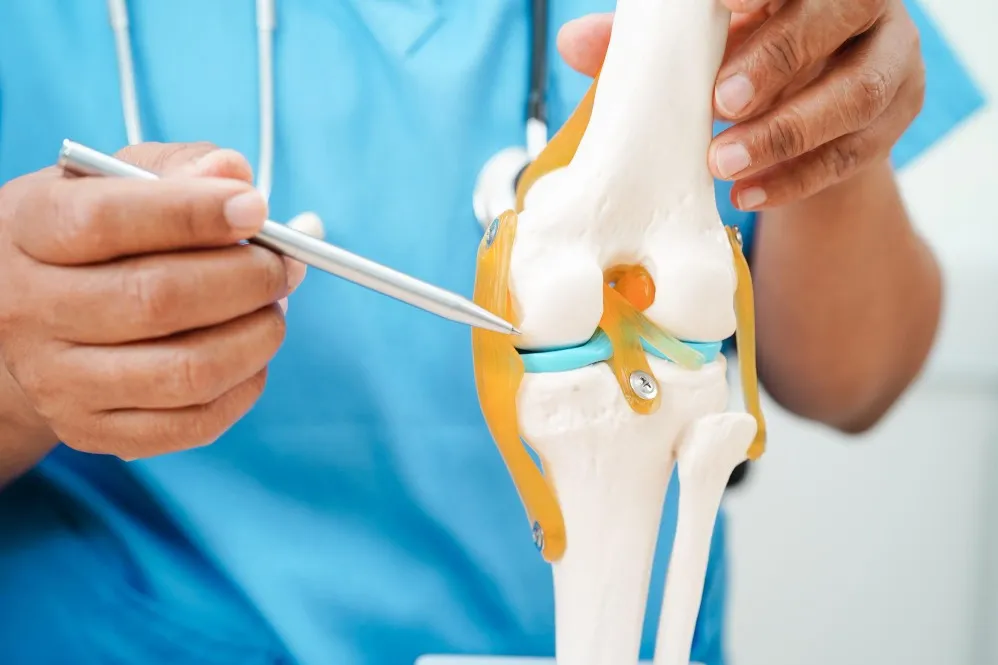
The knee is divided into three compartments:
- Medial (inner side)
- Lateral (outer side)
- Patellofemoral (between the kneecap and thigh bone)
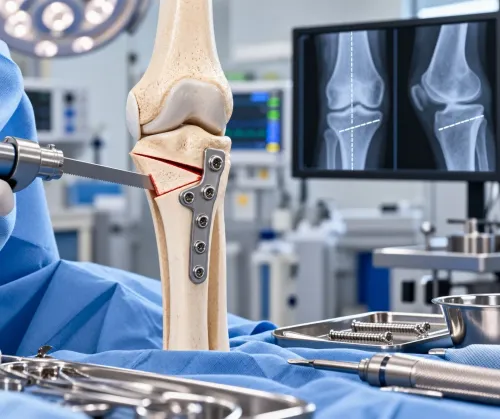
In some patients, arthritis damages only one compartment while the remaining portions of the knee remain relatively healthy. Instead of replacing the entire joint, Unicompartmental Knee Replacement (UKR) replaces only the affected compartment, preserving healthy bone, cartilage, and ligaments whenever possible.
The objective is to relieve pain while maintaining more of the knee's natural structure and movement.
Who May Be a Suitable Candidate?
UKR is not appropriate for everyone with knee arthritis. An orthopedic specialist carefully evaluates the extent of joint damage before recommending this procedure.
Patients who may benefit include those with:
- Arthritis limited to a single compartment of the knee
- Persistent knee pain despite medication and physiotherapy
- Good knee stability
- Healthy ligaments, particularly the anterior cruciate ligament (ACL)
- Adequate range of knee movement
- Localized cartilage wear confirmed through imaging
Patients with widespread arthritis affecting multiple compartments are generally better candidates for Total Knee Replacement.
Benefits of Partial Knee Replacement
For appropriately selected patients, UKR offers several potential advantages.
These may include:
- Preservation of healthy knee structures
- More natural knee movement
- Smaller surgical incision in many cases
- Less disruption to surrounding tissues
- Reduced blood loss during surgery
- Faster early recovery for some patients
- Improved knee function in suitable candidates
Long-term success depends on proper patient selection, surgical technique, rehabilitation, and maintaining overall joint health.
What Happens Before Surgery?
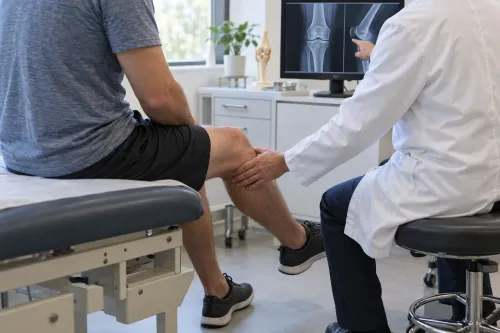
Before recommending UKR, the orthopedic surgeon performs a comprehensive evaluation to confirm that arthritis is confined to a single compartment.
This assessment typically includes:
- Detailed medical history
- Physical examination
- Standing X-rays of the knee
- MRI in selected cases
- Assessment of knee alignment
- Evaluation of ligament stability
- Review of previous conservative treatments
This careful evaluation helps ensure that the procedure is appropriate for the patient's condition.
Recovery After UKR
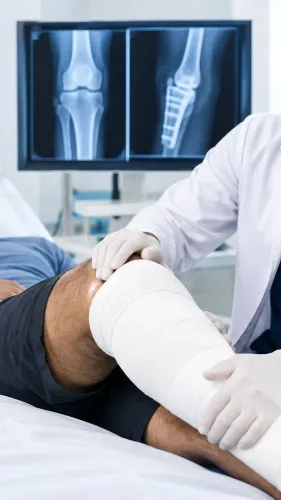
Recovery following partial knee replacement usually begins soon after surgery with guided movement and physiotherapy.
Rehabilitation focuses on:
- Controlling pain and swelling.
- Restoring knee movement.
- Improving muscle strength.
- Regaining walking confidence.
- Returning safely to routine daily activities.
Most patients are encouraged to participate actively in physiotherapy, as consistent rehabilitation plays an important role in achieving good long-term outcomes.
When Should You Consult an Orthopedic Specialist?
Persistent knee pain should not be accepted as a normal part of aging. An orthopedic evaluation is recommended if you experience:
- Knee pain that limits daily activities
- Difficulty climbing stairs
- Pain while walking short distances
- Swelling that repeatedly returns
- Stiffness after rest
- Reduced knee flexibility
- Limited improvement despite medication or physiotherapy
Early assessment allows more treatment options to be considered before arthritis progresses further.
Personalized Knee Care in Thane
People living in Thane, Maharashtra, often seek orthopedic care that combines accurate diagnosis with individualized treatment planning. Since every case of knee arthritis is different, selecting the most suitable procedure requires careful clinical evaluation rather than a one-size-fits-all approach.
At The Bone and Joints - Advance Ortho Care, Dr. Vivek V. Shingane, patients with knee arthritis undergo comprehensive assessment to determine whether conservative treatment, Unicompartmental Knee Replacement (UKR), or Total Knee Replacement is the most appropriate option. Treatment recommendations are based on the severity of arthritis, lifestyle requirements, and long-term joint function. Additional information about orthopedic services and knee replacement procedures can be found at drvivekshingane.com.
Unicompartmental Knee Replacement offers an effective solution for selected patients whose arthritis affects only one compartment of the knee. By preserving healthy joint structures while relieving pain, UKR can help improve mobility and quality of life when recommended for the right patient after a thorough orthopedic evaluation.
Keywords