An osteotomy is a bone-realignment operation that changes how force travels through a joint, but it requires careful selection, whole-leg imaging, and a recovery period measured by bone healing rather than pain alone. By the end, you will know how surgeons assess suitability, what happens in the operating room, what recovery demands, and how to compare local care options safely.
Key takeaways
- Osteotomy shifts load away from damaged cartilage by correcting bone alignment.
- High tibial osteotomy realigns the upper shin; distal femoral osteotomy realigns the thigh bone.
- Ask how preparation, bone fixation, weight-bearing, physiotherapy, and follow-up will be managed.
- Compare osteotomy care by surgical experience, imaging, fixation plans, and recovery support.
Is osteotomy suitable for your joint problem?
Osteotomy suits a joint problem when changing bone alignment can move force away from damaged cartilage. The surgeon cuts and reshapes or repositions the tibia, femur, or another bone while preserving your existing joint. High tibial osteotomy corrects alignment through the upper shin; distal femoral osteotomy corrects deformity through the thigh bone.
It can help selected people with bow-legged or knock-kneed alignment, arthritis mainly in one knee compartment, post-traumatic deformity, malunion, hip impingement, or ligament and sports-related problems.
It is a poor fit when you have:
- Arthritis across multiple compartments, severe stiffness, or advanced bone loss
- Infection, uncontrolled diabetes, or inflammatory arthritis
- Substantial obesity or smoking-related risk to bone healing
- An inability to follow protected weight-bearing instructions
For anyone searching osteotomy surgery in Thane what to expect, the key comparison is the problem each treatment addresses:
| Option | What it addresses | Joint replacement? |
|---|---|---|
| Physiotherapy | Strength, movement, pain, and function | No |
| Unloading brace | Temporary load reduction through alignment support | No |
| Injections | Short-term symptom control in selected cases | No |
| Arthroscopy | Meniscus, loose-body, or selected cartilage problems | No |
| Osteotomy | Bone alignment and load distribution | No |
| Total knee replacement | Widespread damaged joint surfaces | Yes |
Osteotomy can delay arthritis progression, but it cannot guarantee freedom from arthritis or prevent a future knee replacement. Your examination, standing alignment X-rays, joint condition, and ability to complete recovery determine whether it is suitable.
What should happen before osteotomy surgery?
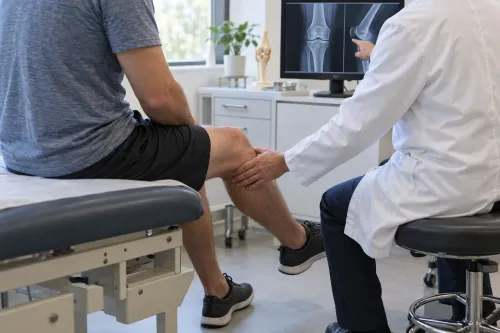
Consent should follow a documented examination, not an X-ray alone. The surgeon should record alignment, walking pattern, joint stability, range of motion, skin condition, pulses, nerve function, and the precise location of pain. Ask for standing, weight-bearing full-leg alignment X-rays: the load-bearing axis matters more than a non-weight-bearing knee image.
| Imaging | What it shows | When it helps |
|---|---|---|
| Full-leg X-ray | Alignment under load | Planning the correction angle |
| MRI | Cartilage, menisci, and ligaments | Suspected soft-tissue damage |
| CT | Bone defects and three-dimensional deformity | Complex or post-traumatic anatomy |
Tell the team about previous operations, allergies, blood thinners, steroids, diabetes, nicotine use, dental or skin infections, and clot or infection symptoms. Expect blood tests, medication changes, infection screening under local protocol, anaesthesia review, and thromboprophylaxis planning. Stop tobacco and discuss nicotine-replacement or cessation treatment; do not assume vaping is harmless to bone healing.
Ask an osteotomy surgeon in Thane:
- Where exactly will the bone be cut?
- What correction angle and whole-leg target are planned?
- Which plate and screws will be used?
- Is graft material expected?
- How long will weight-bearing be restricted?
- What are your complication and reoperation rates?
- What is the plan if the joint later deteriorates?
Check the surgeon’s registration independently through the National Medical Commission’s Indian Medical Register.
What happens during the osteotomy procedure?
After regional or general anaesthesia, the osteotomy procedure in Thane follows a planned sequence: the team positions and prepares your limb, cuts the tibia or femur, corrects its alignment, fixes the bone, and closes the wound.
1. The team positions you and sterilises the limb. A tourniquet may be used. The surgeon marks the planned cut and makes an incision over the tibia or femur.
2. The surgeon exposes the bone while protecting nearby nerves, blood vessels, tendons, and other soft tissues. Imaging or alignment equipment helps confirm the planned correction.
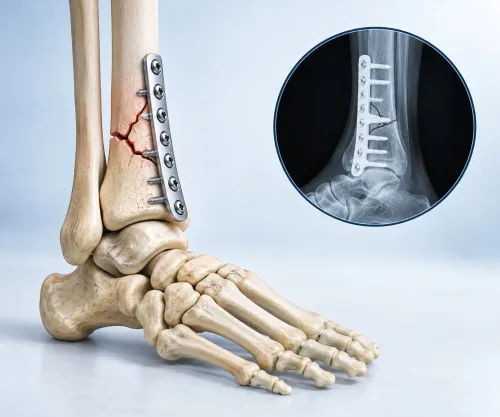
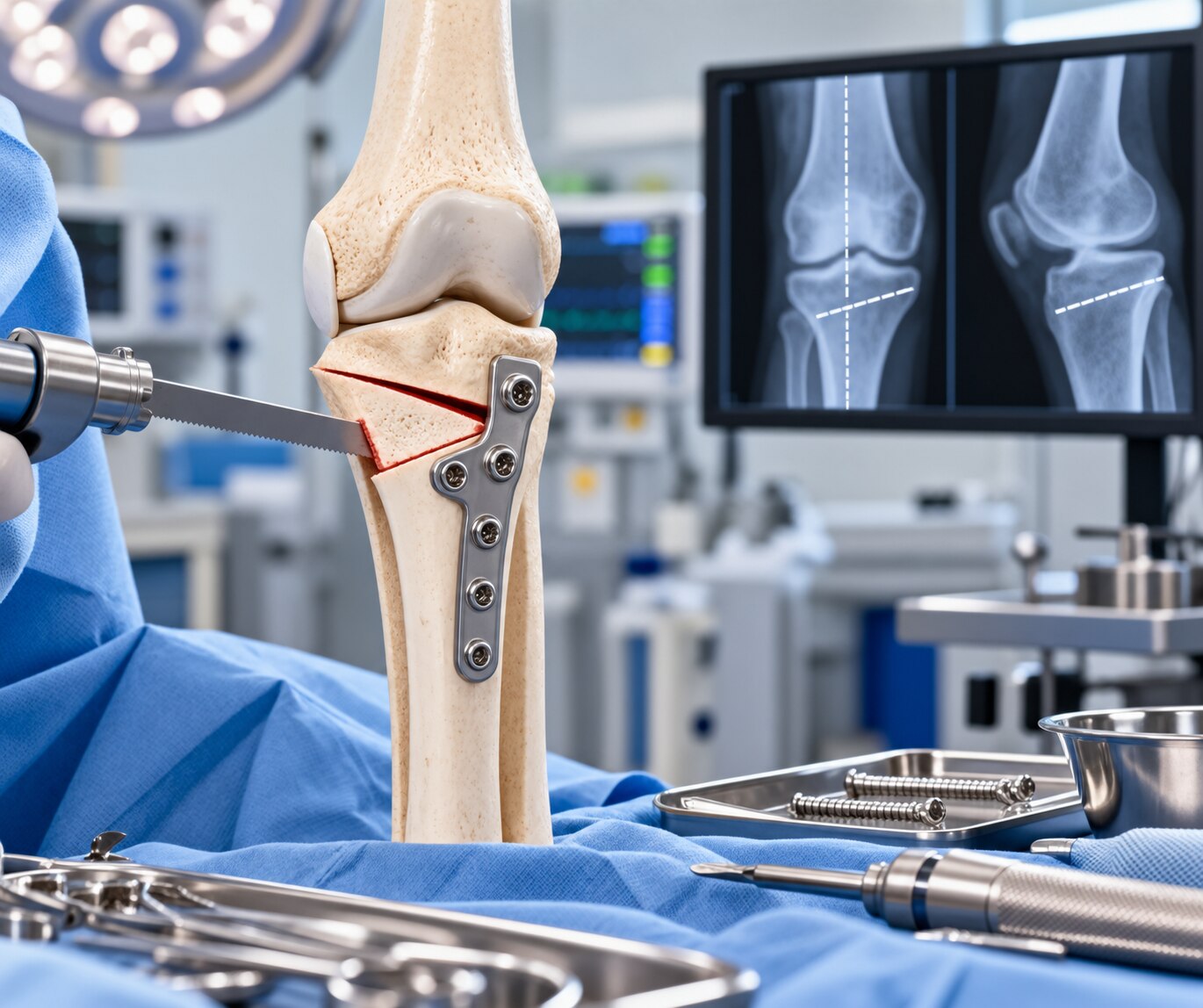
3. In an opening-wedge osteotomy, the surgeon makes a controlled cut, opens the gap gradually, and corrects the alignment. A plate and screws hold the gap; a bone graft or bone-substitute material is added when the gap size, bone quality, or healing plan calls for it.
4. In a closing-wedge osteotomy, the surgeon removes a measured wedge and closes the remaining bone surfaces before securing them with a plate and screws.
5. The choice depends on the deformity, desired correction, bone quality, limb length, and correction plan. Neither method is automatically best. The surgeon checks whole-limb alignment during the operation, then closes the incision and applies a dressing or brace.
6. When indicated, knee arthroscopy, meniscus treatment, cartilage work, or ligament assessment occurs during the same anaesthetic. Consent should name the planned cut, implant, graft, and additional procedures rather than leaving these decisions vague.
What does the osteotomy recovery process involve?
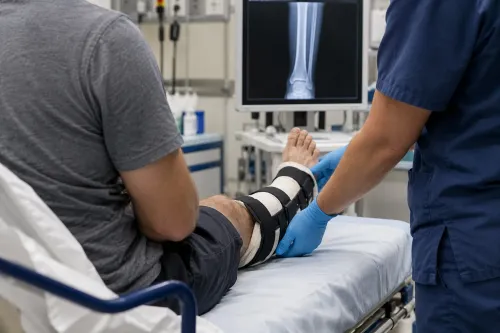
Crutches, a brace, and restricted or partial weight-bearing are common while the osteotomy unites. The osteotomy recovery process takes longer than pain relief: biological union can lag behind functional improvement, so do not increase walking or start impact sport simply because you feel better.
- Protect the bone as instructed. Your weight limit depends on the cut, fixation stability, pain, follow-up X-rays, and the operating surgeon’s protocol.
- Start physiotherapy early with swelling control, knee-motion exercises, quadriceps activation, safe transfers, and gait training.
- Progress to strengthening and sport-specific work only after healing is visible on imaging.
- Return to driving, work, and sport only after individual clearance; a fixed calendar date cannot safely promise readiness.
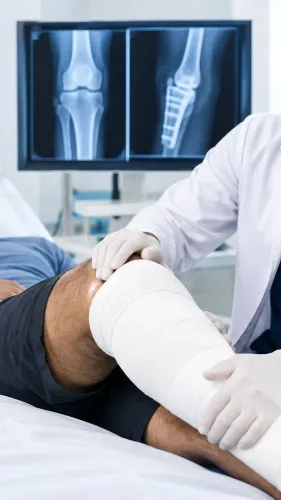
Follow-up appointments include examination and X-rays to check alignment and union. A plate or screws can cause hardware irritation and sometimes require removal after the bone has healed.
Discuss infection, blood clots, nerve or blood-vessel injury, stiffness, persistent pain, loss of correction, delayed union, nonunion, and later conversion to knee replacement. Some problems need revision fixation or bone grafting.
Seek prompt assessment for increasing calf swelling or pain, sudden breathlessness or chest pain, fever with wound drainage, worsening redness, new numbness or weakness, or an acutely painful swollen leg.
How should you compare osteotomy care in Thane?
Distance is only a convenience, not evidence of quality. For an osteotomy procedure in Thane or bone realignment surgery near Kolshet Road, compare documented experience with the exact high tibial, distal femoral, hip, or other osteotomy, not general orthopaedic practice alone.
Before choosing, ask:
- How will whole-leg alignment be measured before surgery and checked during it?
- Which plate and screw system is planned, and why?
- Will the opening wedge need bone graft or bone-substitute material?
- Who provides physiotherapy and gait training?
- When will follow-up X-rays assess healing?
- Whom can you contact at night or on weekends after discharge?
- Is the surgeon’s registration listed in the National Medical Commission’s Indian Medical Register?
| Option | What it addresses | What to clarify |
|---|---|---|
| Physiotherapy | Strength, movement, and function | Whether symptoms justify trying it first |
| Unloading brace | Reduces force through one joint compartment | Fit, daily wear, and reassessment date |
| Injections | Selected pain or inflammation | Expected duration and limits |
| Arthroscopy | Meniscus or cartilage problems | Whether it corrects the underlying alignment |
| Replacement surgery | Widespread joint damage | Why preserving the joint is unsuitable |
| No operation | Avoids surgical risks | How pain and progression will be monitored |
The Bone & Joints - Advance Ortho Care 08048067357 can be one local point for discussing these questions and arranging specialist assessment. Request a written plan and a backup strategy for nonunion, loss of correction, persistent pain, hardware problems, or later joint replacement.
Judge the decision by examination, imaging, consent details, and your ability to complete protected recovery.
Related service
Osteotomy Surgery Dr. Vivek V. Shingane is an experienced Orthopaedic and Joint Replacement Surgeon offering advanced osteotomy surgery at The Bone & Joints. View service → |
Frequently asked questions
Is osteotomy suitable for every joint problem?
No. Osteotomy suits selected alignment problems where changing bone position can move force away from damaged cartilage while preserving the joint.
What happens before osteotomy surgery?
Before surgery, your orthopaedic team assesses alignment and joint damage, discusses the planned bone correction, and explains preparation, risks, fixation, and recovery.
What happens during an osteotomy procedure?
The surgeon cuts and reshapes or repositions the affected bone. High tibial osteotomy works through the upper shin, while distal femoral osteotomy works through the thigh bone.
What does the osteotomy recovery process involve?
Recovery involves protecting the corrected bone, following weight-bearing instructions, attending follow-up appointments, and completing physiotherapy as healing progresses.
How should you compare osteotomy care in Thane?
Compare the surgeon’s experience with bone realignment, the imaging and planning process, fixation approach, hospital support, follow-up schedule, and rehabilitation guidance.
Keywords