Foot or ankle pain lasting longer than six weeks, returning despite self-care, or limiting walking, sleep, work, or sport needs a diagnostic review rather than an automatic operation. You will learn how the cause, examination findings, response to rehabilitation, and risks of delay determine whether non-surgical care or surgery is the better next step.
Key takeaways
- Seek urgent care for deformity, fever, an open wound, numbness, or inability to bear weight.
- Expect an examination, movement tests, and imaging before choosing foot or ankle treatment.
- Try a structured non-surgical programme when pain has no urgent warning signs.
- Consider surgery when a defined problem persists despite appropriate conservative treatment.
When Persistent Foot or Ankle Pain Needs More Than Home Care
Mild pain that is improving, allows you to bear weight, and has no wound, deformity, numbness, or fever can receive short-term home care.
Arrange a diagnostic appointment if pain lasts more than six weeks, returns after self-care, or limits walking, work, sleep, or sport; this is the right starting point for ankle pain treatment in Thane.
Similar symptoms can come from ankle arthritis, recurrent sprain, tendon tear, Achilles tendinopathy, plantar fasciitis, a bunion, stress fracture, nerve compression, instability, gout, infection, or pain referred from the back. Pain severity alone cannot determine whether you need surgery.
Seek urgent assessment if you have:
- Inability to bear weight after an injury
- A visibly deformed foot or ankle
- An open wound, especially with diabetes or poor circulation
- New numbness or weakness
- Sudden calf swelling
- A hot, red, markedly swollen joint with fever or feeling unwell
Do not keep running through focal bone pain or swelling after impact activity; an early X-ray can miss a stress fracture, and continued loading can worsen it.
If you have diabetes, poor circulation, loss of sensation, a previous ulcer, or an amputation, seek prompt assessment even for a small blister or wound. Clinicians need to check skin, blood flow, pressure, infection, sensation, and glucose control before elective treatment.
How Doctors Identify the Cause Before Choosing Treatment
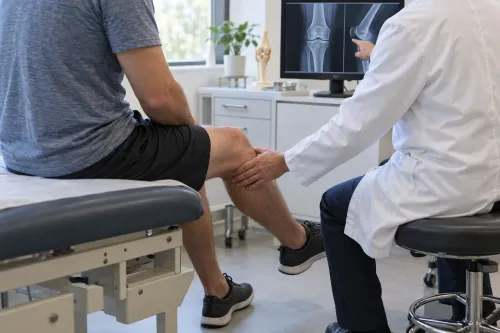
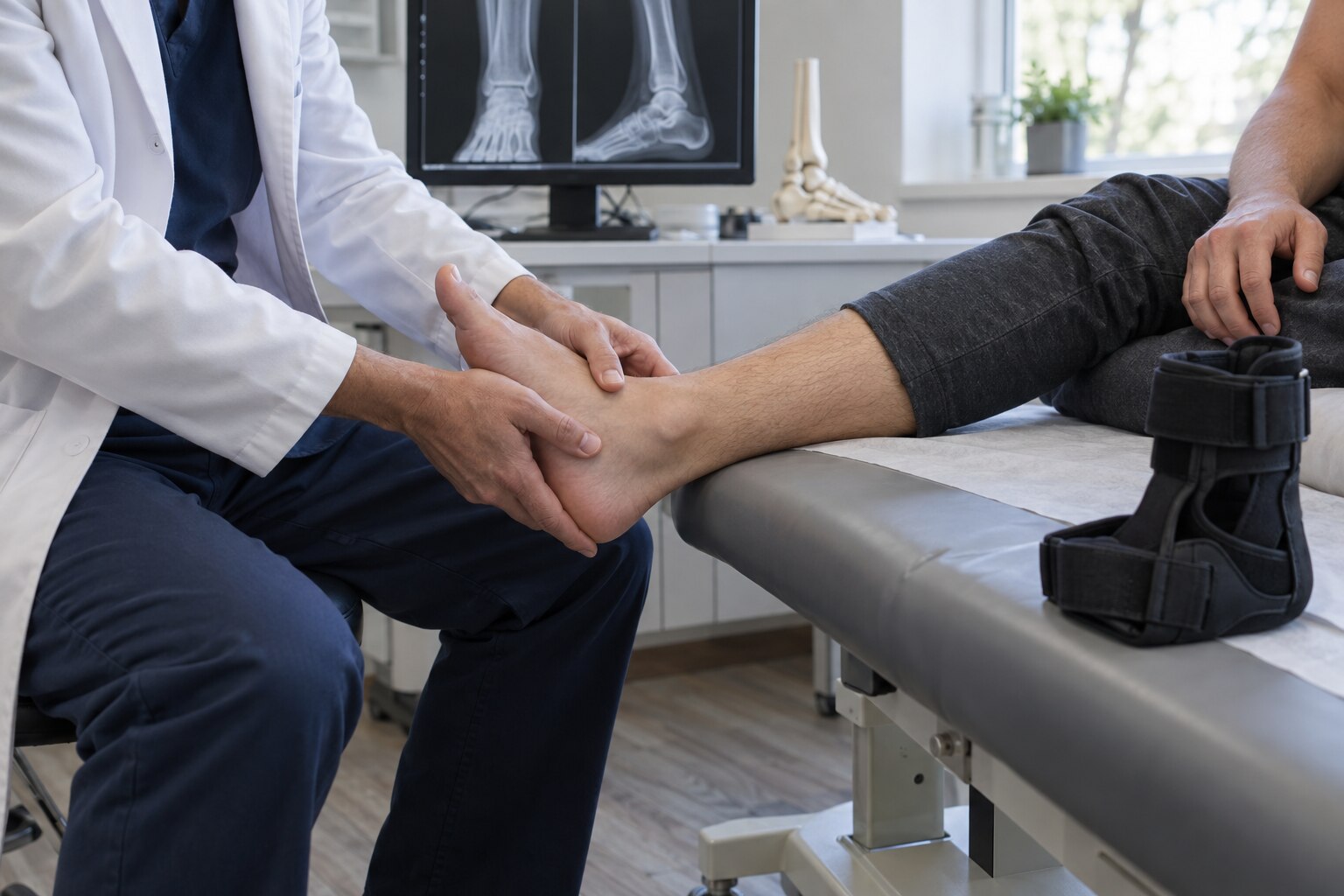
Doctors begin by matching the pain pattern to a possible source, not by choosing an operation. They ask about injury, exact location, duration, activity triggers, instability, night pain, medical conditions, previous treatment, and its effect on walking, work, sleep, or sport.
The examination checks:
- Gait, balance, footwear, alignment, swelling, and visible deformity
- Range of motion and pain during movement
- Muscle strength and tendon function
- Skin, pulses, sensation, and signs of nerve or blood-flow problems
For an acute ankle injury, the Ottawa Ankle Rules guide whether an X-ray is needed. Bone tenderness at the posterior edge or tip of either malleolus, the base of the fifth metatarsal, or the navicular, or an inability to take four steps, supports imaging.
| Test | What it answers |
|---|---|
| Weight-bearing X-ray | Shows alignment, arthritis, deformity, joint-space change, and many fractures under load |
| MRI | Assesses cartilage, tendons, ligaments, osteochondral lesions, occult stress fractures, and other deep structures |
| Ultrasound | Examines superficial tendons dynamically and can guide an injection |
| CT | Provides detailed views of bone, fracture lines, and joint surfaces |
| Blood tests | Help investigate infection, gout, or inflammatory arthritis |
Imaging findings must match the painful area and examination. An MRI abnormality that causes no symptoms is not automatically the diagnosis, so treatment decisions should follow the complete clinical picture.
What a Structured Non-Surgical Programme Looks Like
Non-surgical care is an active, diagnosis-specific programme—not an instruction to rest and hope. Whether you are assessing ankle pain treatment in Thane or elsewhere, the plan should set targets, control load, build strength, and include reassessment.
- Sprain or instability: Use protected weight-bearing and an ankle brace early, then restore range of motion, progress to strengthening, and add balance or proprioception training. Prolonged immobilisation can leave weakness and increase recurrent sprains.
- Ankle arthritis: Modify painful activities, use supportive footwear or orthoses, exercise the ankle and lower limb, and address weight management where relevant. A clinician may recommend suitable analgesic or anti-inflammatory medicine and, selectively, an intra-articular corticosteroid injection. The injection can provide temporary relief; it does not restore cartilage.
- Plantar heel pain: Reduce aggravating loads, stretch the calf and plantar fascia, strengthen the foot and calf, and use supportive footwear or orthoses. Short-term taping can reduce strain while exercise takes effect.
- Achilles tendinopathy: Use progressive tendon-loading exercises and adjust running volume, surfaces, technique, or footwear. Avoid routine corticosteroid injection into the Achilles tendon because tendon weakening can increase rupture risk.
Persistent focal pain after impact activity needs a fresh assessment for a stress fracture, not continued running through it. A clinician may stop impact loading and arrange imaging because a missed fracture can worsen, even when initial pain resembles a routine sprain.
When Surgery Becomes Reasonable—and Which Operation Fits
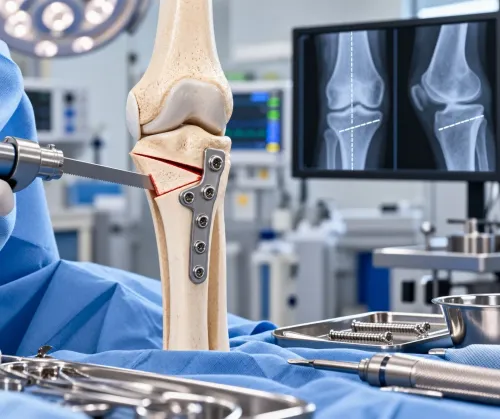
Surgery becomes reasonable when pain still disables walking, work, sleep, or sport after a documented, properly completed non-surgical programme. It also moves higher on the list for mechanical locking, recurrent instability despite rehabilitation, progressive joint damage, major deformity, a displaced fracture, tendon rupture, or another confirmed structural problem where delay worsens the outcome.
The operation must match the diagnosis, not merely the pain score. Compare foot surgery options in Thane by asking what structure is failing and what the procedure is designed to change.
| Diagnosis | Possible operation | Main purpose |
|---|---|---|
| Bunion | Osteotomy with soft-tissue balancing | Realigns the bone and corrects the deforming forces; it does not simply remove the bump |
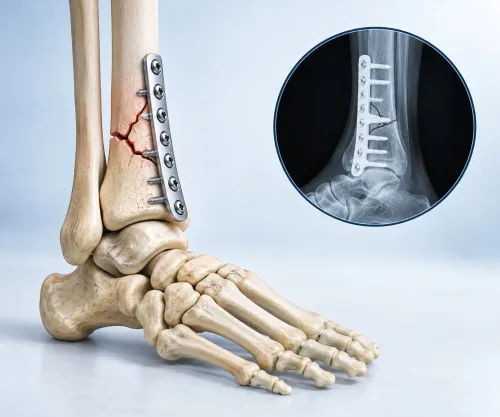
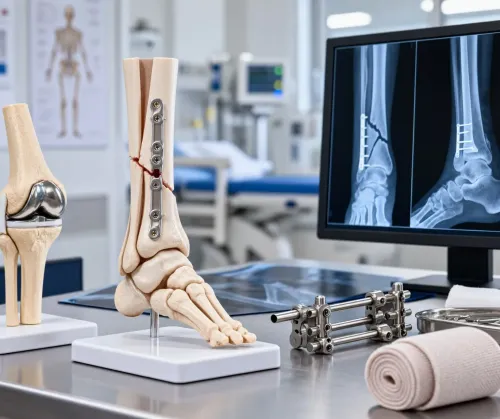
| Unstable stress fracture | Fixation with screws or other hardware | Restores stability when alignment, healing, or continued loading makes protection insufficient |
| Painful damaged joint | Fusion | Eliminates movement at that selected joint to remove painful motion |
| End-stage ankle arthritis | Replacement or fusion | Replacement preserves some motion; fusion removes painful ankle movement |
Ankle replacement retains movement but carries risks of implant failure, infection, fracture, loosening, wear, and later revision. Fusion reliably removes painful motion but permanently sacrifices ankle movement and increases demands on nearby joints.
“Minimally invasive” describes access, not suitability or safety. A smaller incision cannot correct the wrong diagnosis, remove risks, or replace rehabilitation; ask for the expected benefit, restrictions, complication risks, and reason that operation fits your imaging and examination.
How to Compare Foot and Ankle Care Before You Commit
Compare foot and ankle surgery or non surgical treatment in Thane by matching the plan to your diagnosis, evidence, and recovery priorities—not to the clinic’s location or a procedure name.
| Option | What to compare | Questions to answer |
|---|---|---|
| Non-surgical care | Diagnosis-specific programme | What exercises, footwear, brace, medicine, injection, or activity changes come first? |
| Surgery | Confirmed structural problem | What benefit is expected, and what happens if you wait? |
| Reassessment | Proof of progress or failure | When will walking, work, sleep, or sport be reviewed? |
Before choosing a foot and ankle surgeon in Thane, ask for the exact diagnosis and the examination and imaging findings that support it. Request the alternatives, expected benefit, likely risks, and consequence of waiting.
For an operation, ask:
- Is the surgeon medically registered and trained for this procedure, and how many have they performed?
- What anaesthesia, implant or fixation material, and complication and re-operation rates apply?
- How will you prevent wound infection and blood clots?
- What are the rehabilitation milestones, weight-bearing and driving restrictions, and expected time away from work or sport?
A label such as “arthroscopy” describes an approach, not the diagnosis, expected result, or recovery burden. Compare foot surgery options in Thane using this checklist; patients consulting The Bone & Joints - Advance Ortho Care 08048067357 can use it to test whether the proposed plan fits their evidence and priorities.
Related services
Foot and Ankle Surgery Dr. Vivek V. Shingane is a highly experienced Orthopaedic and Joint Replacement Surgeon specializing in foot and ankle surgery at The Bone & Joints. View service → |
Arthroscopy Treatment Dr. Vivek V. Shingane is a skilled Orthopaedic and Joint Replacement Surgeon offering advanced arthroscopy treatment at The Bone & Joints. View service → |
Frequently asked questions
When does persistent foot or ankle pain need more than home care?
Arrange an assessment when pain persists, worsens, limits walking, or follows an injury. Seek urgent care for deformity, fever, an open wound, numbness, or inability to bear weight.
How do doctors identify the cause of foot or ankle pain?
A doctor reviews your symptoms and injury history, examines walking and joint movement, checks strength and sensation, and orders X-rays or other imaging when needed.
What does non-surgical foot and ankle treatment involve?
A structured programme can combine activity changes, appropriate footwear, physiotherapy, exercises, medication guidance, and follow-up to measure pain and function.
When does foot or ankle surgery become reasonable?
Surgery becomes reasonable when a specific structural problem causes ongoing pain or disability and an appropriate non-surgical programme has not restored useful function.
Related services
Tendon and Ligament Reconstruction Tendon and Ligament Reconstruction Dr. Vivek V. Shingane is a highly experienced Orthopaedic and Joint Replacement Surgeon specializing in tendon and ligament reconstruction at The... View service → |
Ganglion Cyst Removal Dr. Vivek V. Shingane is an experienced Orthopaedic and Joint Replacement Surgeon offering expert treatment for ganglion cyst removal at The Bone &... View service → |
Joint Replacement Surgery Dr. Vivek V. Shingane is an experienced Orthopaedic and Joint Replacement Surgeon specializing in advanced joint replacement surgery at The Bone &... View service → |
Osteotomy Surgery Dr. Vivek V. Shingane is an experienced Orthopaedic and Joint Replacement Surgeon offering advanced osteotomy surgery at The Bone & Joints. View service → |
Keywords