Call 112 and use basic first aid when an accident causes uncontrolled bleeding, loss of consciousness, breathing difficulty, paralysis, severe deformity, or an open wound over a suspected fracture. You will be able to distinguish a hospital emergency from a clinic visit, understand the tests and treatments used, and choose the right follow-up care in Thane.
Key takeaways
- Call 112 for breathing trouble, heavy bleeding, paralysis, confusion, or suspected spine injury.
- Do not move a trapped or seriously injured person unless danger demands it.
- Seek emergency care for deformity, exposed bone, uncontrolled bleeding, or loss of sensation.
- Ask how imaging, reduction, casting, splinting, or surgery will address the injury.
What should you do in the first minutes after an accident?
Protect life before checking whether a bone is broken. Call 112 immediately if the person is unconscious, struggling to breathe, bleeding heavily, confused, paralysed, numb, or trapped. An ambulance is safer than private transport when a neck, back, or major-trauma injury is possible.
1. Check responsiveness and breathing. Start CPR only if the person is unresponsive and not breathing normally, and follow the 112 dispatcher’s instructions.
2. Control external bleeding with firm, continuous direct pressure using clean cloth or gauze. If blood soaks through, add more material without removing the first layer.
3. Do not pull out glass, metal, or another embedded object. Press around it, cover the wound, and keep the object from moving.
4. Keep a person with neck or back pain, weakness, numbness, or severe accident force still. Do not sit them up, twist the neck, or let them walk; move them only for immediate danger, and keep the head and body aligned.
5. Do not straighten a visibly deformed limb or push exposed bone back inside. Cover an open wound loosely with a clean dressing and keep the injured limb still without tightening anything around it.
Avoid food, drink, and unnecessary movement while help is coming. If your search term is “orthopedic trauma treatment for after accident in Thane,” remember that first aid protects the person until emergency assessment, imaging, and definitive treatment are available.
When does an accident injury need a hospital emergency department?
Call 112 and seek a hospital emergency department immediately when an accident causes a life threat, threatened limb, or possible injury to the head, chest, abdomen, or spine. An ambulance is safer than private transport when the person is unconscious, unstable, or cannot be moved without worsening a spinal injury.
- Bleeding continues despite firm, direct pressure, or the person is faint, pale, clammy, or confused.
- Bone is visible, or a wound lies over a suspected fracture. This is an open fracture requiring hospital cleaning, antibiotics, tetanus assessment, and fracture treatment.
- The hand or foot is pale, blue, cold, or pulseless compared with the other side.
- New numbness, weakness, paralysis, loss of movement, or severe burning pain develops.
- A limb is visibly bent, shortened, rotated, or displaced.
- Breathing is difficult, chest pain is severe, or the person coughs blood.
- There was loss of consciousness, repeated vomiting, seizure, worsening headache, or unusual drowsiness.
- Severe abdominal pain, a rigid or swollen abdomen, neck or back pain, or tenderness after a major impact suggests internal or spinal injury.
Do not let someone with suspected spine or major-trauma injury walk, sit up repeatedly, or twist their neck. When searching for accident injury treatment near me or emergency fracture care in Thane, confirm 24-hour emergency assessment, X-ray, CT access, orthopaedic review, neurovascular monitoring, anaesthesia, operating-room access, and transfer arrangements.
An appointment clinic is not a substitute for emergency care.
How are fractures and hidden injuries diagnosed after an accident?
A normal-looking limb does not prove that the bone, joint, blood supply, or nerves are intact. The trauma examination compares both sides, checks deformity, swelling, tenderness, skin wounds, range of movement, and pain, then records pulses, skin colour, temperature, capillary refill, sensation, and muscle movement.
Doctors repeat circulation and nerve checks because swelling or displacement can worsen after the first examination.
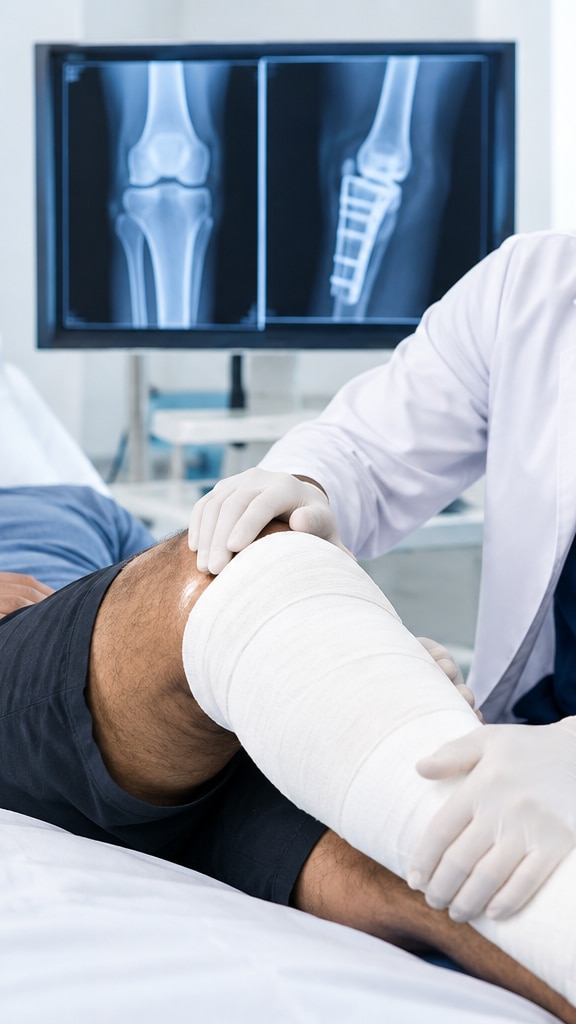
Pain location and mechanism guide imaging. Tell the clinician where pain began, whether it travels, and whether movement causes sharp or deep pain. X-rays should include the suspected bone and the joint above and below it, with at least two views; a joint injury may need additional angled views.
Further imaging is chosen for a specific concern:
- Repeat X-rays after several days can reveal an occult fracture that was invisible before swelling or bone changes developed.
- CT shows complex fractures, joint surfaces, pelvic injuries, spinal fractures, and small bone fragments more clearly.
- MRI detects bone bruising, hidden fractures, ligament or tendon damage, spinal-cord injury, and some soft-tissue problems without radiation.
- Whole-body CT from the top of the head to mid-thigh is considered for adults with blunt major trauma and suspected multiple injuries, not minor accidents.
A normal first X-ray cannot exclude every clinically important injury. Persistent focal pain, inability to bear weight, worsening swelling, numbness, or pain out of proportion warrants reassessment. This evidence-based process directs orthopedic trauma treatment for after accident in Thane.
How do doctors choose a splint, cast, reduction, or surgery?
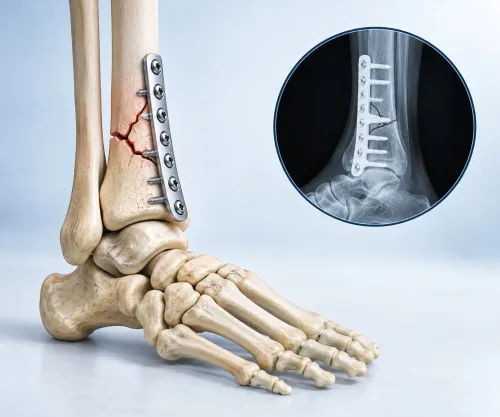
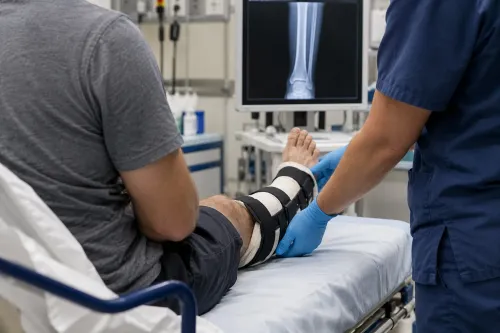
A splint is usually chosen while swelling is increasing; a cast gives firmer immobilisation after swelling settles. Braces support selected stable injuries and allow controlled movement. Reduction realigns displaced bone, while fixation holds that alignment when it will not stay in place.
| Option | What it means | When it applies |
|---|---|---|
| Splint | Partial immobilisation that leaves room for swelling | Early treatment, swelling, or temporary protection |
| Cast | Circumferential rigid immobilisation | Stable alignment after swelling is controlled |
| Brace | Removable support with limited movement | Stable fractures, ligament injuries, or rehabilitation |
| Traction | Gentle, continuous pulling to restore length or alignment | Selected femur, pelvis, or spinal injuries under monitoring |
| Closed reduction | Realignment without opening the fracture site | Displacement that can be corrected and maintained without surgery |
| External fixation | Pins connected to a frame outside the body | Severe swelling, contamination, open injury, or damage needing staged treatment |
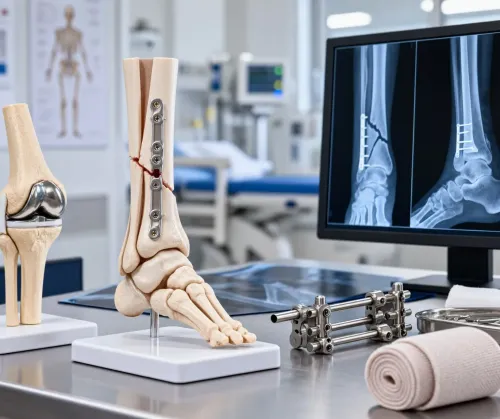
| Open reduction with internal fixation | Surgical alignment held by plates, screws, nails, or wires | Unstable displacement, joint-surface involvement, or failed closed treatment |
Doctors consider how far the bone has shifted, whether the joint is involved, and whether skin, muscle, blood vessels, or nerves are damaged. An open or contaminated fracture needs urgent hospital cleaning and antibiotics; severe swelling can make delayed fixation safer than immediate surgery.
Pale or cold skin, worsening numbness, weakness, or escalating pain with tense swelling requires immediate reassessment. A tight cast can contribute to compartment syndrome. Your general health, diabetes, blood thinners, heart or lung disease, and anaesthetic risk also influence timing.
Ask an orthopedic trauma surgeon in Thane whether a clinic can provide emergency imaging, neurovascular monitoring, and operating-room access before choosing follow-up care.
How should you choose emergency and follow-up trauma care in Thane?
Search for “accident injury treatment near me” by capability, not distance alone. Confirm 24-hour emergency assessment, X-ray, CT when indicated, orthopaedic review, anaesthesia, operating-room access, neurovascular monitoring, and a documented transfer arrangement. An appointment clinic may not provide these services.
- Call 112 for uncontrolled bleeding, fainting, breathing difficulty, confusion, seizure, paralysis, new numbness, severe deformity, or an open wound over a suspected fracture.
- Use an ambulance when head, neck, spine, chest, or multiple injuries are possible; do not make the person walk or repeatedly sit up.
- Ask which hospital can provide emergency imaging, surgery, antibiotics, tetanus assessment, and wound cleaning for an open fracture.
- Choose an orthopedic trauma surgeon in Thane when the fracture is displaced, involves a joint, is open, affects the pelvis or acetabulum, or may need fixation.
| Option | What it provides | When it fits |
|---|---|---|
| Hospital emergency department | Resuscitation, imaging, surgery, monitoring, transfer | Shock, threatened circulation, suspected compartment syndrome, or major trauma |
| Trauma orthopedic clinic in Thane | Cast checks, wound review, stable fracture follow-up, rehabilitation | After emergency threats are excluded and treatment is already stabilised |
The Bone & Joints - Advance Ortho Care 08048067357 may fit follow-up fracture assessment or specialist review after hospital care, provided the patient is stable and the clinic confirms the required imaging and treatment pathway. A tight cast, escalating pain, tense swelling, altered sensation, or weakness means emergency reassessment, not a routine appointment.
Related services
Orthopedic Trauma Treatment Dr. Vivek V. Shingane is a skilled Orthopaedic and Joint Replacement Surgeon specializing in orthopedic trauma care, fracture management, and... View service → |
Fracture Repair Treatment Dr. Vivek V. Shingane is an experienced Orthopaedic and Joint Replacement Surgeon providing expert fracture repair treatment at The Bone & Joints. View service → |
Frequently asked questions
What should you do in the first minutes after an accident?
Protect life first. Call 112 if the person is unconscious, struggling to breathe, bleeding heavily, confused, paralysed, numb, or trapped. Keep the person still when a neck, back, or major-trauma injury is possible, and use an ambulance instead of private transport.
When does an accident injury need a hospital emergency department?
Go to a hospital emergency department for heavy bleeding, an open fracture, severe pain, a visible deformity, loss of movement or sensation, suspected head or spine injury, breathing difficulty, or an injury caused by high-impact trauma.
How are fractures and hidden injuries diagnosed after an accident?
Doctors examine circulation, sensation, movement, swelling, deformity, and skin wounds before ordering imaging. X-rays show many fractures; CT scans define complex bone injuries, while MRI can reveal ligament, tendon, spinal-cord, or other soft-tissue damage.
How do doctors choose a splint, cast, reduction, or surgery?
The choice depends on fracture alignment, stability, skin and soft-tissue damage, blood supply, nerve function, joint involvement, and the person’s overall condition. Doctors may use a splint for swelling, a cast for stable healing, reduction to realign a displaced bone, or surgery when alignment or stability cannot be maintained without fixation.
How should you choose emergency and follow-up trauma care in Thane?
Choose a facility that can provide prompt assessment, X-rays and advanced imaging when needed, fracture reduction, wound care, orthopaedic trauma consultation, and follow-up checks. Confirm where urgent care is available and who will monitor healing after discharge.
Related services
Soft Tissue Repair Treatment Dr. Vivek V. Shingane is a skilled Orthopaedic and Joint Replacement Surgeon providing advanced soft tissue repair treatment at The Bone & Joints. View service → |
Foot and Ankle Surgery Dr. Vivek V. Shingane is a highly experienced Orthopaedic and Joint Replacement Surgeon specializing in foot and ankle surgery at The Bone & Joints. View service → |
Paediatric Orthopaedics Dr. Vivek V. Shingane is an experienced Orthopaedic and Joint Replacement Surgeon offering specialized care in paediatric orthopaedics at The Bone &... View service → |
Keywords