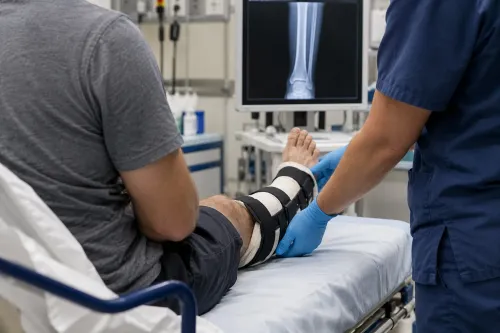
A complex fracture needs more than confirmation that a bone is broken: the injury may involve open wounds, multiple fragments, a joint surface, damaged blood vessels, infection, or failed healing. By the end, you will know which injuries need emergency hospital care, what an appropriate evaluation includes, how staged fixation works, and what to ask when comparing specialists and facilities.
Key takeaways
- Go to the emergency department for an open fracture, numbness, absent pulse, or severe deformity.
- Complex fractures need X-rays and sometimes CT scans to assess fragments and joint involvement.
- Fixation choices include plates, screws, rods, external frames, or staged surgery.
- Compare the surgeon’s trauma experience, hospital support, implant plan, and follow-up schedule.
What a fracture repair specialist handles beyond a routine break
A routine fracture is straight, stable, and likely to heal in good alignment with a cast or brace. A fracture repair specialist in Thane becomes relevant when the injury is displaced, unstable, open, shattered into multiple fragments, extends into a joint, involves bone loss, or has damaged nerves, blood vessels, or an existing implant.
| Role | What the doctor typically handles | When to look beyond that level |
|---|---|---|
| General orthopaedic doctor | Diagnoses common fractures, manages casts and braces, and monitors uncomplicated healing | Alignment changes, severe soft-tissue damage, joint-surface involvement, or failed healing |
| Orthopaedic trauma surgeon | Treats high-energy injuries, open fractures, fracture-dislocations, multiple injuries, and urgent fixation in a hospital | Bone loss, infection, non-union, malunion, major deformity, or reconstruction after failed fixation |
| Complex fracture reconstruction specialist | Plans staged surgery, bone grafting, revision fixation, deformity correction, and restoration of joint function | Choose this experience when the fracture has multiple fragments, an established complication, or demanding functional goals |
A fracture surgeon in Thane is not automatically the right choice for every break; ask what similar injuries the surgeon personally treats and where surgery, anaesthesia, admission, CT imaging, and rehabilitation would occur. A clinic consultation is not the same as a complete trauma pathway.
For a complex injury, hospital access and follow-up matter as much as the surgeon’s title.
Which fracture symptoms require the emergency department now
Do not wait for a clinic appointment if the limb is visibly deformed, bone has broken through the skin, bleeding will not stop, or the hand or foot is cold, pale, blue, or pulseless. New numbness, paralysis, inability to move fingers or toes, rapidly increasing swelling, or major trauma also requires emergency-department care.
Searching for an orthopaedic fracture doctor near me must not delay transport.
| Situation | Immediate response | Why it matters |
|---|---|---|
| Open fracture or deep wound over the break | Cover it and go to hospital | The wound may communicate with the bone and needs antibiotics, surgical cleaning, and stabilisation |
| Cold, pale, numb, or pulseless limb | Call emergency transport | Blood-vessel or nerve damage threatens the limb |
| Severe deformity, uncontrolled bleeding, or major trauma | Keep still and attend the emergency department | Reduction, imaging, and urgent surgery may be necessary |
Before transport:
- Splint the limb in the position found; do not straighten it.
- Cover an open wound with a clean cloth and never push exposed bone back.
- Remove rings, watches, and tight clothing before swelling increases.
- Avoid food and drink when urgent surgery is possible.
A suspected hip fracture after a fall, especially with severe hip pain or inability to stand, also needs hospital assessment. Choose a facility that provides emergency imaging, anaesthesia, admission, surgery, and rehabilitation—not only a consultation for bone fracture treatment in Thane.
How specialists investigate severity, blood supply, and healing risk
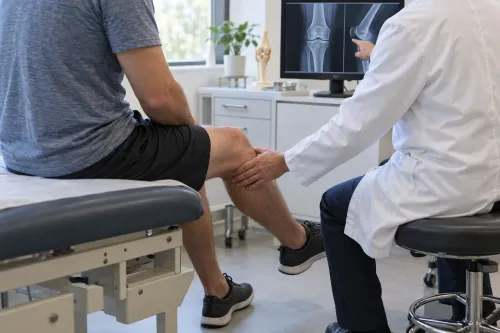
Assessment combines your symptoms, physical examination, medical history and imaging; no single X-ray decides whether a complex fracture is serious. The examiner checks deformity, swelling, skin wounds, tenderness, movement, sensation, and pulses above and below the injury. A cold, pale limb or reduced pulse suggests threatened blood supply and requires urgent hospital action.
Ask the fracture surgeon in Thane to record healing risks rather than reviewing the image alone:
- Smoking, vaping, nicotine replacement, diabetes, poor circulation, and nutritional problems
- Steroid use, other medicines, previous operations, and earlier infection
- The injury’s timing, force, open wounds, and your usual work or activity demands
Imaging answers different questions:
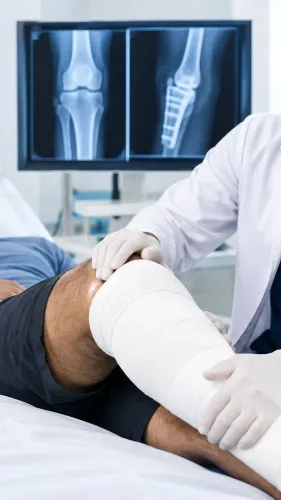
- Plain radiographs show alignment, displacement, shortening, joint involvement, and whether alignment changes during follow-up.
- CT reveals small fragments, three-dimensional displacement, pelvic or spinal patterns, and articular extension hidden on X-ray.
- MRI helps find an occult fracture or ligament, tendon, cartilage, or muscle injury when radiographs are normal or unclear.
Serial radiographs matter because swelling can fall and a loose cast can allow displacement, while fixation can fail. Reduced pain does not prove union. If healing remains uncertain, additional imaging and examination guide bone fracture treatment in Thane.
Poor blood supply, severe soft-tissue damage, infection, inadequate stability, nicotine exposure, and medical conditions all raise delayed-union or non-union risk.
Which fixation method fits the fracture and the soft-tissue condition
A cast suits a stable fracture with acceptable alignment; traction temporarily restores length or reduces pain when swelling, displacement, or surgery makes immediate definitive fixation unsafe. The choice depends on stability, joint involvement, blood supply, soft-tissue damage, and whether the patient can mobilise safely.
| Option | Purpose | Effort and soft-tissue implications |
|---|---|---|
| Cast | Holds a stable fracture | Least invasive; requires repeated X-rays and limits movement |
| Traction | Restores length or alignment temporarily | Bed-based treatment; skin, nerve, and clot risks require monitoring |
| External fixator | Stabilises severe, open, or swollen injuries | Pins avoid the main wound; pin care and later surgery are common |
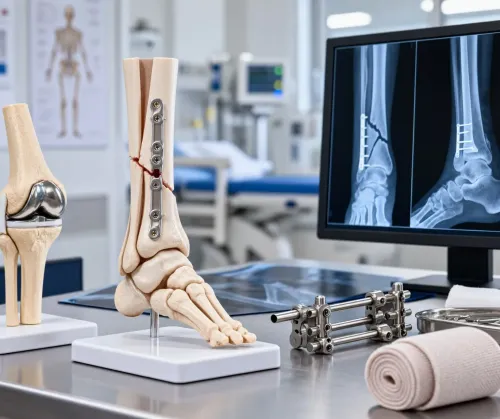
| Intramedullary nail | Supports long-bone fractures from inside | Surgery and imaging required; permits earlier loading in selected cases |
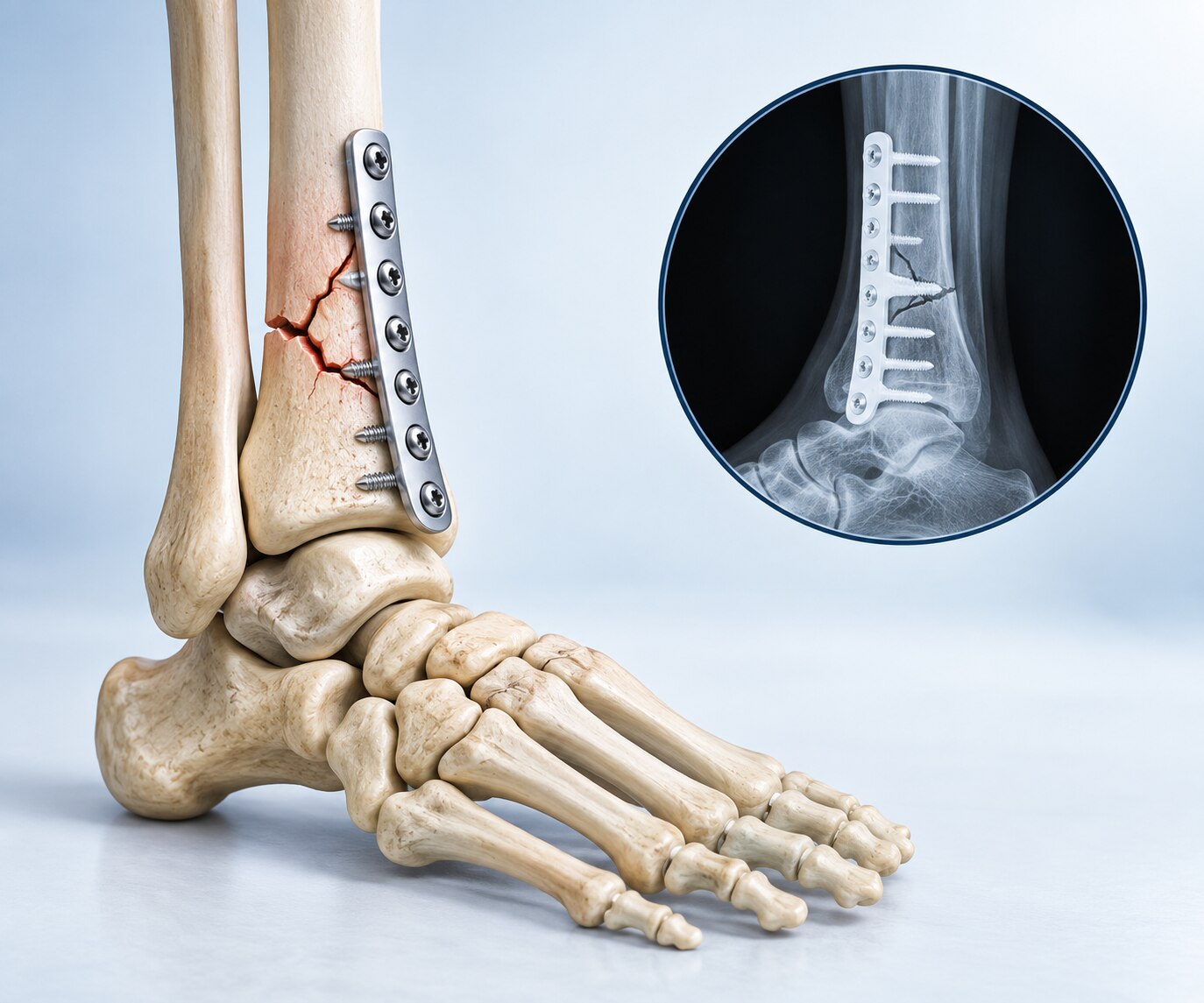
| Plate and screws | Restores alignment near joints or in difficult patterns | Exposes the fracture area; soft-tissue handling matters |
| Wires or pins | Holds small fragments or children’s fractures | Limited fixation; protection and later removal may be needed |
| Bone graft | Fills a gap or stimulates delayed healing | Adds a procedure; it cannot replace stability or infection control |
| Staged fixation | Uses an external fixator before definitive surgery | Protects swollen tissues; requires more than one operation |
| Revision surgery | Corrects non-union, malunion, infection, or failed hardware | Usually the greatest effort, sometimes involving grafts and implant removal |
An open fracture needs surgical removal of dead tissue, contamination, and foreign material; antibiotics alone are not enough. Ask a fracture repair specialist in Thane or fracture surgeon in Thane where emergency imaging, anaesthesia, admission, debridement, fixation, and rehabilitation will occur, because a clinic consultation cannot provide the whole trauma pathway.
How to compare a specialist, hospital pathway, and recovery plan in Thane
Choose care by verifying the surgeon’s reconstruction experience, the hospital’s emergency capacity, and the recovery plan—not by clinic distance alone.
| Area | Verify | Why it matters |
|---|---|---|
| Surgeon | Ask whether the doctor regularly manages open, comminuted, intra-articular, non-union, malunion, infected, implant-related, or nerve and vessel injuries. | A general orthopaedic doctor may suit a stable fracture; complex injuries often need an orthopaedic trauma or reconstruction specialist. |
| Hospital pathway | Confirm where emergency imaging, anaesthesia, admission, surgery, blood tests, wound care, and rehabilitation will occur. | A consultation clinic cannot replace a full hospital when swelling, blood loss, infection, or urgent fixation threatens the limb. |
| Follow-up | Ask who reviews you, when serial X-rays are taken, and what happens if alignment shifts or hardware fails. | Pain reduction alone does not prove union, and a loose cast after swelling falls can allow displacement. |
| Rehabilitation | Request the expected immobilisation period, weight-bearing limits, physiotherapy start date, and return-to-work milestones. | Advancing activity too quickly can damage fixation; delaying movement can produce stiffness. |
| Risks | Discuss smoking or nicotine, diabetes, steroid use, poor blood supply, infection, nutrition, delayed union, non-union, and reoperation. | Naming risks lets you reduce them and recognise failure early. |
A consultation with The Bone & Joints - Advance Ortho Care 08048067357 should clarify which hospital would provide these services, rather than leaving the pathway vague.
- Do not delay emergency care while searching for an orthopaedic fracture doctor near me if bone is exposed, bleeding will not stop, the limb is cold or pale, pulses are absent, or numbness or paralysis appears.
- Treat bone fracture treatment in Thane as a hospital decision when the injury is open, severely deformed, or associated with rapidly increasing swelling.
Related services
Fracture Repair Treatment Dr. Vivek V. Shingane is an experienced Orthopaedic and Joint Replacement Surgeon providing expert fracture repair treatment at The Bone & Joints. View service → |
Orthopedic Trauma Treatment Dr. Vivek V. Shingane is a skilled Orthopaedic and Joint Replacement Surgeon specializing in orthopedic trauma care, fracture management, and... View service → |
Frequently asked questions
What does a fracture repair specialist handle beyond a routine break?
A specialist manages displaced, unstable, open, shattered, joint-involving, bone-loss fractures and injuries affecting nerves, blood vessels, or existing implants.
Which fracture symptoms require the emergency department now?
Seek emergency care for an open wound over the fracture, uncontrolled bleeding, a pale or blue limb, absent pulse, new numbness, paralysis, severe deformity, or rapidly increasing pain and swelling.
How do specialists investigate fracture severity and healing risk?
They examine alignment, skin and soft tissues, circulation, sensation, and movement, then use X-rays and CT scans when fragment detail or joint involvement needs closer assessment.
Which fixation method fits a fracture?
The choice depends on fracture location, displacement, fragment pattern, bone quality, joint involvement, infection risk, and the condition of the surrounding soft tissue. Options include plates and screws, intramedullary nails, external fixators, or staged treatment.
How should you compare fracture treatment options in Thane?
Ask about the surgeon’s experience with your fracture pattern, hospital emergency and imaging access, implant plan, anaesthesia support, rehabilitation, follow-up visits, and expected return to activity.
Keywords