Knee arthritis does not progress in exactly the same way for every patient. Some people remain active with physiotherapy, medicines and lifestyle adjustments for years, while others develop substantial pain, stiffness and loss of mobility. Total Knee Replacement (TKR) becomes a consideration when knee damage and symptoms are severe enough that appropriate conservative treatment is no longer providing satisfactory function.
Understanding that threshold can help patients make a more informed decision rather than choosing surgery solely because an X-ray shows arthritis.
What Happens to an Arthritic Knee?
Healthy knee surfaces are covered with cartilage that helps the joint move smoothly. Osteoarthritis can gradually damage this protective cartilage.
As degeneration progresses, patients may notice:
- Pain during walking
- Stiffness after sitting or resting
- Difficulty using stairs
- Reduced walking distance
- Swelling around the knee
- Changes in leg alignment
- Difficulty bending or straightening the joint
Symptoms, examination findings and imaging are considered together when determining the severity of the condition.
When Is TKR Commonly Discussed?
There is no single pain score that automatically means someone needs surgery.
An orthopaedic surgeon may discuss Total Knee Replacement (TKR) when significant structural knee damage is accompanied by persistent symptoms and functional limitations despite suitable non-operative care.
Before that point, treatment may include physiotherapy, weight management where appropriate, activity modification, medication and other interventions selected according to the patient's clinical condition.
The key question is not simply, “Do I have arthritis?” It is, “How severely is this arthritis affecting my life, and have reasonable non-surgical options been explored?”
What Does Knee Replacement Actually Replace?
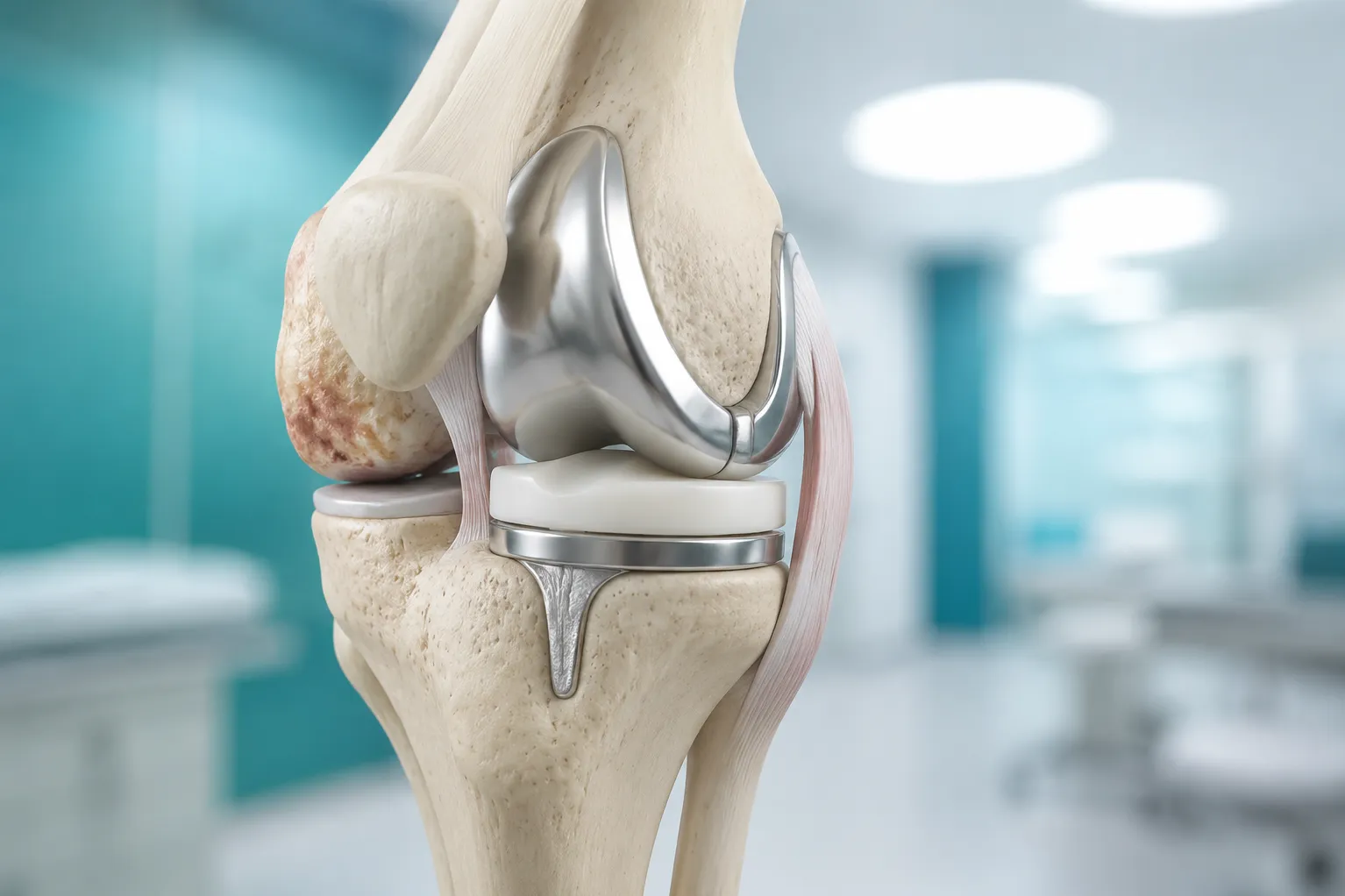
During total knee replacement, damaged joint surfaces are prepared and replaced with prosthetic components. The operation aims to create a stable, functional joint while addressing severely damaged surfaces.
Several decisions are made around the procedure, including implant selection, alignment, balancing of the knee and rehabilitation planning. These decisions depend on individual anatomy and clinical findings.
Preparing for Surgery Matters
Recovery starts before the operation.
Patients may undergo medical assessment to identify conditions that could affect surgical planning or recovery. Medication history, blood investigations and other evaluations may be required based on age and health status.
It is also useful to prepare the home environment for the early recovery period. Frequently used items can be kept within easy reach, unnecessary obstacles can be removed and family assistance can be planned when required.
What Should Patients Expect After TKR?
Recovery is progressive rather than immediate.
Early rehabilitation generally focuses on safe movement, gradually restoring knee mobility and rebuilding strength. Walking support may initially be required, with progression depending on the patient's recovery and clinical advice.
The exact timeline varies. Age, muscle strength, general health, preoperative mobility and adherence to rehabilitation can all influence progress.
Patients should therefore be cautious about comparing their recovery directly with someone else's.
At The Bone and Joints - Advance Ortho Care, Dr. Darshan Shingane in Thane, assessment for knee arthritis can help determine whether conservative management remains appropriate or whether replacement should be discussed.
Questions Worth Asking Before TKR
Patients considering surgery can ask:
- How advanced is my arthritis?
- Which non-operative treatments remain appropriate?
- Why is total replacement recommended in my case?
- What are the relevant surgical risks?
- How will pain be managed?
- When does rehabilitation begin?
- What activities may be possible after recovery?
- How frequently will follow-up be required?
For patients across Thane and the wider Maharashtra region, making the decision after a structured assessment can provide much more clarity than waiting until knee pain becomes completely disabling.
Total Knee Replacement (TKR) is an established treatment for appropriately selected patients with advanced knee disease, but timing and patient selection remain central to a well-planned treatment pathway.
Keywords