Children are not simply smaller versions of adults when it comes to bones and joints. Their skeletons are still growing, growth plates remain active and normal alignment changes considerably during childhood. Paediatric Orthopedic Treatment therefore requires decisions that account for both the current problem and future growth.
For parents, one of the hardest questions is deciding whether an unusual walking pattern or limb appearance is part of normal development or needs assessment.
Which Signs May Lead Parents to Seek an Evaluation?
Children can be assessed for many musculoskeletal concerns, including problems noticed at birth, during growth or after an injury.
Parents may seek orthopaedic advice for:
- Persistent limping
- Recurrent complaints of limb or joint pain
- Walking difficulties
- Unequal limb appearance
- Persistent deformity concerns
- Restricted movement
- Sports-related injuries
- Fractures
- Concerns involving the spine
- Changes in walking that are worsening rather than improving
Not every observation represents disease. Many developmental variations change naturally as children grow.
Why Growth Plates Change Treatment Decisions
Growth plates are areas near the ends of developing bones where growth occurs.
Because they are still active in children and adolescents, injuries involving these areas require appropriate assessment. Certain fractures and developmental conditions can potentially affect future growth depending on their type and severity.
This is one reason adult orthopaedic treatment principles cannot always be applied directly to children.
Does Every Childhood Alignment Difference Need Correction?
No.
Parents frequently notice bow legs, knock knees, flat feet or variations in walking as children develop. Some patterns can fall within normal age-related development, while others deserve closer evaluation.
The child's age, symmetry, progression, pain and functional ability all provide useful information.
Instead of deciding from appearance alone, assessment can determine whether observation, follow-up, physiotherapy, another conservative measure or a specific intervention is appropriate.
Childhood Fractures Need Appropriate Follow-Up
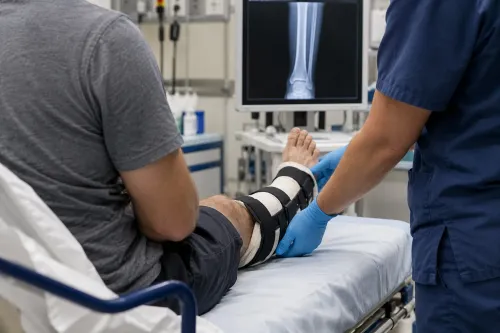
Children generally have considerable healing and remodelling potential, but this does not mean every fracture can be ignored once pain settles.
The location and pattern of the fracture matter, especially when the injury is close to a growth plate or involves a joint.
Treatment can range from immobilisation to surgery depending on the injury.
What Parents Should Bring to an Orthopaedic Consultation
For a productive evaluation, it can help to provide information about:
- When the problem was first noticed
- Whether it is changing over time
- Whether pain is present
- Any previous injury
- Limitations during play or sport
- Previous medical assessments
- Available X-rays or other investigations
A short video showing an intermittent walking problem may also provide useful context when the symptom is not visible during the appointment.
Choosing Care Based on the Child, Not Just the X-Ray
Paediatric Orthopedic Treatment should consider development, skeletal maturity, symptoms and function alongside imaging findings.
At The Bone and Joints - Advance Ortho Care, Dr. Darshan Shingane, families in Thane can seek evaluation for paediatric bone, joint and musculoskeletal concerns, with treatment decisions based on the nature of the condition and the child's stage of growth.
This is particularly important when deciding whether a problem can simply be observed or requires active management.
Parents across Thane and nearby areas of Maharashtra should also understand that children involved in organised sport may experience both acute injuries and overuse problems. Persistent pain or altered movement during sport deserves appropriate evaluation rather than repeated attempts to “play through” the problem.
The goal of Paediatric Orthopedic Treatment is not to intervene in every developmental variation. It is to distinguish normal growth from conditions requiring attention and, where treatment is necessary, choose an approach that considers the child's present function as well as continued skeletal development.
Keywords