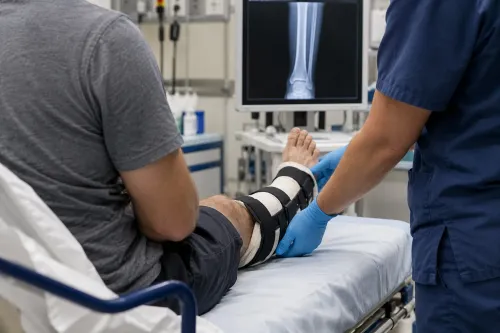
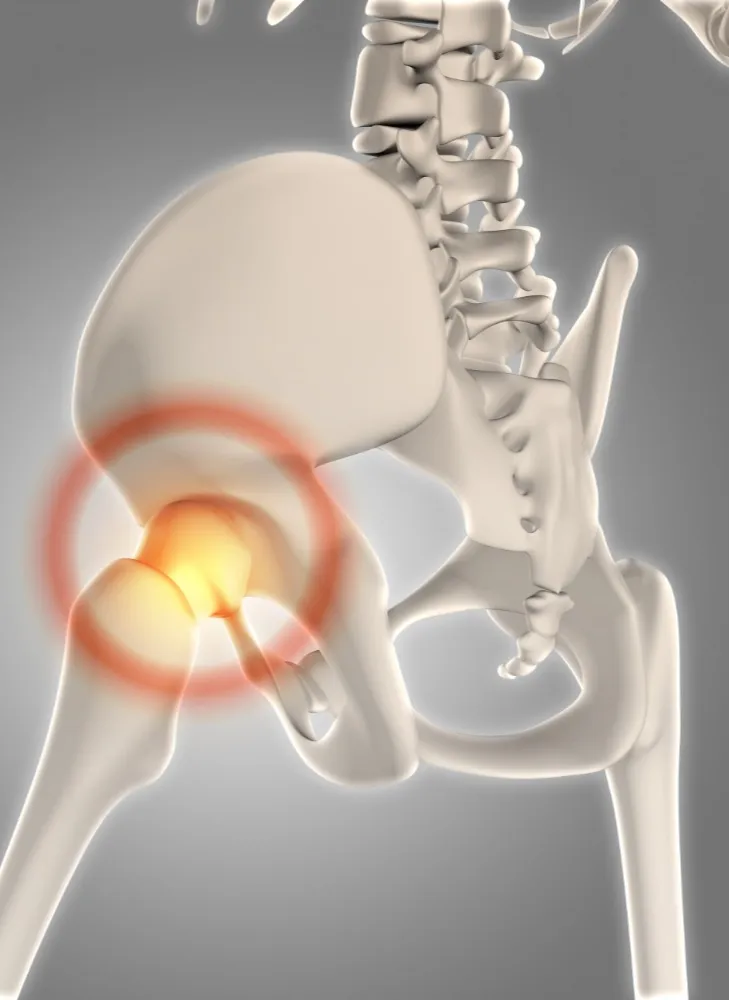
Hip pain is sometimes mistaken for a simple muscle problem because it may initially appear only after long walks or strenuous activity. As hip arthritis progresses, however, discomfort can begin affecting basic movements such as getting out of a chair, putting on footwear or walking short distances. In selected cases, Total Hip Replacement (THR) may eventually become part of the treatment discussion.
Recognising how hip disease affects function is an important first step.
Where Is Hip Arthritis Pain Usually Felt?
Pain caused by the hip joint is not always felt directly over the side of the hip. Some patients experience discomfort in the groin, upper thigh or buttock, and pain may occasionally be perceived around the knee.
Other symptoms can include stiffness, restricted rotation, limping and difficulty performing activities that require bending at the hip.
Because several conditions can cause pain in these areas, examination is important before assuming that arthritis is responsible.
When Does Hip Replacement Enter the Conversation?
Hip replacement is generally considered after evaluating both structural joint damage and its effect on the patient's quality of life.
For example, an individual may have advanced degenerative changes on an X-ray but still retain reasonable function. Another person may have persistent pain and substantial limitations that require a different management approach.
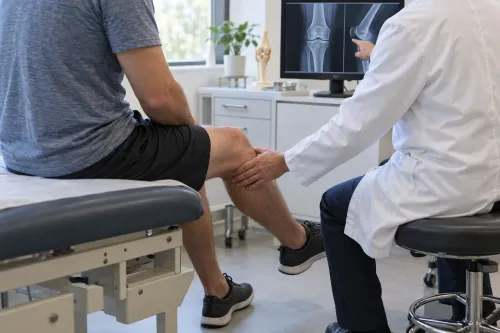
Before recommending surgery, the orthopaedic evaluation may consider:
- Severity and location of pain
- Hip range of motion
- Walking ability
- Imaging findings
- Response to conservative treatment
- Overall health
- Daily activity requirements
What Is Replaced During THR?
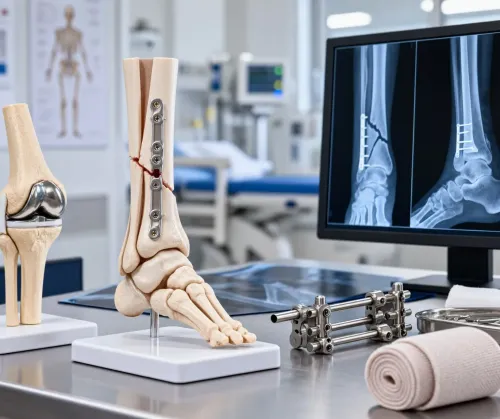
In Total Hip Replacement (THR), damaged portions of the hip joint are replaced with prosthetic components.
The hip is a ball-and-socket joint. Surgical planning therefore involves considerations such as component positioning, stability, anatomy and implant selection.
The specific surgical approach and implant choice can vary. Patients benefit from understanding why a particular option is being recommended rather than assuming that one technique or implant is suitable for everyone.
What About Recovery?
Recovery is influenced by far more than the operation itself.
Preoperative mobility, muscle condition, age, associated medical conditions and rehabilitation participation can all affect progress. Patients are usually encouraged to follow an individualised rehabilitation programme and instructions for safe activity.
Early recovery may involve walking assistance. Over time, exercises generally focus on strength, mobility and returning safely to appropriate everyday activities.
Hip Pain Should Be Properly Diagnosed First
Not every painful hip requires replacement.
Tendon problems, referred pain from the spine, fractures, inflammatory disorders and other conditions may produce symptoms around the hip. This is why diagnosis comes before discussions about surgery.
For people seeking orthopaedic assessment in Thane, The Bone and Joints - Advance Ortho Care, Dr. Darshan Shingane provides a setting where symptoms, examination findings and investigations can be reviewed before a treatment pathway is selected.
Useful Questions Before Making a Decision
If hip replacement has been recommended, patients may find it helpful to ask what the imaging shows, which treatments have already been attempted, what type of implant is proposed and how rehabilitation will be structured.
It is equally important to understand possible complications and the individual factors that may influence recovery.
Patients from Thane and neighbouring areas of Maharashtra may also want to consider the practical side of treatment, including access to follow-up appointments and physiotherapy.
Total Hip Replacement (THR) can be an appropriate option for selected patients with advanced hip disease, but the decision should be based on symptoms, functional limitation, clinical findings and a clear understanding of available alternatives.
Keywords