
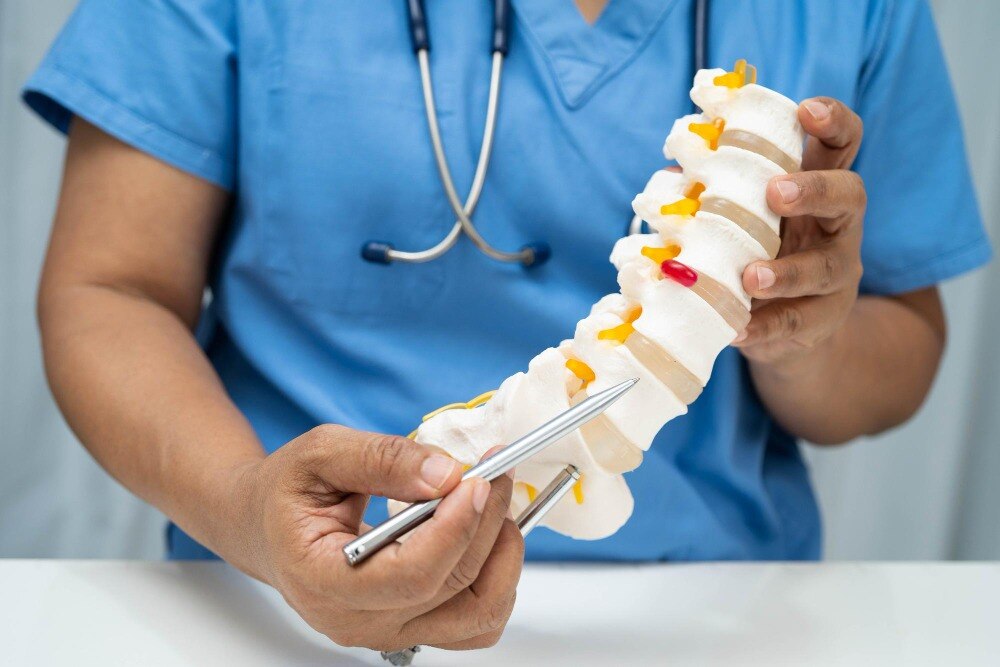
A spine operation involves more than the time spent under anaesthesia: consultation, imaging review, preparation, hospital admission, operating-room safety checks, recovery monitoring, and follow-up all affect the experience. By the end, you will know what happens at each stage, what questions to ask, and which symptoms require urgent medical attention.
Key takeaways
- Surgery follows symptom review, examination, scans and discussion of non-surgical options.
- Bring scan reports, medication details and medical history to the preoperative consultation.
- Ask when to stop food, water and medicines before admission.
- Arrange transport, home support and follow-up before your operation date.
Before admission: consultation, scans, and the decision to operate
A spine surgery consultation in Thane starts with your symptoms, not an automatic recommendation to operate. The spine surgeon in Thane will ask when pain began, what worsens it, whether you have numbness or weakness, and whether medicines, physiotherapy, or injections helped.
The examination checks walking, leg or arm strength, sensation, reflexes, and signs of nerve or spinal-cord compression.
- The surgeon reviews your actual MRI or CT images, not only the report. MRI shows discs, nerves, and spinal narrowing; X-rays show alignment and instability; CT gives clearer detail of bone. A disc bulge or narrowing on a scan does not prove it causes your symptoms.
- The decision to operate depends on a matching diagnosis, disabling pain that persists despite appropriate non-surgical treatment, progressive weakness, spinal-cord pressure, or an urgent problem such as cauda equina compression. The surgeon explains decompression, fusion, or non-operative care, including what postponing surgery could mean.
- Before consent, ask about the exact procedure, its goal, implant use, major risks, expected hospital stay, activity restrictions, alternatives, and the chance of persistent or recurring symptoms. Ask who provides anaesthesia, where the operation will occur, and who handles emergencies after discharge.
A clinic usually arranges assessment and pre-operative tests; major spine surgery takes place in a hospital theatre, not a consultation room. The anaesthesia team may request blood tests, an ECG, or chest assessment before admission.
Spinal surgery preparation and day-of-surgery admission
Arrange transport, an adult to stay with you after discharge, and time away from work before admission. Confirm which hospital will perform the operation, expected stay, restrictions, implant use, alternatives, major risks, and what happens if surgery is postponed. Ask who provides anaesthesia and whom to contact after discharge.
For spinal surgery preparation in Thane, give the team a complete list of medicines and supplements. Include blood thinners, diabetes medicines, steroids, painkillers, vitamins, allergies, smoking, other illnesses, and any previous anaesthetic problem. Do not stop a prescribed medicine unless the surgeon or anaesthesia team tells you to.
- Bring your identity documents, reports, MRI or CT images, medication list, prescriptions, and consent paperwork. Follow the hospital’s fasting and bathing instructions exactly.
- At admission, staff confirm your name, date of birth, allergies, medical history, fasting status, and the planned operation. They check vital signs and may insert an intravenous line.
- The anaesthesia team reviews your airway, medicines, previous anaesthesia, and medical risks. They order blood tests, an ECG, or chest assessment when your age or health makes those checks necessary.
- Before transfer to theatre, the team marks and confirms the operative level and repeats the safety questions. This formal pause prevents the wrong patient, procedure, or spinal level from reaching incision.
A clinic may coordinate this spinal surgery process in Thane with a hospital; major spine surgery takes place in a hospital operating theatre, not a routine consultation room.
Inside the operating room: anaesthesia, positioning, and the procedure
The operation takes place in a hospital theatre, not a standard consultation room. The spinal surgery process in Thane usually begins with a final confirmation of your identity, consent, planned procedure, and operative level. The team also asks about allergies and repeats the safety check even after your clinic visit.
1. The anaesthesia team reviews your medical history, starts an intravenous line, and gives general anaesthesia. You are unconscious while the team monitors your breathing, blood pressure, heart rate, oxygen level, and other vital signs.
2. Staff position you on the operating table, usually face down for lumbar surgery, with cushions protecting your chest, eyes, arms, and pressure points. The surgeon confirms the correct spinal level using the scans and operating-room safety pause before cleaning and draping your back.
3. The surgeon makes the planned incision and reaches the spine through the muscles. During decompression, small amounts of bone, ligament, or disc material are removed or reshaped to free a compressed nerve.
Fusion is different: bone graft, screws, and rods stabilise and join two or more vertebrae when instability or another specific problem requires it.
4. The surgeon checks bleeding, closes the deeper tissues and skin with sutures, staples, or adhesive, and applies a dressing. You then move to the recovery area, where staff monitor pain, leg strength, sensation, urination, and safe movement.
What happens during spinal surgery at a orthopaedic clinic in Thane therefore includes hospital-based theatre and recovery care, even when the clinic arranged the operation.
Waking up, discharge, and the first stage of recovery
In the recovery area, staff monitor your blood pressure, breathing, alertness, pain, leg strength, sensation, wound, and ability to urinate. They also check whether you can stand and walk safely before discharge.
The spinal surgery process in Thane may include recovery at the hospital where the operation takes place, followed by follow-up at the orthopaedic clinic.
| Procedure | Possible discharge pattern | What affects the timing |
|---|---|---|
| Small decompression | Same day or after one night | Stable observations, controlled pain, safe walking and urination |
| Spinal fusion | After one or more nights | Pain control, mobility, wound condition, and the extent of fusion |
| Complex surgery or serious neurological disease | Longer monitored stay | Neurological checks, medical conditions, and assistance needed at home |
There is no safe universal discharge time. You can leave when the surgeon and anaesthesia team consider your observations stable, your pain manageable with prescribed medicine, and your home support adequate.
Early walking is usually encouraged after lumbar surgery, but lifting, repeated bending or twisting, driving, and work remain restricted according to the operation and your recovery.
Contact the surgical team promptly instead of waiting for a routine appointment if you develop:
- Increasing wound redness, swelling, opening, or drainage
- Fever or worsening pain
- New leg weakness or increasing numbness
- New loss of bladder or bowel control
- Calf swelling, chest pain, or difficulty breathing
Follow the wound-care, medicine, walking, and review instructions provided at discharge.
Choosing care in Thane and planning life after surgery
A spine surgeon in Thane should explain why your symptoms, examination, and MRI or CT findings point to surgery rather than relying on the scan alone.
During a spine surgery consultation in Thane, ask who will operate, which hospital and anaesthesia team will be involved, whether implants are planned, how long you may stay, and what happens if you postpone or choose non-surgical treatment.
| What to compare | Ask for | Why it matters |
|---|---|---|
| Surgeon | Procedure-specific experience, alternatives, complication plan, second-opinion openness | A disc decompression and a fusion require different decisions and recovery |
| Hospital | Operating theatre, inpatient beds, recovery-room monitoring, emergency cover | A standard clinic room is not equipped for major spine surgery |
| Cost | Surgeon, hospital, anaesthesia, implants, tests, medicines, follow-up, rehabilitation | A quoted operation fee may not include the full episode of care |
| Recovery plan | Walking target, restrictions, physiotherapy, review dates, contact after discharge | Vague instructions can delay safe recovery |
Arrange transport and an adult helper for the first few days. Budget for time away from work, medicines, wound care, physiotherapy, and extra help with bathing, cooking, shopping, or childcare; driving, lifting, bending, and twisting restrictions depend on the operation.
The Bone & Joints - Advance Ortho Care 08048067357 can be one place to clarify whether the clinic examination and follow-up will be coordinated with a partner hospital, rather than assuming the consultation room is where surgery occurs.
Seek prompt medical advice for fever, increasing wound redness or drainage, new weakness, worsening numbness, or bladder or bowel changes.
Related service
Spinal Surgery Dr. Vivek V. Shingane is a skilled Orthopaedic and Joint Replacement Surgeon offering advanced spinal surgery care at The Bone & Joints. View service → |
Frequently asked questions
What happens during a spine surgery consultation in Thane?
The surgeon reviews when symptoms began, what worsens them, numbness or weakness, previous treatments, examination findings and scan results before discussing whether surgery is appropriate.
What does spinal surgery preparation in Thane involve?
Preparation includes reviewing medical history and medicines, completing requested tests, following fasting instructions, arranging admission documents and planning transport and support at home.
What happens on the day of spinal surgery?
After admission, the clinical team confirms your identity, procedure and medical details. An anaesthetist discusses anaesthesia, then the team positions and prepares you in the operating room.
What happens after spinal surgery before discharge?
You wake in a monitored recovery area, receive pain-control and mobility guidance, and leave when the treating team confirms that discharge is safe and explains follow-up care.
Keywords