A serious fall, road crash, sports collision, or workplace injury needs more than pain relief and an X-ray. You will learn how coordinated trauma care protects blood flow and nerve function, identifies injuries that need urgent treatment, and guides you from first assessment through rehabilitation.
Key takeaways
- Treat heavy bleeding, deformity, numbness, and cold skin as emergencies.
- Keep a suspected fracture still and avoid straightening the limb yourself.
- Injury type determines whether you need splinting, reduction, surgery, or rehabilitation.
- Ask about nerve checks, blood flow, weight-bearing limits, and follow-up timing.
What Orthopedic Trauma Care Covers—and When It Becomes Urgent
A routine orthopaedic consultation evaluates a planned problem such as arthritis or persistent pain. General fracture treatment may stop at an X-ray, cast, and discharge. Orthopedic trauma care connects urgent stabilisation with fracture alignment, joint stability, nerve and blood-vessel protection, surgery when needed, and rehabilitation.
The difference matters after a high-energy crash. A trauma clinician assesses the whole patient for blood loss, head, chest, abdominal, or multiple injuries, not only the broken bone. Emergency medicine controls immediate threats; specialist trauma care also decides whether the injury needs reduction, fixation, transfer, or monitored nonoperative treatment.
Stable, well-aligned fractures may need immobilisation and follow-up, while displaced, unstable, joint-involving, or open fractures need faster specialist planning.
Treat these signs as reasons for emergency evaluation, not routine clinic booking:
- Uncontrolled bleeding, exposed bone, or an open wound over a fracture
- An obvious deformity or inability to bear weight after significant injury
- A cold, pale, blue, numb, or increasingly painful hand or foot
- Loss of movement, or suspected spine, head, chest, abdominal, or multiple injuries
People comparing the benefits of orthopedic trauma care in Thane should verify access to emergency imaging, repeated pulse and nerve checks, pain control, fracture reduction, fixation, anesthesia, infection prevention, rehabilitation, and escalation for vascular injury or polytrauma. Location alone does not establish those capabilities.
What to Do Before You Reach Emergency Care
Call emergency services after a serious accident, especially for uncontrolled bleeding, exposed bone, obvious deformity, numbness, loss of movement, a cold or pale hand or foot, or suspected head, spine, chest, abdominal, or multiple injuries. Do not drive yourself if you feel faint or the injury is severe.
- Keep the person still and check breathing. Do not move them if a spine injury is possible unless the area is unsafe.
- Press a clean dressing over bleeding. Do not push exposed bone back under the skin.
- Support the injured limb in its existing position with a splint or padding. Never straighten a deformity.
- Remove rings, watches, and tight clothing before swelling increases.
- Avoid food and drink when surgery or anaesthesia could be needed. Give only medicines or fluids advised by emergency clinicians.
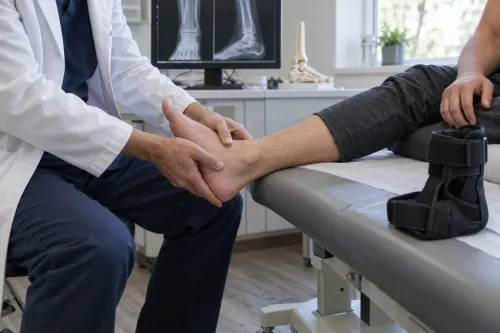
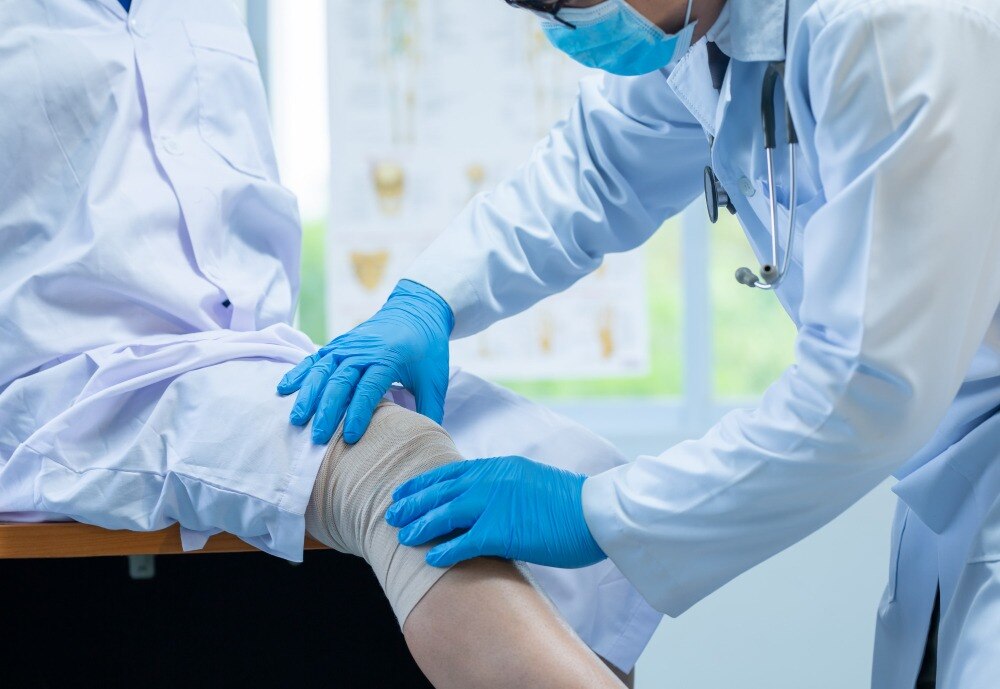
A trauma specialist in Thane assesses more than the X-ray. The clinician checks airway and circulation when necessary, controls bleeding, examines pulses, skin colour, sensation, and movement below the injury, and treats pain. They also look for blood loss, head injury, chest or abdominal trauma, and medication such as blood thinners.
The team then orders appropriate imaging, stabilises the injury, and decides whether it needs reduction, immediate surgery, or transfer to a higher-level trauma service. Serial neurovascular checks matter because a limb can lose blood supply or nerve function after the first examination.
How Injury Type Changes the Treatment Plan
The injury pattern determines how quickly you need care, which images will answer the clinical question, and whether immobilisation, reduction, or surgery is safest.
| Pattern | Urgency and examination | Imaging | Treatment direction |
|---|---|---|---|
| Open fracture | Emergency assessment; inspect wound, blood supply, nerves, and contamination | X-rays; CT for complex fragments | Antibiotics, wound protection, urgent surgical cleaning, and stabilisation |
| Closed fracture | Urgent assessment if deformity, severe pain, swelling, or circulation changes exist | X-rays usually come first | Splinting or casting if aligned; reduction or fixation if unstable |
| Stable, well-aligned injury | Protect the limb and arrange follow-up | X-rays confirm position; repeat films detect movement | Immobilisation, pain control, and monitored healing |
| Displaced, unstable, or joint-surface injury | Prompt reduction protects alignment, movement, and soft tissues | CT defines joint involvement and fracture fragments when X-rays are insufficient | Reduction, fixation, or specialist-led nonoperative care |
| Isolated injury | Focused limb, nerve, and circulation examination | Targeted imaging | Treatment can proceed around the injured area |
| Multiple or high-energy injuries | Treat bleeding, breathing, head, chest, abdominal, and spinal threats before definitive fracture care | Whole-patient assessment directs selective X-ray or CT imaging | Temporary stabilisation, surgery, or transfer in a coordinated trauma pathway |
Severe escalating pain, pain when muscles are passively stretched, tense swelling, or new numbness or weakness can signal compartment syndrome. Do not dismiss it because a pulse remains present.
MRI helps find occult fractures and ligament, tendon, cartilage, or spinal-cord-related injury. Good orthopedic injury treatment in Thane uses imaging to answer a specific question, not to order more scans by default.
The Practical Benefits—and Limits—of Specialist Trauma Care
The gain is coordinated decision-making before a small problem becomes a permanent one. A trauma specialist checks circulation, nerve function, pain, alignment, and the rest of your injuries, then sets one treatment plan instead of leaving you to repeat scans and opinions while swelling or displacement worsens.
The practical benefits of orthopedic trauma care in Thane include:
- Earlier stabilisation that protects blood supply, nerves, and soft tissue.
- Accurate alignment and joint stability, reducing the chance of stiffness, weakness, or malunion.
- A clear decision about immediate surgery, safe immobilisation, or transfer to a higher-level trauma service.
- Planned follow-up, so changing swelling, loss of movement, or poor healing is detected rather than ignored.
Nonoperative care is safer when a fracture is closed, stable, and well aligned, and follow-up can confirm that position remains acceptable. A cast, splint, or brace avoids a surgical wound, anaesthesia, and implant complications, but prolonged immobilisation can cause stiffness and an unstable injury can heal crooked.
Fixation is more useful when the break is displaced, unstable, involves a joint surface, or has exposed bone. Before choosing orthopedic injury treatment in Thane, ask whether the service can provide the complete route from emergency imaging to rehabilitation and transfer when needed.
The Bone & Joints - Advance Ortho Care 08048067357 is one clinic where you can ask that question directly and clarify which injuries require hospital-level escalation.
Related services
Orthopedic Trauma Treatment Dr. Vivek V. Shingane is a skilled Orthopaedic and Joint Replacement Surgeon specializing in orthopedic trauma care, fracture management, and... View service → |
Fracture Repair Treatment Dr. Vivek V. Shingane is an experienced Orthopaedic and Joint Replacement Surgeon providing expert fracture repair treatment at The Bone & Joints. View service → |
From Stabilisation to Safe Movement and Follow-Up
Safe movement begins with restoring alignment and joint stability, not simply closing a wound or applying a cast. Rehabilitation then controls swelling, restores range of motion, rebuilds strength, and progresses weight-bearing at the right pace. Loading too early can damage fixation; immobilising too long causes stiffness, weakness, and slower recovery.
Repeat examinations catch problems that are easy to miss on the first visit: shifting alignment, worsening swelling, nerve or blood-vessel changes, infection, and loss of movement. A trauma specialist in Thane can adjust a brace, cast, exercise plan, or weight-bearing limit as healing develops instead of leaving you to follow an outdated instruction.
Follow-up is especially important for these groups:
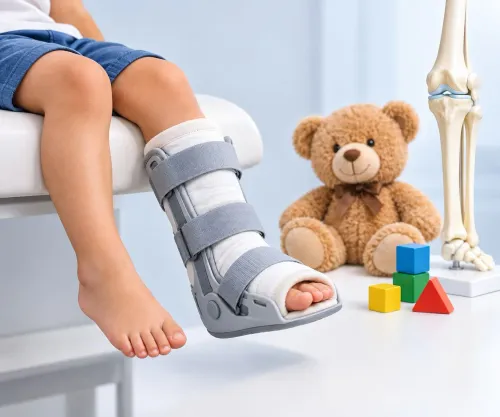
- Children: A fracture through a growth plate can disturb future bone growth even when the initial deformity looks small. Repeat imaging checks that alignment remains safe and looks for growth disturbance.
- Older adults: After a hip fracture, coordinated treatment and early mobilisation reduce complications linked to pain and bed rest, including delirium, pressure injuries, chest infection, and blood clots. Surgery is recommended on the day of, or day after, admission when the patient is medically fit.
- Sports injuries: Return should wait for controlled pain and swelling, near-normal motion, strength and balance close to the uninjured side, and successful sport-specific movements. A fixed promise such as “back in two weeks” ignores reinjury risk.
Frequently asked questions
When does an orthopaedic injury become urgent?
Seek emergency care for heavy bleeding, an open fracture, severe deformity, numbness, loss of movement, or a cold, pale, or blue limb.
What should you do before reaching emergency care?
Keep the injured area still, cover an open wound with a clean dressing, control bleeding with gentle pressure, and do not straighten the limb.
How does the injury type affect treatment?
Treatment depends on the fracture pattern, joint involvement, soft-tissue damage, and nerve or blood-vessel findings. Options include splinting, reduction, surgery, and rehabilitation.
What does specialist trauma care include after stabilisation?
Follow-up care checks healing, pain, movement, weight-bearing, nerve function, and blood flow before progressing exercises and daily activity.
Related service
Soft Tissue Repair Treatment Dr. Vivek V. Shingane is a skilled Orthopaedic and Joint Replacement Surgeon providing advanced soft tissue repair treatment at The Bone & Joints. View service → |
Keywords