A twisted knee, painful shoulder, sudden calf pop, or soreness after training does not all point to the same injury or require the same care. You will learn how to recognise warning signs, protect the injury during the first 48 hours, choose the right clinician, understand common tests and treatments, and judge when you are ready to return to sport.
Key takeaways
- Soreness affects worked muscles; sharp pain, swelling, bruising, or weakness suggests injury.
- Seek emergency care for deformity, numbness, severe bleeding, or inability to bear weight.
- Protect the injury, use wrapped ice, and avoid massage during the first 24 to 48 hours.
- Choose X-ray, ultrasound, or MRI based on the suspected tissue and injury pattern.
Is It Soreness, a Strain, Sprain, Tear, or Stress Fracture?
Ordinary post-workout soreness starts several hours after unfamiliar or intense exercise, affects the worked muscles on both sides, and eases within 24 to 72 hours as you move. It should not cause a single sharply tender spot, visible swelling, bruising, joint instability, or loss of function.
- Muscle strain: A sudden pull or pain during a sprint, lift, or change of direction points to overstretched muscle or tendon fibres. Pain increases when you contract or stretch that muscle.
- Tendon injury: Pain sits near a tendon, such as the Achilles or rotator cuff, and worsens with repeated loading. A pop, bruising, or sudden weakness suggests a larger tear.
- Ligament sprain or tear: Pain follows a twist or collision around a joint. Swelling, giving way, or difficulty changing direction suggests ligament damage rather than soreness.
- Stress fracture: Deep, pinpoint bone pain builds over days or weeks, worsens with impact, and may progress to pain while walking or at rest. Do not run through it.
- Dislocation: A joint looks out of place after trauma, with severe pain and inability to use the limb. Treat this as urgent.
Seek same-day emergency assessment for deformity, an open wound over a suspected fracture, inability to bear weight, rapidly increasing swelling, numbness, weakness, or a cold or pale limb. A sports medicine clinic in Thane can assess both acute injuries and overuse problems, but confirm the clinician’s training before booking.
When an Athletic Injury Needs Emergency Care
Go to an emergency department now if an athletic injury causes a visibly deformed limb, an open wound over a suspected fracture, a cold or pale foot or hand, new numbness, or loss of movement. These signs can indicate a fracture, dislocation, nerve injury, or blocked blood flow.
Even while arranging sports injury treatment in Thane, use these thresholds:
- Do not bear weight or keep playing when severe pain, rapidly increasing swelling, or major weakness prevents normal use.
- Seek prompt assessment after a collision if pain seems extreme for the injury, swelling expands quickly, or the limb feels tight.
- Leave the field after a blow to the head if you develop headache, dizziness, poor balance, nausea, light sensitivity, slowed thinking, memory trouble, unusual fatigue, or irritability. Loss of consciousness is not required for suspected concussion.
- Treat a sudden Achilles “pop,” marked push-off weakness, or inability to stand on tiptoe as a possible rupture, not ordinary tendon soreness.
| Level | Warning signs | Action |
|---|---|---|
| Emergency department now | Deformity, open fracture, cold or numb extremity, uncontrolled severe pain | Immobilise it and seek emergency care |
| Same-day assessment | Suspected concussion, inability to bear weight, rapidly increasing swelling, Achilles pop | Stop sport and arrange urgent evaluation |
| Routine appointment | Mild symptoms with usable movement and no red flags | Book assessment and avoid aggravating activity |
What to Do During the First 24 to 48 Hours
Stop the activity immediately; playing through pain can turn a small injury into a larger tear. Protect the area, cool it, use gentle compression, elevate it, and reintroduce only easy movement during the first 24 to 48 hours.
1. Stop running, jumping, lifting, or contact sport. If you hit your head, leave play the same day and do not return until a healthcare professional clears you.
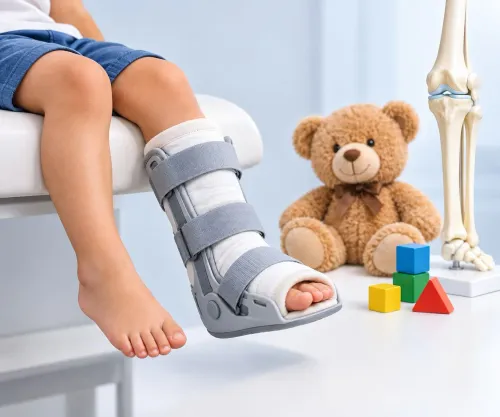
2. Protect the injury with a brace, sling, supportive shoe, or crutches if needed. Do not force weight through a painful leg or repeatedly “test” the joint.
3. Apply an ice pack wrapped in a thin cloth for 15 to 20 minutes, then remove it for at least 40 minutes. Repeat while awake for pain relief; never place ice directly on skin or sleep with it on.
4. Wrap an elastic bandage from below the injury upward with firm, even pressure. Loosen it immediately if you feel numbness, tingling, increasing pain, or cold, pale fingers or toes.
5. Raise an injured limb above heart level when resting, using pillows to support the whole limb. Avoid heat, alcohol, vigorous massage, and hard stretching during this period because they can increase swelling.
6. After the first day, gently bend and straighten the joint within a comfortable range several times daily. Stop if pain or swelling increases, and arrange assessment with a Sports injury doctor in Thane.
Seek urgent care for deformity, an open wound, inability to bear weight, rapidly increasing swelling, severe pain, numbness, weakness, or a cold limb.
Which Clinician and Which Scan Should You Choose?
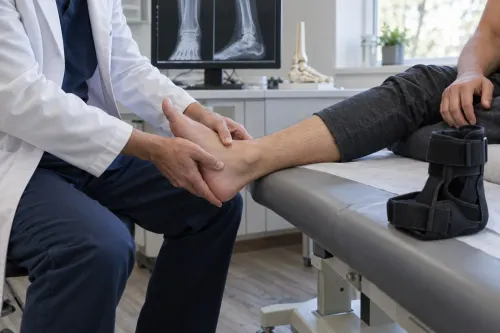
Start with an examination, not a scan. Choose a sports injury doctor in Thane for a new injury, recurring pain, or an overuse problem that affects training; search for a sports medicine specialist near me, then check the clinician’s actual training rather than relying on the word “sports.”
| Option | Choose it when | What it adds |
|---|---|---|
| Emergency department | The limb is deformed, open, cold, numb, rapidly swelling, or impossible to bear weight on | Immediate assessment, pain control, X-ray, CT, reduction, or fracture care |
| Sports medicine clinician | You have an acute or overuse injury involving muscle, tendon, ligament, bone, nerve, or exercise-related symptoms | A sport-specific examination, diagnosis, rehabilitation plan, and imaging decision |
| Orthopaedic consultation | You have suspected fracture, dislocation, persistent instability, major swelling, or symptoms that do not improve | Structural assessment and discussion of bracing, procedures, or surgery |
| Physiotherapist | A clinician has excluded urgent structural damage, or you need guided recovery | Restored movement, strength, balance, and sport-specific loading |
| Primary-care doctor | The pain is unclear, recurrent, medication-related, or accompanied by broader health concerns | Initial assessment, medical review, referral, and safe medicine advice |
| X-ray | Fracture or dislocation is suspected | Bone alignment; it can miss early stress injury or growth-plate injury |
| Ultrasound | A superficial tendon, muscle tear, fluid collection, or dynamic movement problem is suspected | Real-time soft-tissue assessment |
| MRI | ACL, meniscus, cartilage, deep muscle, tendon, or stress injury needs clarification | Detailed soft-tissue and bone-marrow imaging |
| CT | Complex fracture or detailed bone planning is needed | Cross-sectional bone detail, with more radiation than X-ray |
The Bone & Joints - Advance Ortho Care 08048067357 can be useful when one consultation must connect examination, orthopaedic assessment, and referral for the right scan. Do not repeat high-dose anti-inflammatory medicine without reviewing ulcers, kidney disease, dehydration, blood thinners, or heart conditions.
Related services
Sports Medicine Dr. Vivek V. Shingane is an experienced Orthopaedic and Joint Replacement Surgeon specializing in sports medicine at The Bone & Joints. View service → |
Soft Tissue Repair Treatment Dr. Vivek V. Shingane is a skilled Orthopaedic and Joint Replacement Surgeon providing advanced soft tissue repair treatment at The Bone & Joints. View service → |
How Treatment and Return to Sport Are Decided
The decision rests on the injury, stability, sport demands, medical risks, and your goals—not pain relief alone. A sports medicine clinic in Thane should examine movement and strength before recommending escalation.
| Option | What it means | When it applies |
|---|---|---|
| Activity modification | Reduce or replace the aggravating load | Stable injuries and overuse problems; pain must settle without losing function |
| Bracing | Supports or limits movement | Instability, selected sprains, or protection during early healing |
| Medicines | Short-term pain control, including prescribed NSAIDs | Use after reviewing ulcers, kidney disease, dehydration, anticoagulants, and heart conditions; prolonged NSAID use can cause bleeding, kidney injury, fluid retention, or cardiovascular complications |
| Physiotherapy | Progressive mobility, strength, balance, and sport drills | Most muscle, tendon, ligament, and post-operative rehabilitation; Achilles tendinopathy needs progressive loading, not passive treatment alone |
| Injection | Targeted symptom relief | Selected conditions after diagnosis; it does not repair a torn structure or replace rehabilitation |
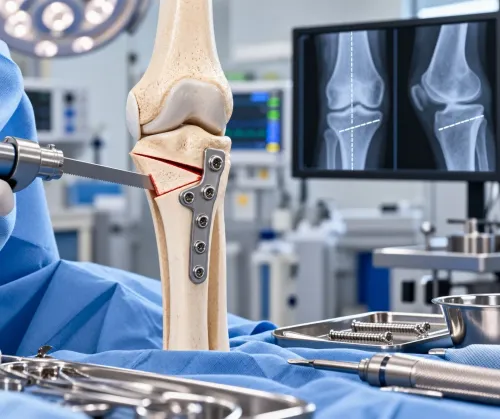
| Procedure or reconstruction | Repairs or rebuilds damaged tissue | Persistent symptoms, mechanical locking, repeated instability, or high-demand ACL injury with associated damage |
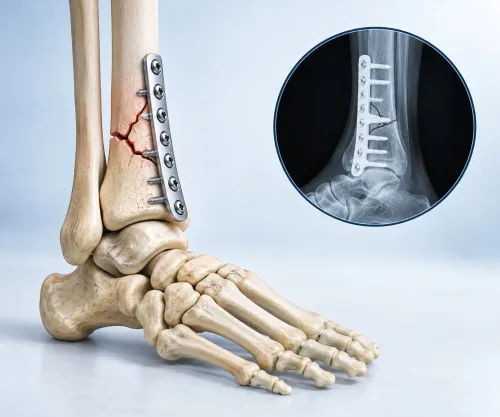
| Fracture fixation | Holds broken bone in alignment | Displaced, unstable, open, or poorly aligned fractures |
Return when you have near-full motion, side-to-side strength and balance, and can complete running, cutting, landing, or sport-specific drills without pain, swelling, weakness, or next-day worsening. Passing a hop or strength assessment is stronger evidence than feeling better. A sudden Achilles pop or inability to stand on tiptoe needs prompt review.
For sports injury treatment in thane, if you search sports medicine specialist near me, verify the clinician’s training.
Frequently asked questions
How can you tell soreness from a strain, sprain, tear, or stress fracture?
Post-workout soreness affects worked muscles on both sides and improves within 24 to 72 hours. A strain affects muscle or tendon; a sprain affects a ligament. A tear causes sudden pain, weakness, swelling, or bruising. A stress fracture causes focused bone tenderness that worsens with impact.
When does an athletic injury need emergency care?
Seek emergency care for a visible deformity, an open fracture, uncontrolled bleeding, a cold or blue limb, new numbness, severe swelling, or inability to move or bear weight after an injury.
What should you do during the first 24 to 48 hours?
Stop the activity, protect the area, apply ice wrapped in cloth for short sessions, use comfortable compression, and elevate the limb. Avoid heat, alcohol, vigorous massage, and training through sharp pain.
Which clinician and scan should you choose for a sports injury?
See a sports injury doctor in Thane or orthopaedic clinician for persistent pain, swelling, weakness, instability, or suspected fracture. X-rays assess bone, ultrasound assesses superficial tendons and muscles, and MRI assesses ligaments, cartilage, deep muscle, and bone stress injuries.
How is return to sport decided after an injury?
Return depends on pain-free movement, restored strength, joint stability, sport-specific drills, and the injury’s healing timeline. Increase training gradually rather than returning at full intensity after symptoms improve.
Related services
Orthopedic Trauma Treatment Dr. Vivek V. Shingane is a skilled Orthopaedic and Joint Replacement Surgeon specializing in orthopedic trauma care, fracture management, and... View service → |
Fracture Repair Treatment Dr. Vivek V. Shingane is an experienced Orthopaedic and Joint Replacement Surgeon providing expert fracture repair treatment at The Bone & Joints. View service → |
Foot and Ankle Surgery Dr. Vivek V. Shingane is a highly experienced Orthopaedic and Joint Replacement Surgeon specializing in foot and ankle surgery at The Bone & Joints. View service → |
Tendon and Ligament Reconstruction Tendon and Ligament Reconstruction Dr. Vivek V. Shingane is a highly experienced Orthopaedic and Joint Replacement Surgeon specializing in tendon and ligament reconstruction at The... View service → |
Keywords