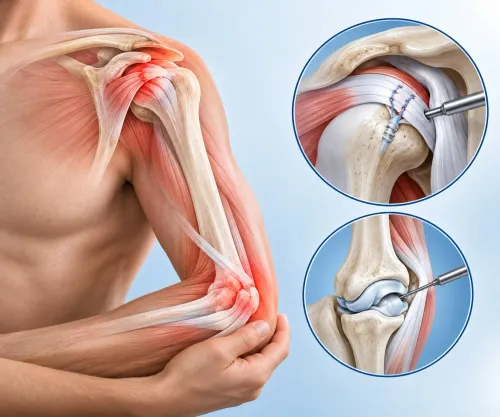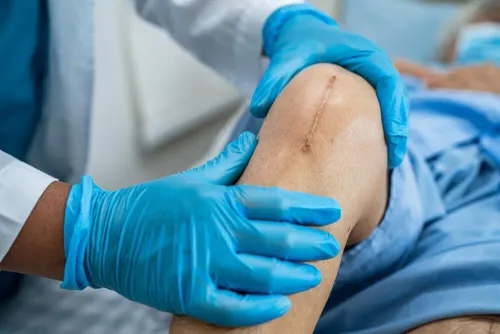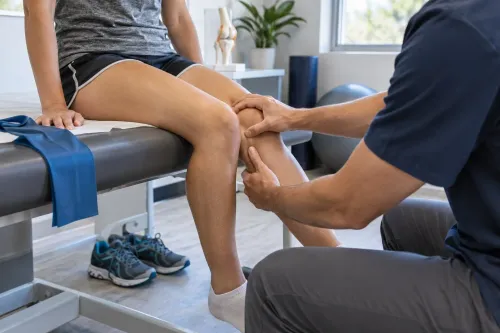
Pain lasting months or years does not automatically mean a torn tendon, ligament, or meniscus needs repair. By separating a repairable structural problem from arthritis, nerve pain, or chronic tendon overload, you can judge whether surgery offers a realistic functional gain over rehabilitation and other treatments.
Key takeaways
- Confirm the pain source with examination and imaging before choosing repair.
- Try targeted rehabilitation before committing to soft-tissue surgery.
- Arthritis-related pain often needs joint-focused treatment, not tear repair.
- Compare recovery demands, age-related healing, and the quality of your consultation.
Does the pain come from a repairable soft-tissue problem?
A repair is worth considering only when the symptoms, examination, and imaging identify a treatable soft-tissue problem. For soft tissue injury treatment in Thane, diagnosis must come before injections or surgery.
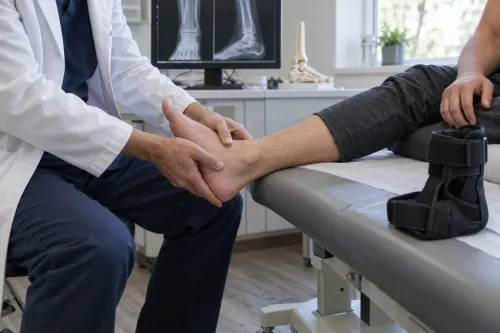
The history looks for a specific injury, catching, weakness, instability, night pain, stiffness, and the movement you can no longer perform. Examination compares range of motion, tenderness, resisted strength, joint stability, and nearby spine and nerve function.
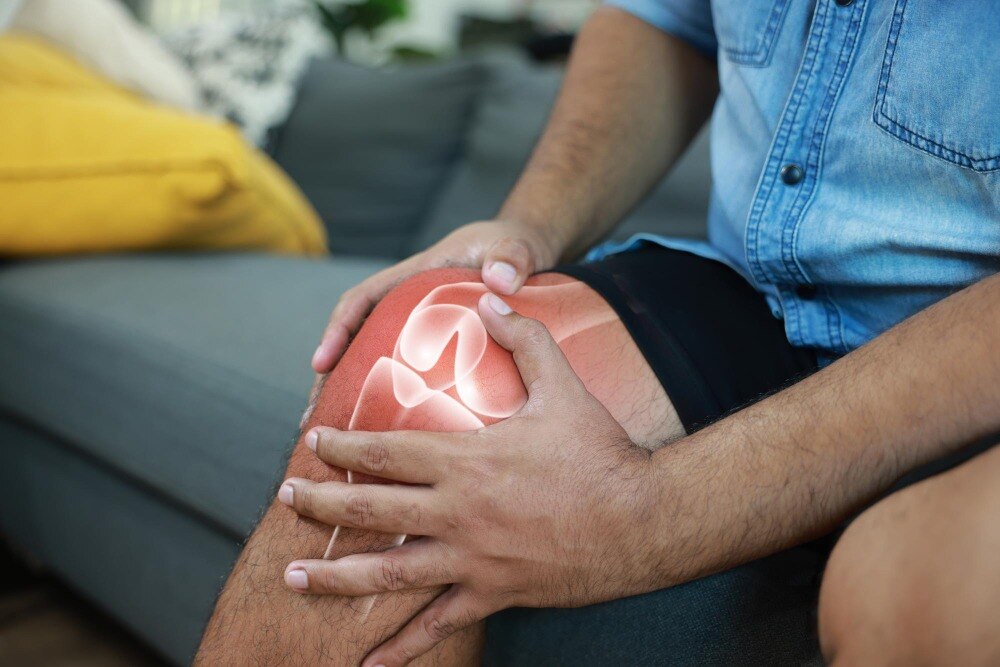
Marked cartilage loss or bone-on-bone osteoarthritis points to joint-surface pain; neck pain, radiating symptoms, reflex changes, or numbness suggests referred spinal or nerve disease instead.
Weight-bearing X-rays show joint-space narrowing, deformity, fractures, and arthritis under load. Ultrasound can show dynamic tendon tears and guide an injection. MRI defines tendons, ligaments, labrum, meniscus, cartilage, bone, and nerve-related changes, but an MRI tear does not prove it causes pain. The scan must match the history and examination.
A carefully targeted diagnostic injection can help identify whether a joint or nearby structure is generating symptoms, though it is not a perfect test.
Seek urgent assessment for:
- Fever with a hot, swollen joint
- New inability to bear weight
- Suspected dislocation or fracture
- Rapidly progressive weakness
- Loss of pulses or sensation below the injured area
- Sudden traumatic tendon rupture
When arthritis, nerve disease, or infection is the dominant problem, repairing an incidental tear may leave the pain unchanged.
Which chronic tears are most likely to improve with repair or reconstruction?
The chronic tears most likely to improve are confirmed structural injuries that cause measurable weakness, instability, or loss of function—not simply pain on an MRI. A full-thickness rotator-cuff tear with weakness, chronic tendon tear or rupture, ligament insufficiency causing instability, selected meniscal or labral tears, and scar-related dysfunction can justify intervention.
The case for repair strengthens when:
- The tear followed trauma or clearly reproduces your symptoms.
- Joint cartilage remains reasonably preserved.
- The tissue is healthy enough to hold sutures.
- Examination, ultrasound or MRI findings match the painful structure.
- You have a concrete goal, such as lifting your arm overhead or stopping the knee from giving way.
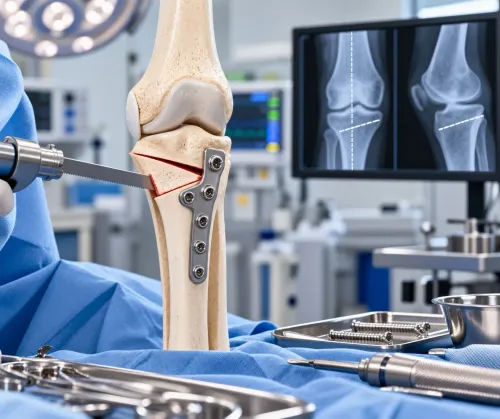
Direct repair sutures usable torn tissue back together. Reconstruction uses a graft when a tendon or ligament is retracted, extensively damaged, or too weak to hold stitches.
| Option | What it means | When it applies |
|---|---|---|
| Direct repair | Sutures the remaining tendon, ligament, meniscus, or labrum | Usable tissue reaches its attachment without excessive tension |
| Reconstruction | Replaces or reinforces the damaged structure with a graft | Retraction, extensive damage, or failed tissue quality prevents reliable repair |
Arthroscopy can inspect and treat selected meniscal, labral, ligament, and scar lesions through small portals. It is not a solution for every painful scan.
A consultation for soft tissue repair for chronic joint pain in Thane, including tendon injury repair for seniors in Thane, should link the scan to your examination, tissue quality, cartilage condition, and functional target.
What should you try before committing to soft-tissue surgery?
A structured non-operative trial usually comes before surgery. Match physiotherapy to the diagnosis: restore range of motion, then build strength progressively rather than repeating painful movements. Chronic tendinopathy is not a fresh laceration; disordered, load-intolerant tendon usually responds first to graded loading, while a repaired gap may need surgery.
- Reduce the aggravating load, then reintroduce it gradually.
- Change workstation setup, lifting technique, footwear, or sports volume.
- Address body weight when it increases joint load.
- Use a planned analgesic or anti-inflammatory strategy with a clinician, including dose, duration, and safety checks.
- Measure a target such as reaching overhead, climbing stairs, or walking without giving way.
Allow roughly 6 to 12 weeks for structured rehabilitation, not a few casual sessions. Chronic tendinopathy often needs longer strengthening.
| Option | Expected benefit | Limitations and risks | Recovery |
|---|---|---|---|
| Medication | Short-term pain control | Does not repair tissue; stomach, kidney, liver, or cardiovascular risks depend on the drug | Immediate relief; no rehabilitation |
| Corticosteroid injection | Short-term reduction in inflammation and pain | Repeated use can weaken tendon or damage cartilage; relief may fade | Days to weeks |
| PRP | Possible symptom improvement in selected tendinopathies | Evidence varies; cost and injection risks; no guaranteed repair | Gradual, weeks to months |
| Physiotherapy | Builds motion, strength, and function | Requires correct exercises and adherence | Usually 6–12 weeks or longer |
| Arthroscopy | Treats selected mechanical lesions | Not a cure for arthritis; infection, clots, and persistent pain | Weeks to months |
| Repair | Best chance for a repairable tear causing weakness or instability | Non-healing, retear, stiffness, and prolonged rehabilitation | Months |
Failure means persistent weakness or instability, inability to perform the target activity, worsening function, or no measurable improvement despite correct exercises and adherence—not pain alone.
When is soft-tissue repair the wrong answer for arthritis?
A painful arthritic joint is not usually fixed by repairing nearby tissue. In advanced osteoarthritis, severe cartilage loss, marked joint-space narrowing, or a fixed deformity, the joint surfaces—not a tendon or meniscus—drive pain, so repair can leave the main problem unchanged. Infection needs urgent treatment, while inflammatory arthritis such as rheumatoid arthritis needs medical control.
Nerve-related pain or imaging that does not match your symptoms also weakens the case for repair.
For anyone searching for soft tissue repair for arthritis in Thane, first identify the pain source:
- Osteoarthritis
- Rheumatoid arthritis
- Gout
- Joint infection
- Referred pain from the spine or nerves
A degenerative knee meniscal tear often coexists with osteoarthritis without causing the main symptoms. Arthroscopic lavage, debridement, and routine partial meniscectomy generally do not provide lasting clinically important benefit; the FIDELITY sham-surgery trial found no meaningful patient-reported advantage from trimming the meniscus and no lower risk of later osteoarthritis at five years.
Do not treat an MRI finding automatically. A truly unstable tear after trauma, with locking, giving-way, or a repairable pattern, is different.
When arthritis dominates, discuss exercise, medication, suitable injections, and joint-replacement assessment instead of assuming repair is the answer.
How do age, recovery demands, and consultation quality change the decision?
Set the endpoint before choosing treatment: lifting your arm overhead, walking without knee giving-way, returning to work, or sleeping with less pain. A consultation should confirm that the examination, strength and stability findings, and imaging identify the same pain source—not treat an MRI abnormality in isolation.
| Option | Likely benefit and cost | When it applies |
|---|---|---|
| Repair or reconstruction | Can improve pain and restore strength, but non-healing or retear remains possible; immobilisation and protected rehabilitation can last several weeks, with strengthening over months. | Acute, repairable tear with disabling weakness, useful tissue, and preserved cartilage |
| Rehabilitation | Avoids surgical risks; progress is slower and incomplete if structural weakness or instability persists. | Chronic tendinopathy, tolerable symptoms, or a tear without a clear functional deficit |
| Joint replacement | Addresses bone-on-bone pain and major cartilage loss, but involves major surgery and recovery. | Advanced arthritis, deformity, and pain arising from the joint rather than a repairable tendon |
Age alone should not exclude an older adult. Tendon quality, fatty muscle change, atrophy, diabetes, smoking, frailty, cognition, home support, and ability to follow restrictions matter more than the birth date.
Tendon injury repair for seniors in Thane may be worthwhile for an acute repairable tear causing disabling weakness; a chronic degenerative tear with advanced arthritis may not be.
Ask what happens if repair fails: further rehabilitation, revision reconstruction, or replacement. The Bone & Joints - Advance Ortho Care 08048067357 can provide a Thane assessment linking examination, imaging, and functional goals before recommending treatment.
Related services
Soft Tissue Repair Treatment Dr. Vivek V. Shingane is a skilled Orthopaedic and Joint Replacement Surgeon providing advanced soft tissue repair treatment at The Bone & Joints. View service → |
Tendon and Ligament Reconstruction Tendon and Ligament Reconstruction Dr. Vivek V. Shingane is a highly experienced Orthopaedic and Joint Replacement Surgeon specializing in tendon and ligament reconstruction at The... View service → |
Frequently asked questions
Does chronic joint pain always mean a soft-tissue problem needs repair?
No. Examination and imaging must identify a repairable tendon, ligament, labral, or cartilage problem before surgery is considered.
Which chronic tears are most likely to improve with repair or reconstruction?
Tears with a clear injury pattern, persistent symptoms, suitable tissue quality, and a repairable structure are stronger candidates than widespread degenerative damage.
What should you try before committing to soft-tissue surgery?
Discuss activity changes, targeted physiotherapy, pain control, and selected injections with a clinician who has confirmed the diagnosis.
Is soft-tissue repair the right treatment for arthritis?
Not usually when arthritis is the main pain source. Treating the tear will not reverse cartilage loss or correct advanced joint damage.
How do age and recovery demands affect tendon injury repair for seniors?
Age, tissue quality, medical conditions, rehabilitation capacity, and the demands of your daily life all influence whether repair is worthwhile.
Related services
Arthroscopy Treatment Dr. Vivek V. Shingane is a skilled Orthopaedic and Joint Replacement Surgeon offering advanced arthroscopy treatment at The Bone & Joints. View service → |
Joint Replacement Surgery Dr. Vivek V. Shingane is an experienced Orthopaedic and Joint Replacement Surgeon specializing in advanced joint replacement surgery at The Bone &... View service → |
Keywords