Patients often want to know when to arrive, what happens before anaesthesia, how long the operation takes, and whether they will go home the same day. A clear sequence helps you pack the right documents, follow fasting and medication instructions safely, arrange an escort, and recognise the decisions that affect discharge.
Key takeaways
- Carry identification, insurance papers, scans, reports and your current prescription list.
- Confirm fasting instructions, arrival time, deposits, brace charges and attendant rules.
- Arrange an adult escort, transport and help at home before surgery day.
- Leave only after receiving written medication, wound-care, mobility and follow-up instructions.
Before You Arrive: Documents, Fasting and Home Arrangements
Bring your identification, insurance or pre-authorisation documents, previous scans, reports, prescription list and details of allergies. Pack loose clothing and any brace or walking aid requested by the surgical team. Confirm the facility’s deposit, implant or brace charges, attendant policy and physiotherapy arrangements before admission.
- Ask the surgeon or anaesthesia team for your exact fasting plan. Confirm when solid food, milk, tea and clear liquids must stop; do not copy a cut-off time from another hospital.
- Ask which medicines to take on the morning of surgery. Do not stop blood thinners, diabetes medicines, blood-pressure tablets or supplements unless the treating team gives you a specific instruction.
- Bathe as directed and follow any skin-preparation instructions. Do not shave the surgical area yourself unless instructed.
- Remove jewellery, piercings, contact lenses, makeup and nail polish before arrival. Leave valuables at home.
- Arrange a responsible adult to take you home and remain with you initially after general anaesthesia or sedation. You must not drive, operate machinery, drink alcohol or make important decisions while restrictions apply.
Ask whether your arthroscopy is planned as day-care or requires overnight admission. The joint treated, repair performed, anaesthetic, medical conditions, pain, nausea and ability to walk safely can change the stay, so arthroscopy preparation and discharge in Thane should not be planned around a guaranteed discharge time.
Bring your phone and an after-hours contact number, but expect written instructions before leaving.
Admission, Checks and Anaesthesia Assessment
Registration starts the preoperative process: staff confirm your name, date of birth, identification, planned arthroscopy, operative joint and consent before you enter the theatre. The exact pathway in Thane depends on whether the case is day-care or requires an overnight stay.
1. A nurse records your blood pressure, pulse, temperature, oxygen level, weight and pain score. Staff ask when you last ate or drank, check the fasting instructions, and confirm allergies, diabetes, heart or lung disease, pregnancy possibility and previous anaesthetic problems.
2. The surgeon or team reviews your scans, reports, medical history and planned procedure. You can ask what will happen if the scan does not match what is found inside the joint.
3. Give the anaesthetist every medicine, including blood thinners, diabetes medicines, painkillers and supplements. The team will tell you whether to continue, delay or adjust each one; do not stop a medicine on your own.
4. The anaesthetist discusses local, regional or general anaesthesia, sedation, expected pain control and risks. They assess your airway and breathing, answer questions, and confirm the safest plan for your operation.
5. You change into theatre clothing and remove jewellery, contact lenses, dentures and removable devices as instructed. Staff mark and recheck the operative limb, then transfer you to the operating area.
Keep an adult escort available for the return journey, even when same-day discharge is planned. This arthroscopy patient guide in Thane cannot promise a fixed discharge time because your anaesthetic, procedure and recovery determine how long you stay.
Inside the Operating Room: The Arthroscopy Steps
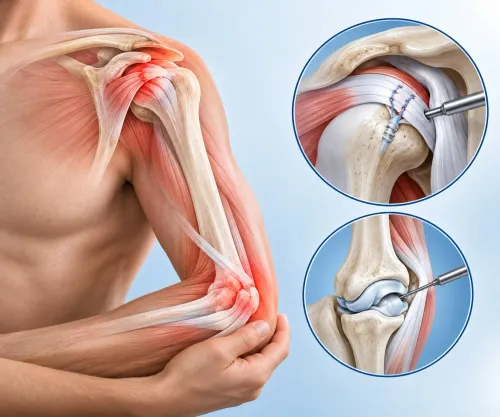
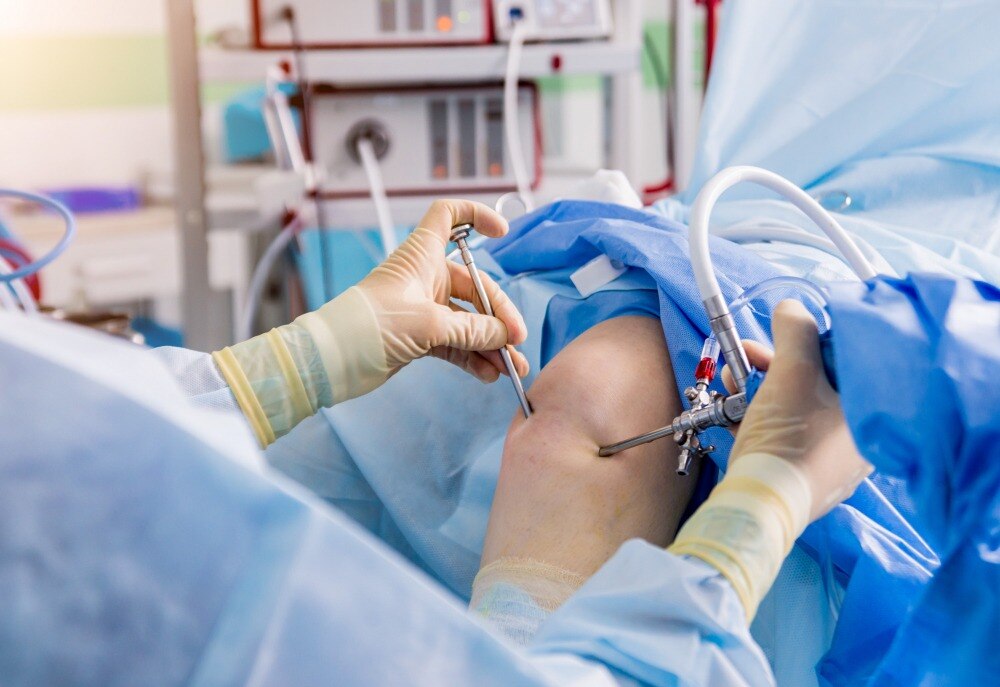
A camera enters the joint through a small portal incision after anaesthesia has taken effect. The arthroscopy surgery steps in Thane follow the same technical sequence used elsewhere: sterile fluid expands the joint, the arthroscope sends magnified images to a monitor, and the surgeon inspects the structures before choosing the treatment.
- The surgeon makes one or more additional portals for instruments.
- The surgeon removes loose tissue, trims damaged material, or smooths an injured cartilage surface when that matches the approved plan.
- The surgeon repairs or reconstructs structures such as a meniscus or ligament when the tear and tissue quality allow it.
- The portals are closed with sutures, strips, or a dressing, and you move to recovery for checks of breathing, alertness, pain, nausea, bleeding, and limb circulation or sensation.
A scan guides the plan; it does not show every feature as clearly as a camera inside the joint. That difference can change the treatment.
| Scan finding | Arthroscopic finding | Possible effect on treatment |
|---|---|---|
| Suspected meniscus tear | Tear is repairable or badly frayed | Repair or trimming |
| Cartilage damage | Damage is shallower, deeper, or wider than expected | Smoothing, cartilage work, or observation |
| Loose fragment or inflamed tissue | Fragment is absent or inflammation is confirmed | Removal, tissue treatment, or no extra procedure |
“Keyhole” describes the incision size, not the workload. A reconstruction or extensive repair can require longer protection, bracing, and rehabilitation than a simple diagnostic inspection. The surgeon should discuss which changes are authorised by your consent before proceeding.
Recovery Room and the Decision to Go Home
After surgery, you remain in a recovery room while staff confirm that the anaesthetic is wearing off safely. For an arthroscopy procedure from admission to discharge in Thane, the exact pathway depends on the joint treated, the repair performed, the anaesthetic, and your medical conditions.
Staff monitor:
- Consciousness and responsiveness
- Breathing, oxygen level, pulse and blood pressure
- Pain and nausea
- Surgical-site bleeding and dressing condition
- Circulation, movement and sensation in the operated limb
- Safe transfer or walking with crutches, a brace or other permitted support
| Option | What it means | When it applies |
|---|---|---|
| Same-day discharge | You are alert, medically stable, and your pain and nausea are controlled. You can move safely, and bleeding is not concerning. A responsible adult must take you home and remain with you initially. | Common after uncomplicated day-care arthroscopy |
| Extended observation or overnight stay | Staff continue monitoring if pain or vomiting remains uncontrolled, you are excessively drowsy, bleeding is concerning, or a medical problem develops. A late operation, unsafe walking, or no suitable adult at home also changes the plan. | More likely after complex repair, longer surgery, or when the anaesthetic or your health requires closer observation |
Do not drive, operate machinery, drink alcohol or make important decisions while anaesthetic effects persist and while your treating team’s restrictions apply. No facility can promise a fixed discharge time.
Discharge Instructions, Follow-Up and Thane-Specific Questions
Do not leave until you can explain your wound care, medicines, bathing restriction, permitted weight bearing, and emergency contact route. The arthroscopy operation process in Thane ends with recovery-room checks, not an immediate walk from theatre to the exit. Staff confirm consciousness, breathing, pain, nausea, bleeding, and limb circulation or sensation before approving discharge.
Ask for written instructions covering:
- Dressing changes, stitches, bathing, ice and elevation
- Pain medicine doses and which regular medicines to restart
- Crutch or brace use and the exact weight limit
- The first wound review, surgeon follow-up and physiotherapy appointment
- An after-hours telephone number and symptoms requiring urgent assessment
| Discharge plan | What it means | What to confirm |
|---|---|---|
| Day-care | You return home after observation once you can leave safely with an attendant. | Departure criteria, pickup time, transport restrictions and whether a responsible adult must stay overnight |
| Overnight stay | Monitoring continues because of the repair, anaesthetic, medical condition, pain, mobility or nausea. | Bed availability, next-morning review and extra room or nursing charges |
| Procedure-specific recovery | Diagnostic arthroscopy, meniscal repair and ligament reconstruction have different movement and weight-bearing rules. | The exact repair performed, brace or crutch duration and rehabilitation milestones |
Confirm pre-authorisation, deposit, identification, scans, reports, implant or brace charges, and whether physiotherapy is arranged directly with the facility. The Bone & Joints - Advance Ortho Care 08048067357 can clarify its own appointment and follow-up arrangements, but never assume another Thane facility follows the same policy.
Follow-up reviews wounds, findings or pathology when relevant, movement, weight bearing and rehabilitation progress.
Related service
Arthroscopy Treatment Dr. Vivek V. Shingane is a skilled Orthopaedic and Joint Replacement Surgeon offering advanced arthroscopy treatment at The Bone & Joints. View service → |
Frequently asked questions
What documents should I bring for arthroscopy admission in Thane?
Bring identification, insurance or pre-authorisation documents, previous scans, medical reports, your prescription list and documented allergy details. Carry any requested brace or walking aid as well.
What should I arrange at home before arthroscopy?
Arrange an adult escort and transport home, clear walking paths, and help with meals, bathing or stairs if your surgeon restricts weight-bearing. Keep prescribed medicines and mobility equipment ready.
What happens during the arthroscopy operation?
After admission checks and an anaesthesia assessment, the surgical team prepares the joint, inserts a camera through a small incision, examines the damaged structures and treats the planned problem through additional small portals.
When can I go home after arthroscopy?
You can leave when the recovery team confirms stable vital signs, adequate alertness, controlled pain and nausea, and safe movement for your procedure. You also need an escort and written discharge instructions.
What should I confirm with an orthopaedic facility in Thane?
Ask about the arrival time, fasting rules, deposit, implant or brace charges, attendant policy, transport requirements, physiotherapy arrangements, follow-up date and whom to contact after discharge.
Keywords