Pain, swelling, stiffness and weakness can continue during early rehabilitation, but pain that worsens, stops improving or returns after a pain-free period needs a different response from ordinary surgical soreness. You will learn which symptoms need emergency care, when to call the operating surgeon, what tests may be used and how to prepare for a useful review.
Key takeaways
- Pain should gradually improve as function returns, even when soreness fluctuates.
- Seek emergency care for chest pain, breathlessness, fainting or a suddenly swollen leg.
- Call your surgeon promptly for fever, wound drainage, redness or worsening pain.
- Bring your pain pattern, medication list and physiotherapy progress to review.
How do you know whether pain is normal healing or a problem?
The calendar alone cannot tell you whether pain is normal healing. After knee, hip or shoulder replacement, soreness can fluctuate with physiotherapy, walking and sleep, but recovery should gradually improve your function.
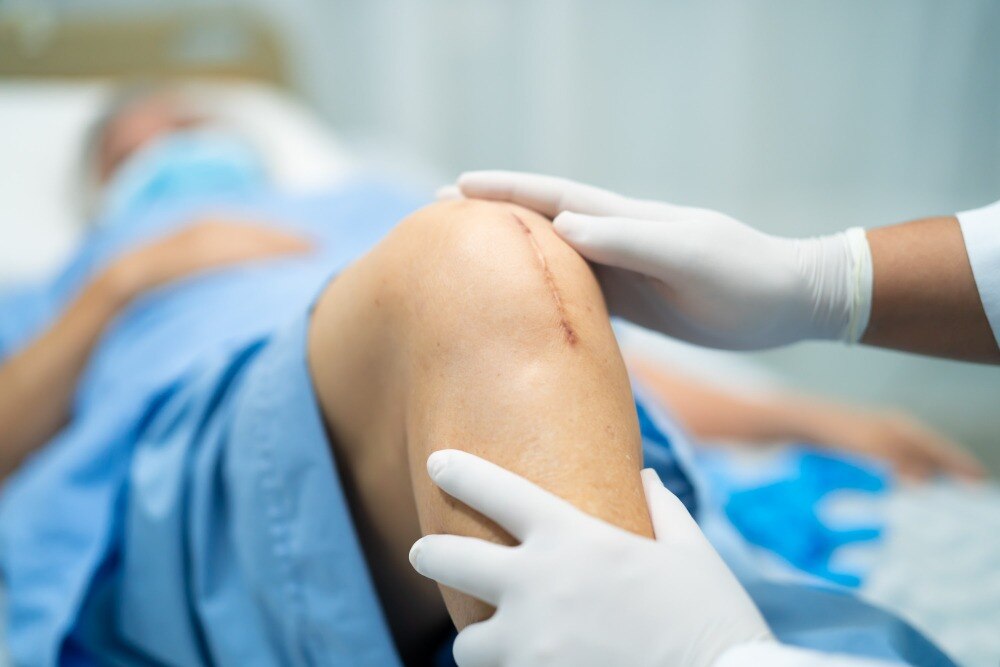
Arrange review when pain remains function-limiting beyond your expected recovery, fails to improve from week to week, or causes ongoing pain at rest or at night. Seek assessment for increasing swelling, weakness, loss of range of motion, or stiffness that blocks walking or exercise.
- Arrange prompt review if pain returns after an initially pain-free period, especially after a fall, sudden activity increase, or putting extra body weight through the joint.
- Seek same-day care for fever with wound redness or drainage, rapidly increasing swelling, severe calf pain with swelling, sudden breathlessness, chest pain, inability to bear weight, or a deformed joint.
Keep a dated record of pain intensity, pain at rest and during walking, night waking, swelling, wound appearance, temperature, walking distance, range of motion and response to physiotherapy. This timeline helps distinguish slow healing from a new complication and gives the clinician clearer evidence.
Online interpretation has limits. Persistent, worsening or systemic symptoms need an in-person examination, not reassurance based only on the number of weeks since surgery. Bring this record when seeking care for persistent pain after joint replacement in Thane.
Which symptoms need emergency care rather than a routine appointment?
Go to an emergency department or seek same-day medical assessment for any of these signs:
| Warning sign | Why it needs urgent assessment |
|---|---|
| Fever with new wound redness or drainage | Possible infection |
| Pus or foul-smelling fluid | Possible wound or implant infection |
| Rapidly increasing swelling | Possible bleeding, infection or clot |
| Severe calf pain with swelling | Possible deep-vein thrombosis |
| Sudden shortness of breath or chest pain | Possible pulmonary embolism |
| New inability to bear weight | Possible fracture or major joint problem |
| A deformed or apparently dislocated joint | Possible dislocation or fracture |
After hip replacement, treat a fall followed by sudden pain, a shortened or rotated leg, or inability to walk as an emergency. These symptoms can indicate dislocation or a periprosthetic fracture. Do not drive yourself if you have severe pain, weakness, breathlessness or trouble bearing weight.
Contact the operating surgeon or an arthroplasty specialist for worsening pain, pain unchanged despite rehabilitation, pain returning after a pain-free period, new stiffness, instability or wound changes.
When arranging care for persistent pain after joint replacement in Thane, provide the operation date, replaced joint, pain location, temperature, wound findings, mobility change, falls, activity changes and every current medicine. In Thane, take a caregiver, arrange transport that supports the operated leg or hip, and ask where urgent assessment is available outside clinic hours.
Persistent joint replacement recovery problems in Thane deserve assessment rather than repeated reassurance.
What patterns matter after knee, hip or shoulder replacement?
1. After knee replacement, limited bending or failure to regain full extension deserves early review because rehabilitation and pain control may need adjustment; simply doing more exercises can worsen swelling. Giving-way can suggest instability, while painful clicking, front-of-knee pain or pain returning after activity needs examination of the kneecap, alignment, tendons and implant.
2. Increasing pain during walking, new swelling or a sudden drop in function warrants assessment. These patterns help address pain after knee replacement in Thane without treating a symptom as a diagnosis.
3. For pain after hip replacement in Thane, note whether it is in the groin, thigh or outer hip, and whether it appears when lifting the leg, rising from a chair, walking or turning.
Groin pain with active flexion can involve iliopsoas irritation; outer-hip pain can involve abductors or greater-trochanteric tissues; thigh pain has several possible implant-bone causes. A slipping feeling, new leg-length concern, difficulty walking, sudden shortening or rotation, or pain after a fall needs prompt assessment.
4. Shoulder replacement pain warrants review when movement deteriorates, the joint feels unstable, swelling increases or improvement stops. Location and movement guide examination but do not prove the cause. These details help a clinician assess joint replacement recovery problems in Thane and choose the next step.
What causes are doctors checking for, and which tests are used?
Doctors check whether pain comes from infection around the implant, a blood clot, loosening or wear, incorrect implant position or alignment, instability, stiffness, fracture, nerve irritation, tendon or muscle disease, or referred pain from the spine, hip or another source. Low-grade infection can lack fever, pus and marked redness.
The assessment begins with wound and joint examination, gait, strength and range-of-motion testing, plus review of the operative report and implant details.
| Stage | What doctors check | Tests used |
|---|---|---|
| Examination | Joint and non-joint causes, including neurologic, spine, hip and vascular problems | Physical examination and records review |
| Initial tests | Alignment, fracture, radiolucent lines, wear or obvious loosening | Standing knee and comparison X-rays; complete blood count, C-reactive protein and erythrocyte sedimentation rate |
| Targeted tests | Component rotation, bone loss or selected soft-tissue disease | CT, ultrasound, or joint aspiration for fluid cell count and culture when infection remains possible |
For persistent pain after joint replacement in Thane, a normal blood test or broadly acceptable X-ray does not exclude every complication. Pain after knee replacement in Thane still needs review when findings do not explain it.
Do not start leftover antibiotics before medical advice: treatment before aspiration can reduce culture yield and make the cause harder to identify.
What can you safely do while waiting for a review?
Until review, protect the replacement rather than trying to suppress every symptom.
- Follow the prescribed weight-bearing limit. Use crutches, a walker or a cane exactly as taught; changing support can worsen a fracture, instability or soft-tissue injury.
- Continue only approved exercises. Ask the physiotherapist to adjust them if stiffness, swelling or sharp mechanical pain is increasing; do not simply add repetitions.
- Keep the wound clean and dry. Do not soak it, apply unapproved products or expose it to contamination.
- Use ice or elevation only if the surgical team has permitted them. Pace activity through the day instead of alternating overexertion with prolonged rest.
- Do not increase pain-medicine doses or add ibuprofen, naproxen or another anti-inflammatory without a medication review. Report poor relief, drowsiness, constipation, stomach symptoms or other problems, and mention kidney disease, ulcers, blood thinners and every prescribed drug.
- Discuss diabetes control, smoking, obesity, dental or skin infection, immunosuppressive medicines and poor wound healing. These affect recovery and infection risk but do not prove the cause.
For joint replacement recovery problems in Thane, bring your discharge summary, implant or operation card, X-rays, medicine list, physiotherapy records and dated pain-and-fever log. Take a caregiver if walking, transfers or transport are difficult.
When is specialist review, physiotherapy or revision surgery the right next step?
Repeat surgery is not the default: the examination and test results should identify the problem before treatment is chosen.
| Option | What it addresses | When it applies |
|---|---|---|
| Physiotherapy adjustment | Stiffness, weakness or movement limits | Strength or range of motion is the main barrier |
| Medicine review or soft-tissue treatment | Pain control, tendon or muscle problems | Symptoms fit a non-implant cause |
| Imaging or aspiration | Loosening, malposition, fracture or infection | Examination, X-rays or blood tests raise concern |
| Revision surgery | Infection, instability, loosening, malposition or fracture | A defined implant-related problem explains the pain |
A clinician may also investigate the spine, hip, nerves or another non-joint source. Revision for unexplained pain has less predictable benefit; treating the wrong cause can leave you painful after another major operation.
For persistent pain after joint replacement in thane or other joint replacement recovery problems in thane, ask a second-opinion clinician to review the original operative report, implant records and actual X-ray images. Ask how infection and loosening will be assessed, which findings are urgent, and what non-surgical, revision and non-joint options exist.
The Bone & Joints - Advance Ortho Care 08048067357 can provide an in-person orthopaedic assessment when pain limits function or recovery changes. Confirm mobility assistance, caregiver access, transport and emergency arrangements beforehand. Leave with a documented diagnosis, safety plan, test plan and return instructions.
Related service
Joint Replacement Surgery Dr. Vivek V. Shingane is an experienced Orthopaedic and Joint Replacement Surgeon specializing in advanced joint replacement surgery at The Bone &... View service → |
Frequently asked questions
How do you know whether pain is normal healing or a problem?
Normal soreness can fluctuate after physiotherapy, walking or poor sleep, but pain should gradually improve and allow better function. Worsening pain, new swelling, fever, wound drainage or loss of movement needs medical review.
Which symptoms need emergency care after joint replacement?
Seek emergency care for chest pain, sudden breathlessness, fainting, severe weakness, a cold or pale limb, or sudden swelling and pain in one leg.
What pain patterns matter after knee, hip or shoulder replacement?
Tell the doctor whether pain occurs at rest, during weight-bearing, at night, with specific movements or near the wound. Record new clicking, instability, stiffness, swelling and reduced function.
What tests might a doctor use for persistent joint replacement pain?
Assessment can include an examination, X-rays and blood tests for infection or inflammation. Ultrasound, CT, MRI with metal-implant protocols, joint-fluid analysis or other tests depend on the joint and suspected cause.
What can you safely do while waiting for a review?
Follow your prescribed exercises, use walking or shoulder-support aids as directed, take medicines only as prescribed, protect the wound and avoid suddenly increasing activity. Contact your care team if symptoms worsen.
Keywords