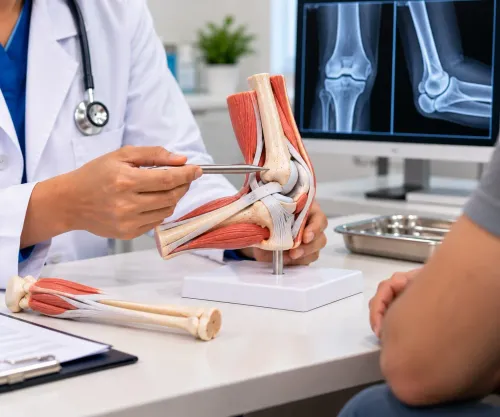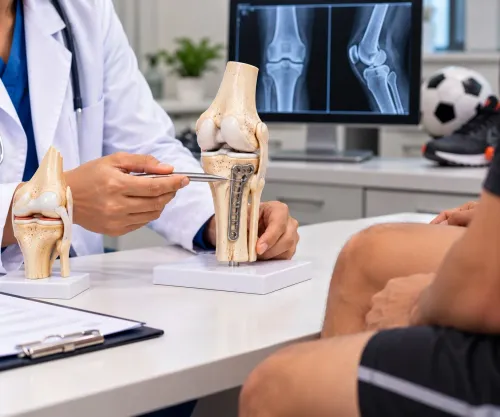
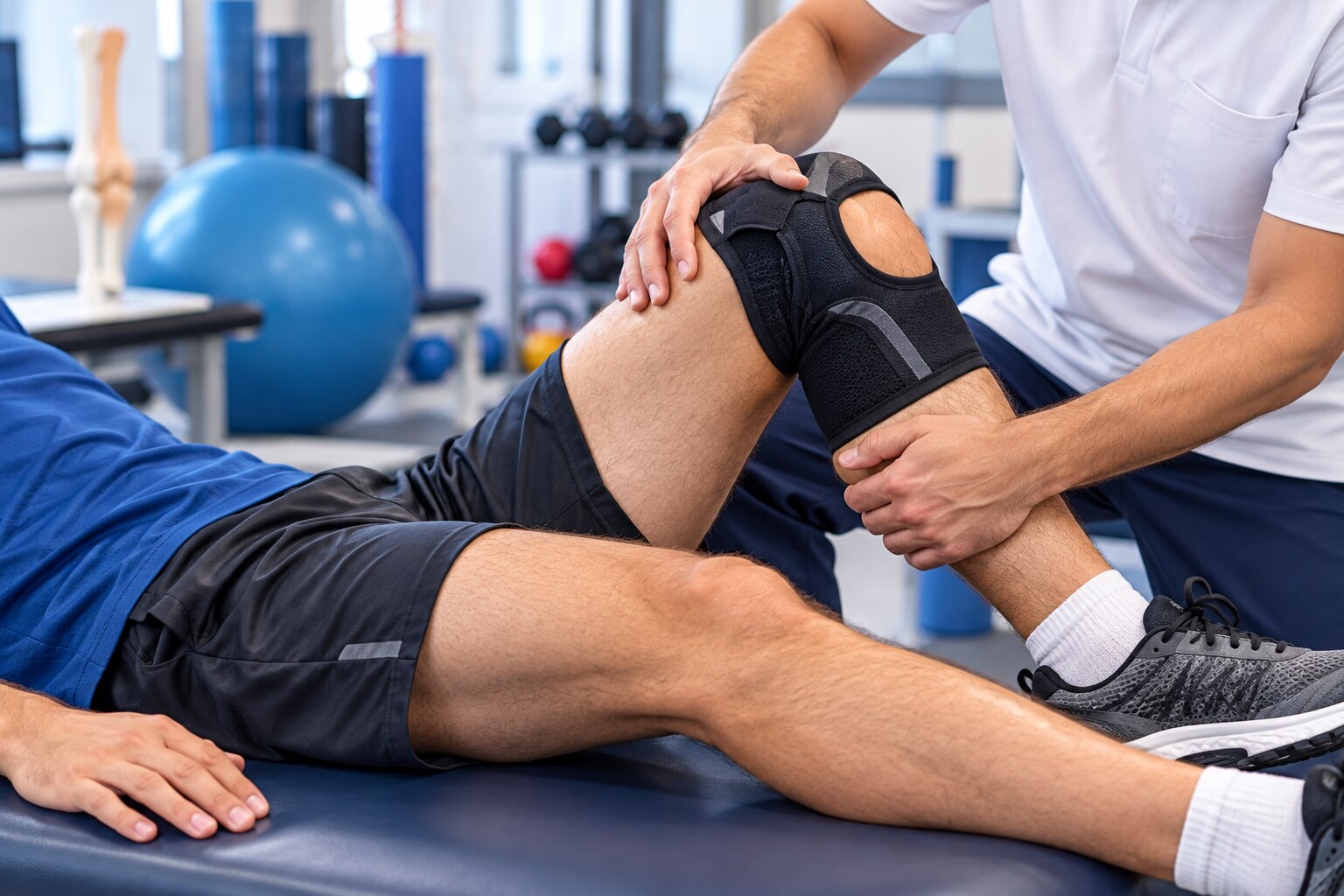
The right treatment depends first on what was damaged: muscle, tendon, ligament, cartilage, bone or the joint itself. By matching your symptoms, examination findings, scan results, sport and recovery goals to each option, you can distinguish injuries suited to rehabilitation from those needing urgent or surgical assessment.
Key takeaways
- Seek urgent care for deformity, an open wound, numbness, coldness, or a weak pulse.
- Match treatment to the injured structure, severity, stability, and sport demands.
- Start rehabilitation with pain control, strength, movement, and sport-specific testing.
- Choose a Thane clinician who examines you and explains imaging and return-to-play criteria.
When does a sports injury need urgent assessment and imaging?
Urgent assessment is needed when an injury threatens bone alignment, circulation, nerve function, or a major tendon or ligament. Go promptly after a visible deformity, open wound, cold or numb limb, absent or weakening pulse, worsening weakness, or inability to bear weight after significant trauma.
Seek emergency care for severe, rapidly increasing swelling or pain out of proportion to the injury, especially with a tight limb or pain when the fingers or toes move. After a head impact, repeated vomiting, worsening headache, seizure, confusion, weakness, or loss of consciousness also requires urgent evaluation.
- An audible pop followed by instability can indicate an ACL or other ligament tear.
- A locked joint can indicate displaced cartilage or a loose fragment.
- Suspected Achilles rupture needs prompt specialist assessment; it is not the same as ordinary tendon pain.
Examination and imaging answer different questions:
| Test | What it checks | When it helps |
|---|---|---|
| Physical examination | Tenderness, movement, strength, stability, circulation and nerve function | Every significant injury |
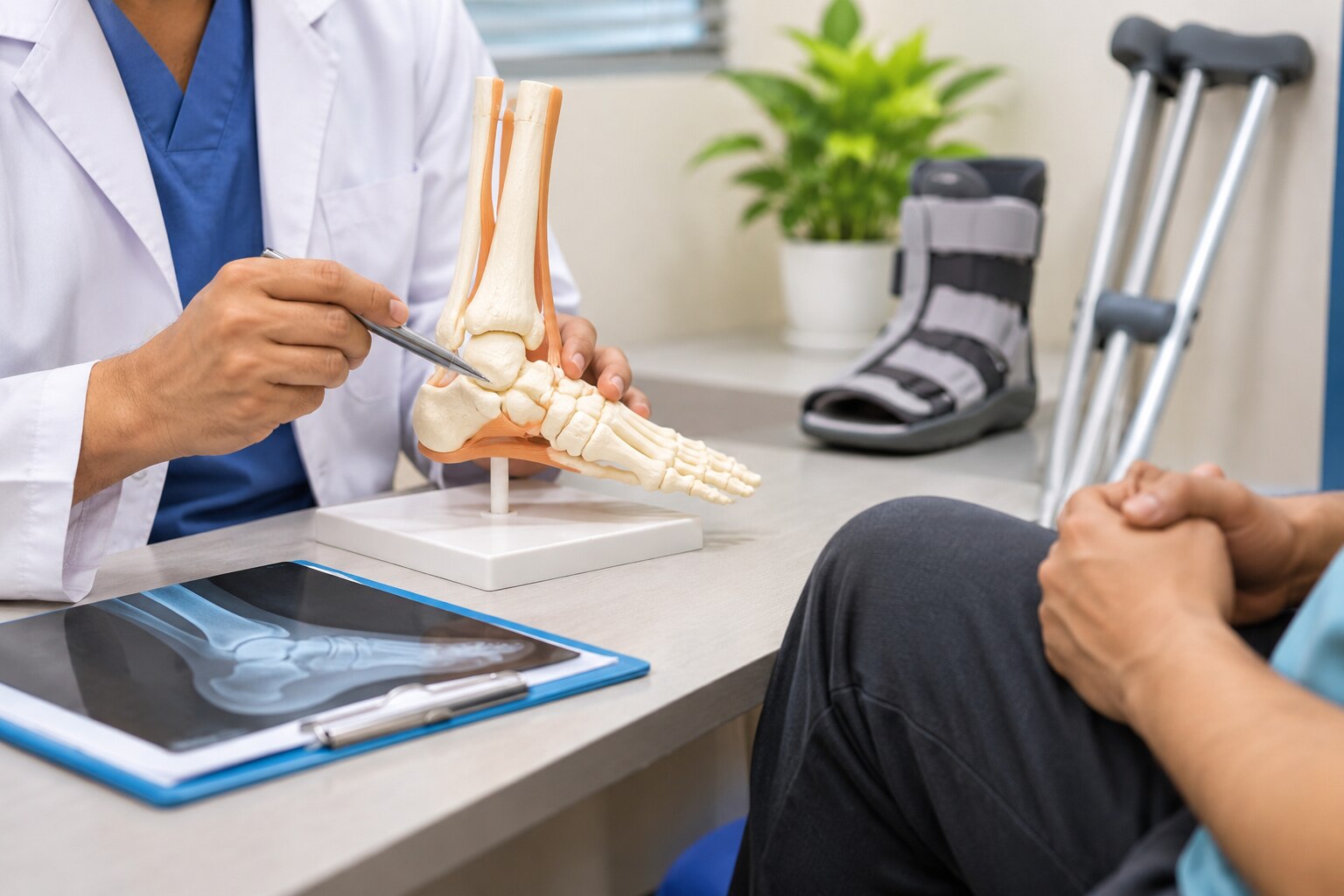
| X-ray | Fracture, dislocation and bone alignment | Trauma, deformity or inability to bear weight |
| Ultrasound | Muscle, tendon and some ligament tears; fluid and bleeding | Suspected superficial tendon or muscle injury |
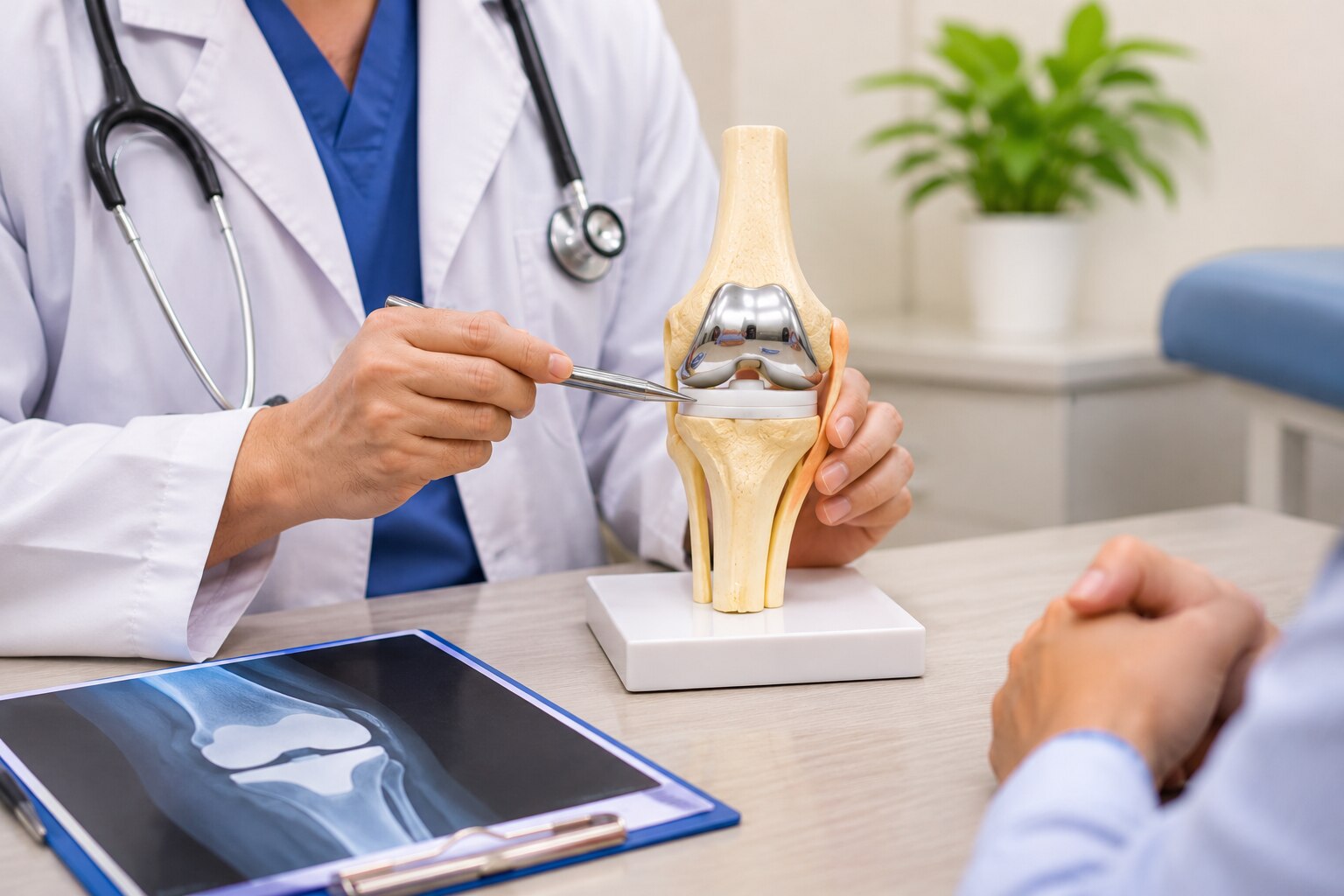
| MRI | Ligaments, cartilage, menisci, bone marrow and deep soft tissue | Persistent symptoms, instability, suspected major tear or stress fracture |
A normal X-ray does not exclude a ligament, cartilage, tendon or early stress injury.
How do rest, rehabilitation, bracing, medication, injections and surgery compare?
Rest means stopping the movement that aggravates the injury, not staying in bed. It suits a mild sprain, strain or flare-up for a short period; prolonged inactivity weakens tissue and delays return.
| Option | What it does | When it is sensible |
|---|---|---|
| Rest and activity modification | Reduces painful load while healing starts | Mild sprains, muscle strains, or irritated tendons; replace running with cycling only if pain-free |
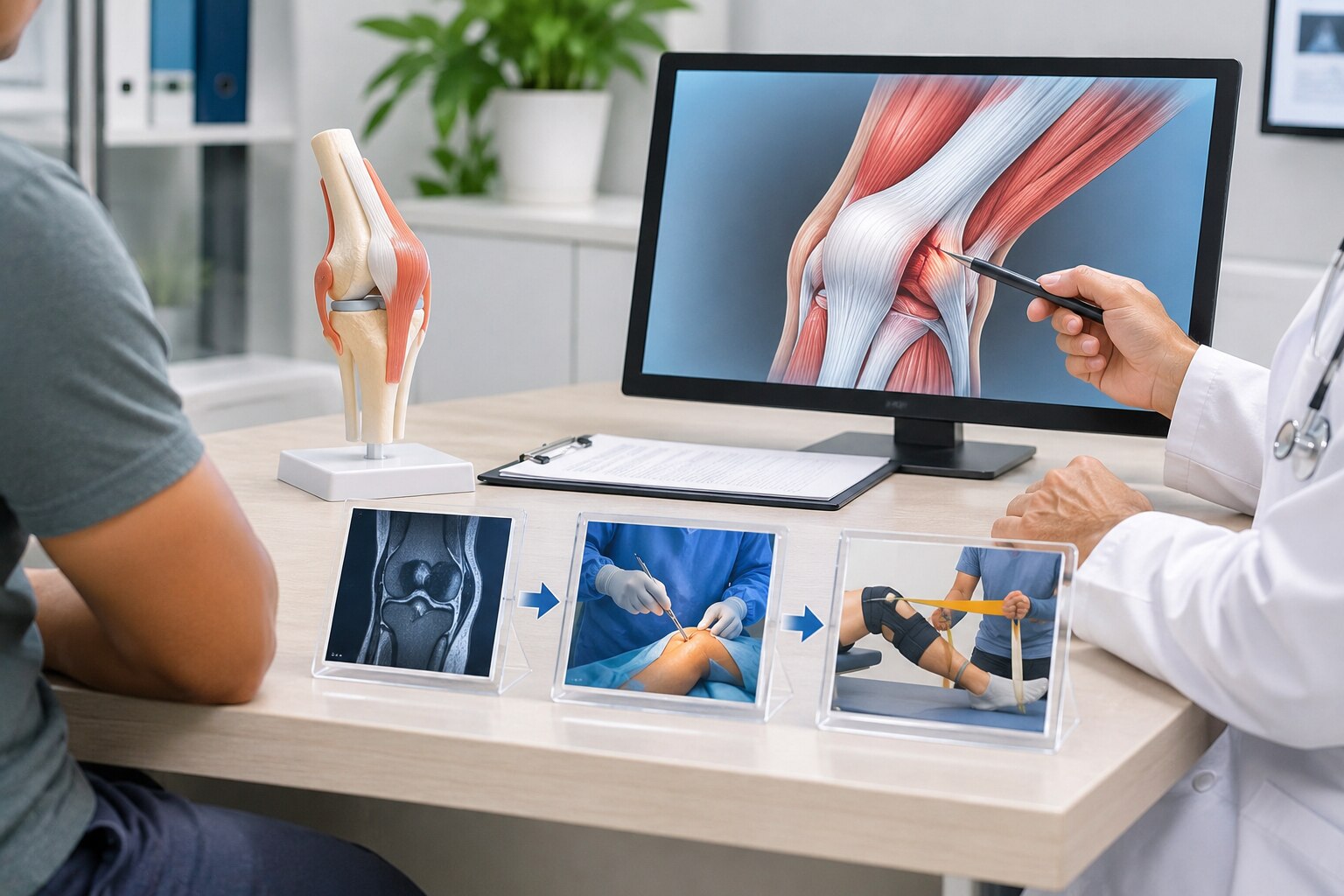
| Rehabilitation | Restores range, strength, balance and sport-specific control | Most injuries, including tendinopathy and ligament tears managed without surgery |
| Brace or taping | Limits risky movement and adds support | Instability, a partial ligament tear, or return to sport after a joint injury |
| Medication | Controls pain and inflammation; it does not repair torn tissue | Short-term pain relief when prescribed safely; avoid masking pain to compete |
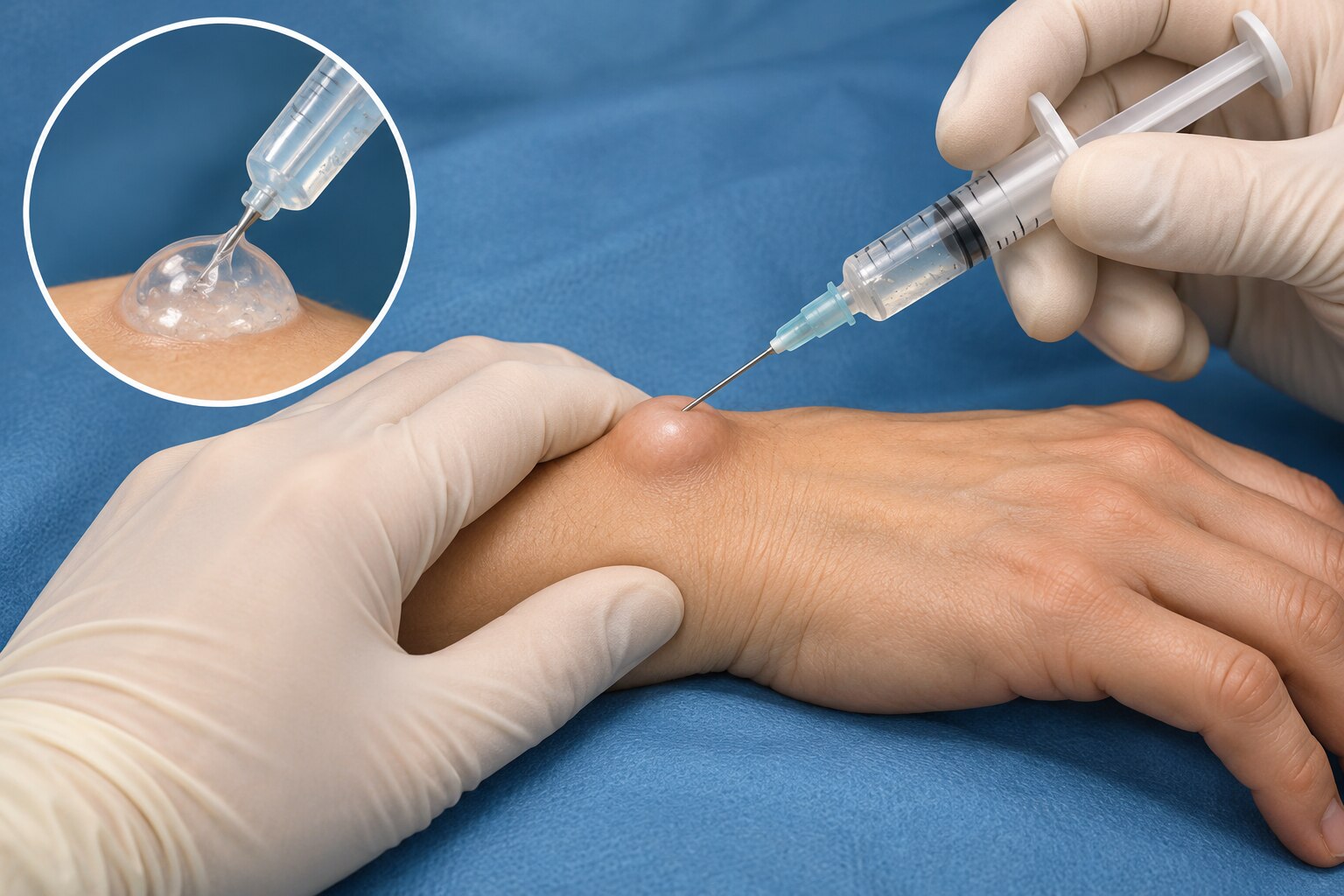
| Injection | Delivers medicine to a targeted area | Selected diagnoses after examination; ask what evidence supports corticosteroid, hyaluronic acid or PRP for your condition |
| Arthroscopy or open surgery | Repairs, removes or stabilises damaged structures | Complete tendon rupture, displaced fracture, recurrent instability, locked joint, or failed appropriate rehabilitation |
Physiotherapy is not simply massage: progressive loading is the treatment for many tendon and muscle problems. Surgery is not automatically better, and injections are not universal cures; PRP evidence varies by diagnosis and preparation, and rehabilitation remains necessary.
When comparing sports injury treatment options in Thane, ask for the working diagnosis, non-operative alternatives, imaging plan, rehabilitation access and follow-up. Confirm that the clinician’s training matches the decision, especially when surgery is being considered.
How does the injured structure change the treatment decision?
The injured structure determines what must heal, what needs protection, and how quickly you can reload it. A normal X-ray can show that bone is intact while missing tendon, ligament, cartilage and many stress injuries.
- Muscle strains involve torn muscle fibres. Early activity modification controls pain, followed by stretching, progressive strengthening and sport-specific loading; returning at full speed too soon raises the risk of re-injury.
- Tendinopathy is a painful, overloaded tendon rather than a sudden rupture. Tendon injury treatment in Thane should distinguish these conditions: tendinopathy usually needs load adjustment and progressive strengthening, while an acute complete Achilles rupture needs prompt specialist assessment because timing and treatment choices differ.
- Ligament tears affect joint stability. Ligament injury treatment in Thane depends on the ligament, tear grade, instability, sport and associated damage; bracing and rehabilitation may suit a stable partial tear, while recurrent giving-way or a combined injury needs surgical assessment.
- Cartilage damage can cause catching, locking or persistent swelling. Treatment depends on the defect’s size, location and effect on joint movement, not pain alone.
- A dislocation stretches or tears stabilising tissues and can injure nerves or blood vessels. Reduction and an instability plan take priority.
- Stress fractures need reduced impact and gradual loading; continuing to run can turn a small crack into a complete break.
- Complete fractures require bone alignment and protection, with surgery considered when the break is displaced, unstable, open or involves a joint.
The plan changes again when injuries occur together, so examination and targeted imaging matter more than choosing treatment from symptoms alone.
What does conservative care and a safe return to sport involve?
Pain-free walking is not the finish line. Follow structured rehabilitation until range of motion, strength, balance, coordination and sport-specific control have returned; uncomplicated sprains may need 2–6 weeks, while tendon, ligament, bone or cartilage injuries often require several months. Medication or an injection can hide pain, so do not use temporary relief as clearance.
1. Before running, walk briskly and climb stairs without a limp, swelling or increased pain the next day. The injured joint should have nearly full, pain-free movement.
2. Before jumping, complete single-leg calf raises, squats and step-downs with controlled alignment. Strength on the injured side should commonly reach at least 90% of the uninjured side.
3. Before repeated jumping or sprinting, pass hop tests: single hop, triple hop and side-to-side hop, landing quietly without the knee collapsing or the ankle giving way. Compare distance, control and symptoms with the other leg.
4. Before contact sport, perform acceleration, deceleration, cutting, pushing and sport-specific drills at full speed. You must tolerate these sessions without instability, swelling or next-day pain.
5. Before competition, complete a full training session, including the positions and movements your sport demands, then recover normally for 24 hours. A clinician should confirm readiness if you had surgery, a fracture, dislocation or recurrent instability.
If you are comparing sports medicine treatment options in Thane, ask for written milestones rather than a calendar-only return date. Passive treatments do not replace progressive loading and supervised exercise.
How should you choose a sports injury clinician in Thane?
Choose a sports injury specialist in Thane by checking qualifications, not just online ratings. Verify the clinician’s registration, relevant sports-medicine or orthopaedic training, and experience with your injured structure. An orthopaedic surgeon assesses whether surgery is indicated; a physiotherapist usually designs and monitors rehabilitation, so these roles are not interchangeable.
Ask for a clear working diagnosis and the reason for each proposed test or treatment. Use this checklist:
| Check | What to ask | Warning sign |
|---|---|---|
| Clinician | Who will examine me, and what is their relevant training? | Vague credentials or no named clinician |
| Diagnosis | Which structure is injured, and what examination supports it? | Treatment offered without a diagnosis |
| Imaging | Do I need an X-ray, ultrasound or MRI, and what will it show? | Scan recommended without explaining its purpose |
| Alternatives | What are the benefits and risks of rest, bracing, physiotherapy, medication, injections or surgery? | PRP or corticosteroid presented as a universal cure |
| Rehabilitation | Who supplies the programme, milestones and return-to-sport tests? | No written plan or follow-up date |
| Surgical support | If I need an operation, who performs it, and what emergency cover exists? | No clear referral, hospital or after-hours plan |
At The Bone & Joints - Advance Ortho Care 08048067357, ask whether the same clinician will review imaging, coordinate rehabilitation and explain surgical referral when needed. Confirm follow-up before committing to treatment.
Related services
Sports Medicine Dr. Vivek V. Shingane is an experienced Orthopaedic and Joint Replacement Surgeon specializing in sports medicine at The Bone & Joints. View service → |
Soft Tissue Repair Treatment Dr. Vivek V. Shingane is a skilled Orthopaedic and Joint Replacement Surgeon providing advanced soft tissue repair treatment at The Bone & Joints. View service → |
Frequently asked questions
When does a sports injury need urgent assessment and imaging?
Go promptly after a visible deformity, open wound, cold or numb limb, absent or weakening pulse, worsening weakness, or inability to bear weight after significant trauma. Assessment and imaging help identify fractures, dislocations, tendon ruptures, and serious ligament damage.
How do rest, rehabilitation, bracing, medication, injections and surgery compare?
Rest protects the injury early, while rehabilitation restores movement, strength, balance, and sport-specific control. Braces add support, medicines help manage pain, injections suit selected conditions, and surgery is considered for problems such as unstable injuries, displaced fractures, or complete tendon ruptures.
How does the injured structure change the treatment decision?
Bone injuries require alignment and healing assessment; ligament injuries depend on instability and sport demands; tendon injuries depend on the tear and loss of function; muscle injuries usually progress through protected movement and strengthening. The examination and imaging determine the plan.
What does conservative care and a safe return to sport involve?
Conservative care can include activity modification, ice or other pain measures, prescribed medication, bracing, physiotherapy, progressive strengthening, and balance work. Return when movement, strength, control, and sport-specific drills meet the clinician's criteria without worsening symptoms.
How should you choose a sports injury clinician in Thane?
Choose a sports injury specialist in Thane who examines the injury, orders imaging when it will change care, explains ligament injury treatment options, and provides measurable rehabilitation and return-to-sport milestones.
Related services
Orthopedic Trauma Treatment Dr. Vivek V. Shingane is a skilled Orthopaedic and Joint Replacement Surgeon specializing in orthopedic trauma care, fracture management, and... View service → |
Fracture Repair Treatment Dr. Vivek V. Shingane is an experienced Orthopaedic and Joint Replacement Surgeon providing expert fracture repair treatment at The Bone & Joints. View service → |
Tendon and Ligament Reconstruction Tendon and Ligament Reconstruction Dr. Vivek V. Shingane is a highly experienced Orthopaedic and Joint Replacement Surgeon specializing in tendon and ligament reconstruction at The... View service → |
Arthroscopy Treatment Dr. Vivek V. Shingane is a skilled Orthopaedic and Joint Replacement Surgeon offering advanced arthroscopy treatment at The Bone & Joints. View service → |
Keywords