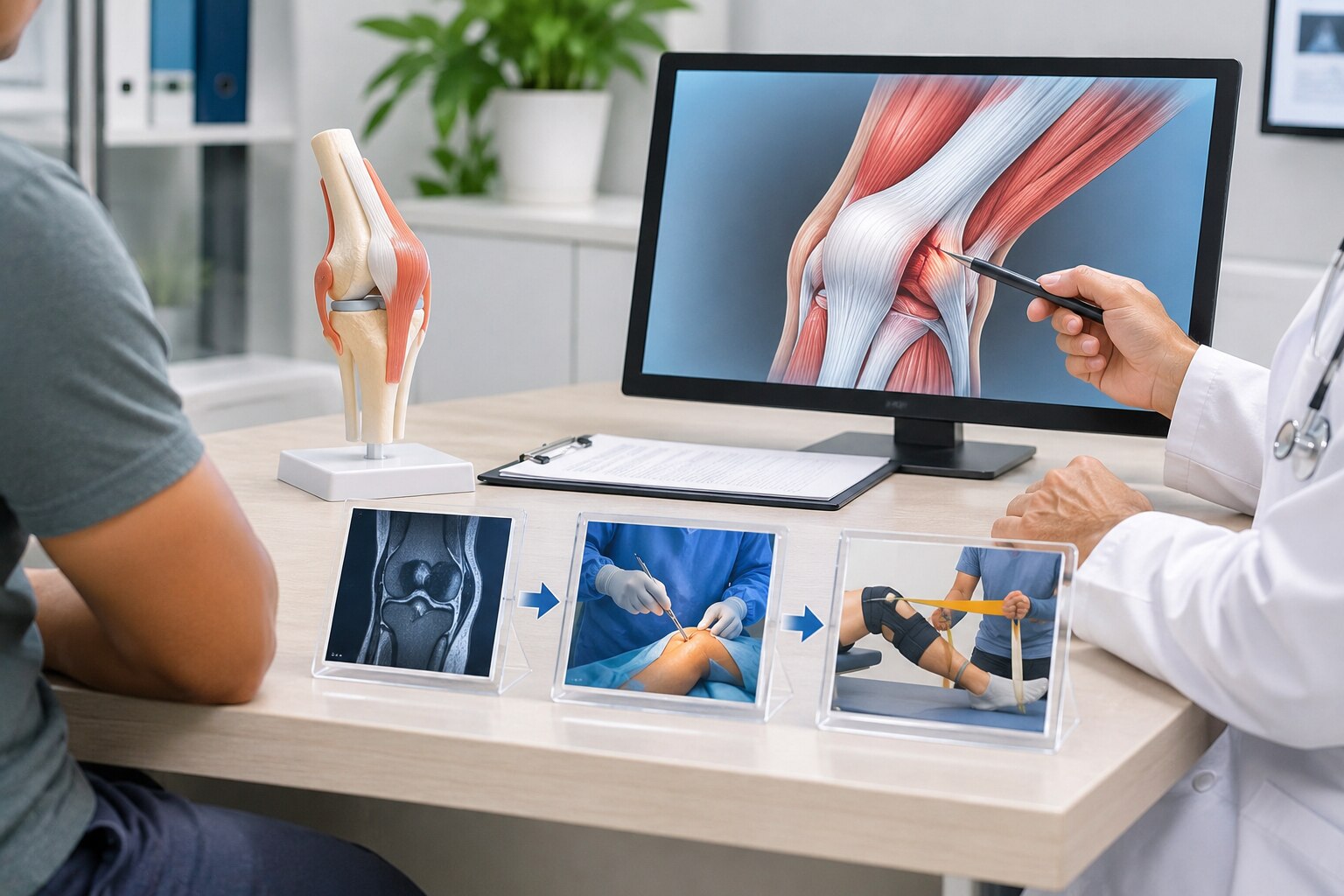
A painful or unstable joint does not automatically mean you need an operation: the first task is to identify whether the problem is a tendon, ligament, muscle, sprain, strain, cartilage injury or something else. By the end, you will know how diagnosis, treatment choice, surgery, discharge and rehabilitation fit together, and which questions to ask before committing to care in Thane.
Key takeaways
- Expect strength, stability, sensation and circulation checks before treatment.
- Choose physiotherapy when the tissue is stable and function is improving.
- Ask how tendon, ligament or muscle repair will be protected after surgery.
- Compare surgeon experience, hospital facilities and rehabilitation support before deciding.
How doctors identify the injured soft tissue and decide how urgent it is
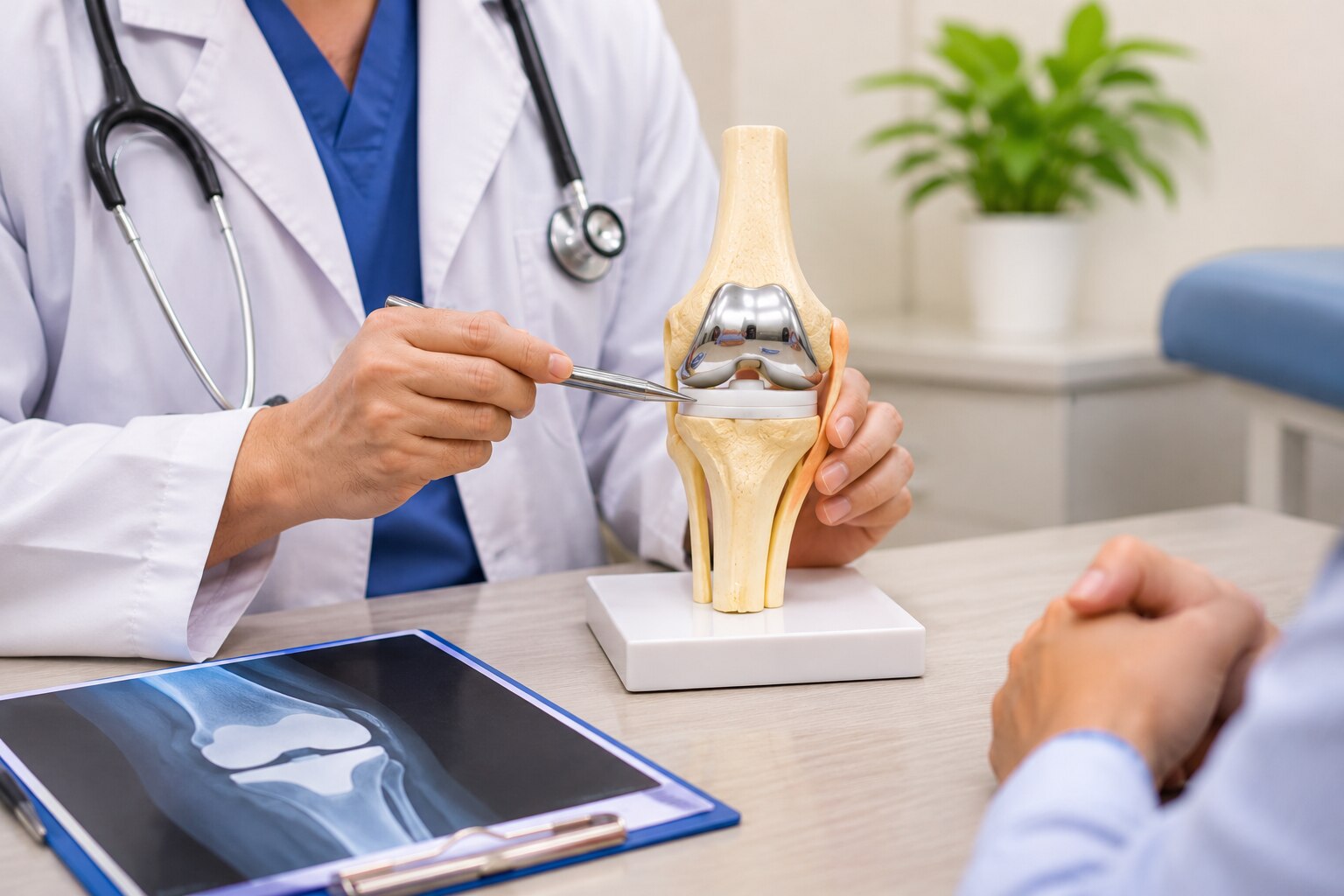
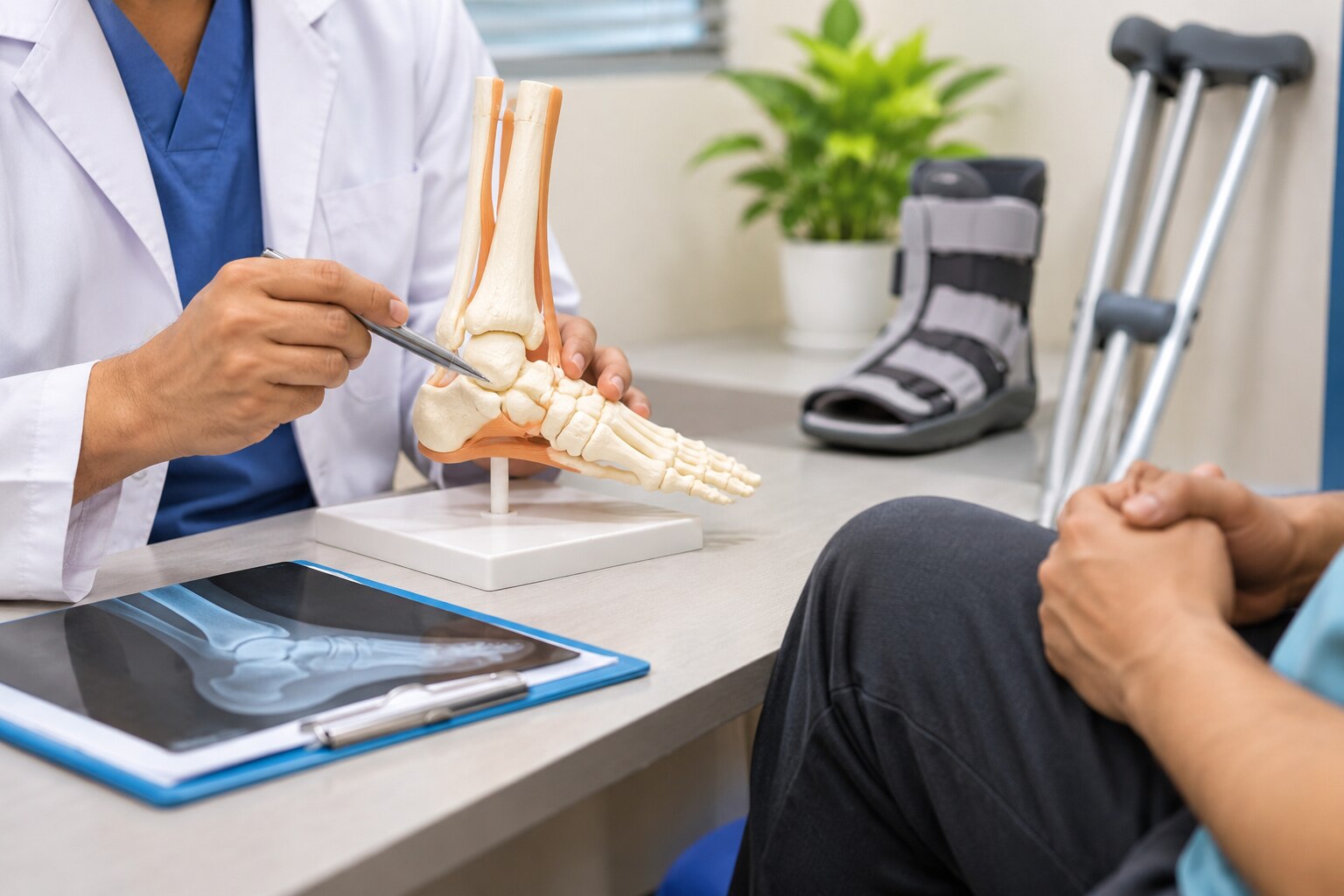
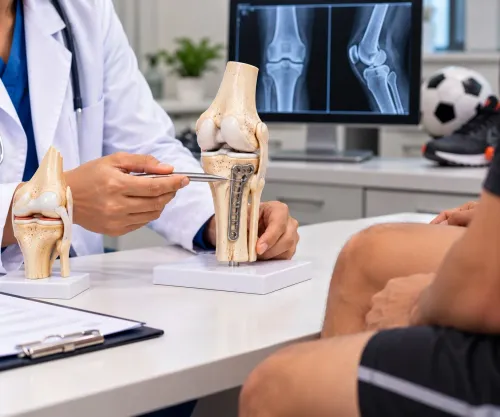
A sound soft tissue repair surgery process in Thane starts with diagnosis, not an automatic operation. During the first consultation, the doctor records how the injury happened, when swelling or weakness began, your previous injuries and activity demands. They then check tenderness, bruising, range of motion, strength, joint stability, sensation, pulses and skin condition.
The examination helps distinguish a tendon tear from a ligament injury, muscle strain, sprain or cartilage problem. X-rays look for fractures, avulsion injuries and arthritis; ultrasound can show some superficial tendon tears dynamically, while MRI maps deeper tendons, ligaments, muscle and cartilage when the result will change treatment.
- Seek emergency assessment for an open wound with deep tissue exposure, an absent or weak pulse, new numbness or paralysis, a visibly dislocated joint, suspected compartment syndrome, or severe pain that is rapidly worsening.
- Arrange prompt orthopaedic assessment for sudden loss of strength, a palpable tendon gap, a locked joint, major instability, or suspected complete rupture after trauma.
- Routine treatment is reasonable when the joint is stable, circulation and nerve function are normal, and symptoms fit a minor or partial injury; treatment may begin with protection, activity modification and physiotherapy.
| Finding | Likely next step | Why |
|---|---|---|
| Emergency signs | Immediate hospital assessment | Delay risks permanent nerve, blood-vessel or tissue damage |
| Stable suspected tear | Targeted ultrasound or MRI | Imaging defines the structure and tear before treatment |
| Minor stable injury | Examination-led conservative care | Scans rarely change early management |
When rest and physiotherapy are better than surgery
Doctors choose non-operative care when pain, strength and stability are improving, the joint remains usable, and imaging does not show a repairable failure. A tear on MRI alone is not enough: degenerative tendon or labral changes can exist without causing symptoms.
| Option | What it means | When it applies |
|---|---|---|
| Rest and physiotherapy | Reduce aggravating activity, restore movement and build strength | Stable injuries, partial tears, strains, and symptoms improving without surgery |
| Primary repair | Reattach the patient’s torn tendon or ligament with sutures or anchors | Fresh tears with healthy tissue that can reach its attachment without excessive tension |
| Delayed repair | Repair after swelling settles or after further assessment | Missed injuries, open wounds, medical stabilisation, or complex damage; delay can allow retraction and scarring |
| Tendon transfer | Reroute a working tendon to replace lost function | Irreparable tendon damage, muscle wasting, or a failed previous repair |
| Ligament reconstruction | Replace or augment a non-healing ligament with a graft | Persistent instability when the native ligament cannot be repaired, as with many complete ACL tears |
The decision combines injury mechanism, examination, weakness, instability, activity demands, ultrasound or MRI findings and response to treatment. A surgeon also considers whether you can follow protected rehabilitation; poor adherence can undo a technically sound repair.
Ask what milestone would trigger surgery and what objective tests allow driving, work or sport. Ligament repair recovery and reconstruction recovery both require staged loading, so choosing an operation for faster activity can create a longer setback if the tissue is not repairable.
The soft tissue surgery steps from preparation to wound closure
The surgeon does not begin by stitching until the damaged structure is confirmed. After reviewing the examination and imaging, the team confirms consent, allergies, medicines, anaesthesia and the expected procedure. The soft tissue surgery steps then depend on whether the tissue can heal after reattachment or needs replacement with a graft.
- Position the patient, prepare the skin with antiseptic, and drape a sterile field.
- Give regional or general anaesthesia, then mark and access the injured area.
- Identify the tendon, ligament, muscle, meniscus or labrum and remove damaged tissue.
- Reattach repairable tissue with strong sutures or anchors; use a graft for reconstruction.
- Test tension, stability and movement through a safe range without stressing the repair.
- Close the incision with sutures, staples or adhesive, then apply a dressing and brace.
- Provide wound-care instructions, pain control and a protected rehabilitation schedule.
| Option | What happens | Main distinction |
|---|---|---|
| Repair | The surgeon brings the patient’s torn tissue ends together and secures them. | Uses native tissue when it remains suitable for healing. |
| Reconstruction | A tendon or ligament is replaced or reinforced with a graft or other material. | Used when the original tissue cannot provide reliable stability. |
| Arthroscopic surgery | A camera and instruments enter through small portals around the joint. | Usually causes less skin disruption but requires specialised access and technique. |
| Open surgery | The surgeon reaches the structure through a larger incision. | Provides direct exposure for extensive tears, graft work or difficult anatomy. |
The operation may combine these categories: an arthroscopic ACL reconstruction and an open tendon repair are both soft tissue procedures, but their access, graft needs and restrictions differ.
What recovery involves after tendon, ligament or muscle repair
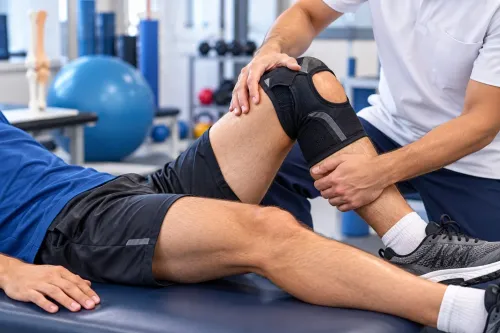
Rehabilitation is staged to protect the repair before restoring normal movement and strength. Tendon repair rehabilitation in Thane usually begins with a splint, brace or restricted loading, then progresses to therapist-directed motion, strengthening and task-specific activity.
Pain relief does not prove that tissue has healed; excessive force can rupture a repair beneath an incision that looks normal.
- Protection: keep the repair within the prescribed brace or splint and follow weight-bearing limits.
- Controlled movement: perform only the exercises approved by the surgeon or physiotherapist. After flexor tendon repair, early hand therapy helps limit adhesions while protecting the sutures.
- Strength and function: add resistance gradually, then practise work, driving, running or sport only after objective strength, movement and stability criteria are met.
Ligament repair recovery follows the same principle, but the brace duration and loading plan depend on the ligament, repair strength and whether reconstruction used a graft. Do not substitute internet exercises for your protocol.
Contact the surgical team promptly for increasing redness or warmth, wound drainage, fever, calf swelling or pain, new numbness or weakness, sudden loss of function, or a pop followed by deterioration. Chest pain or sudden breathlessness requires emergency care.
Before discharge in Thane, obtain the hospital’s out-of-hours number; do not wait for a routine appointment when warning signs appear.
How to compare a soft tissue surgeon and hospital in Thane
Before booking, ask a soft tissue surgeon in Thane to name the injured structure and explain whether the operation is repair or reconstruction. Confirm the doctor’s registration in the National Medical Commission’s Indian Medical Register; a general orthopaedic title does not prove experience with your particular tendon or ligament procedure.
| Area | Questions to answer | Warning sign |
|---|---|---|
| Expertise | How many of this exact operation has the surgeon performed? What non-operative alternative remains? | The recommendation is automatic or unexplained |
| Safety | Who provides anaesthesia? What infection-control pathway and emergency cover does the hospital have? | No clear out-of-hours contact or escalation plan |
| Facilities | Are imaging, theatre, overnight observation and revision support available if needed? | A clinic consultation is treated as proof of hospital capability |
| Cost | Does the written estimate separate surgeon, anaesthesia, theatre, implant or graft, hospital, medicines, imaging and physiotherapy fees? | No provision for extra findings during surgery |
| Rehabilitation | Who provides physiotherapy, and what milestones allow driving, work, running and sport? | Restrictions and objective clearance criteria are vague |
Ask how long bracing, non-weight-bearing or restricted movement will last, and who reviews wound problems. The Bone & Joints - Advance Ortho Care 08048067357 can be assessed using this same checklist, rather than choosing on a clinic consultation alone.
Confirm the hospital’s discharge instructions before booking, including whom to call for drainage, fever, calf swelling or sudden weakness. Compare the full treatment pathway, not just the operation quote.
Related services
Soft Tissue Repair Treatment Dr. Vivek V. Shingane is a skilled Orthopaedic and Joint Replacement Surgeon providing advanced soft tissue repair treatment at The Bone & Joints. View service → |
Tendon and Ligament Reconstruction Tendon and Ligament Reconstruction Dr. Vivek V. Shingane is a highly experienced Orthopaedic and Joint Replacement Surgeon specializing in tendon and ligament reconstruction at The... View service → |
Frequently asked questions
How do doctors identify the injured soft tissue and its urgency?
They review the injury mechanism and timing, then assess swelling, bruising, tenderness, movement, strength, joint stability, sensation, pulses and skin condition. Imaging can help define the injury when the examination does not provide enough detail.
When are rest and physiotherapy better than soft tissue surgery?
Non-surgical care suits injuries that remain stable, retain useful function and improve with protection, graded exercise and physiotherapy. Surgery becomes more relevant when a complete tear, persistent weakness, instability or failure of rehabilitation prevents normal activity.
What are the main soft tissue surgery steps?
Preparation includes confirming the diagnosis, discussing anaesthesia and arranging post-operative protection. The surgeon exposes the damaged tissue, removes unhealthy tissue when needed, repairs or reattaches the tendon, ligament or muscle, checks the repair and closes the wound.
What does tendon repair rehabilitation in Thane involve?
Rehabilitation protects the repair first, then progresses through controlled movement, gradual strengthening, functional exercises and a return-to-activity plan. The timeline depends on the tissue repaired, injury severity and surgical findings.
How can you compare a soft tissue surgeon and hospital in Thane?
Ask about experience with your specific injury, the proposed repair, anaesthesia, infection prevention, emergency support, physiotherapy coordination, follow-up schedule and expected restrictions. Request clear explanations of alternatives, risks and recovery milestones.
Keywords