Knee pain after sport does not automatically mean that realignment surgery is the right answer. The decision starts with identifying whether abnormal loading, ligament-related alignment, cartilage damage, or another problem is driving symptoms, then comparing the operation with rehabilitation, bracing, reconstruction, cartilage procedures, and replacement.
Key takeaways
- Pain alone does not justify osteotomy; confirm measurable overload and alignment abnormality.
- Choose high tibial or distal femoral osteotomy based on the overloaded compartment.
- Ask for weight-bearing X-rays, mechanical-axis measurements, and tibial-slope assessment.
- Plan months of rehabilitation before returning to running, cutting, or competitive sport.
When does a sports-related knee problem justify osteotomy?
Pain alone does not justify osteotomy. Choosing osteotomy surgery for sports-related knee problems in Thane starts with proving that a measurable alignment or slope problem concentrates force in one knee compartment.
Varus, or bow-legged alignment, can overload the medial compartment after cartilage, meniscus, or ligament damage. Valgus, or knock-kneed alignment, can overload the lateral compartment. A slope-correction osteotomy is reserved for selected ACL-deficient or revision-ACL cases with excessive posterior tibial slope. Osteotomy shifts force; it does not repair a torn ligament or restore cartilage.
An acute ligament tear, isolated meniscus injury, cartilage defect, or patellar-tracking problem may need a different treatment. A tibial tubercle osteotomy addresses selected patellar instability or tracking problems, not varus or valgus loading.
Reasons to question suitability include:
- Arthritis across multiple compartments
- Severe stiffness or major bone loss
- Active infection or severe bone weakness
- Open growth plates
- Inability to complete protected weight-bearing and rehabilitation
| Option | Main purpose | When it fits |
|---|---|---|
| Physiotherapy, strength work, activity change | Reduce symptoms and improve control | Mild or manageable symptoms |
| Brace, weight reduction, selected injections | Reduce compartment load or inflammation | Nonoperative trial or temporary relief |
| Arthroscopy or cartilage restoration | Treat selected meniscus or cartilage lesions | Localised structural damage |
| Ligament reconstruction | Restore instability | Confirmed ligament insufficiency |
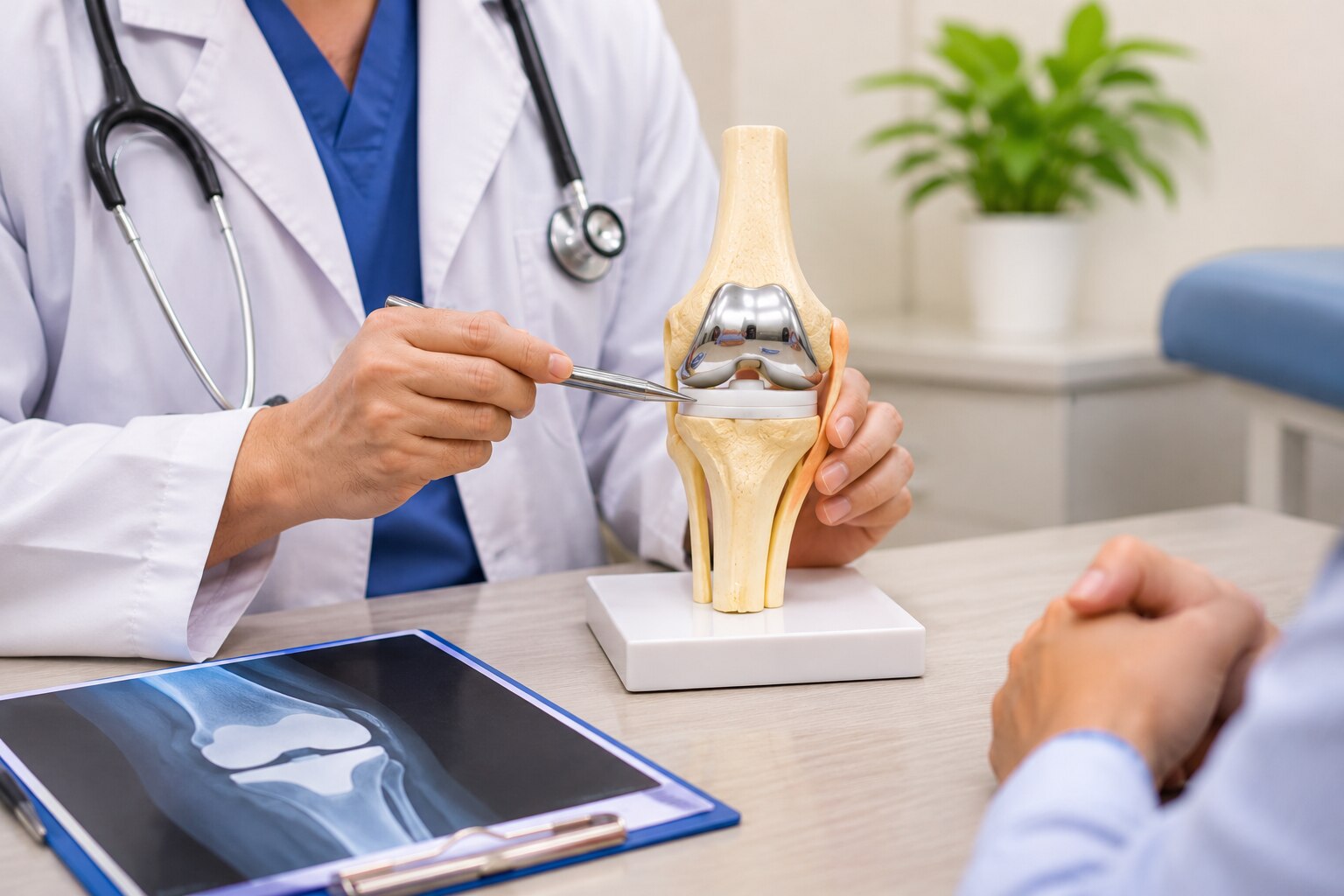
| Unicompartmental or total replacement | Replace damaged joint surfaces | Advanced one-compartment or widespread arthritis |
Repeated giving-way, locking, swelling, rest pain, or rapidly worsening function requires an orthopaedic assessment, not self-selection of an operation. A surgeon must confirm the mechanical cause before recommending realignment.
Which osteotomy matches the knee’s alignment and overloaded compartment?
Alignment, not the sport, determines the operation: varus, or bow-legged alignment, usually overloads the medial compartment, while valgus, or knock-kneed alignment, overloads the lateral compartment. High tibial osteotomy shifts force away from the damaged inner side toward the better-preserved lateral side; distal femoral osteotomy shifts force away from the outer side.
| Option | Alignment and purpose | Main trade-offs |
|---|---|---|
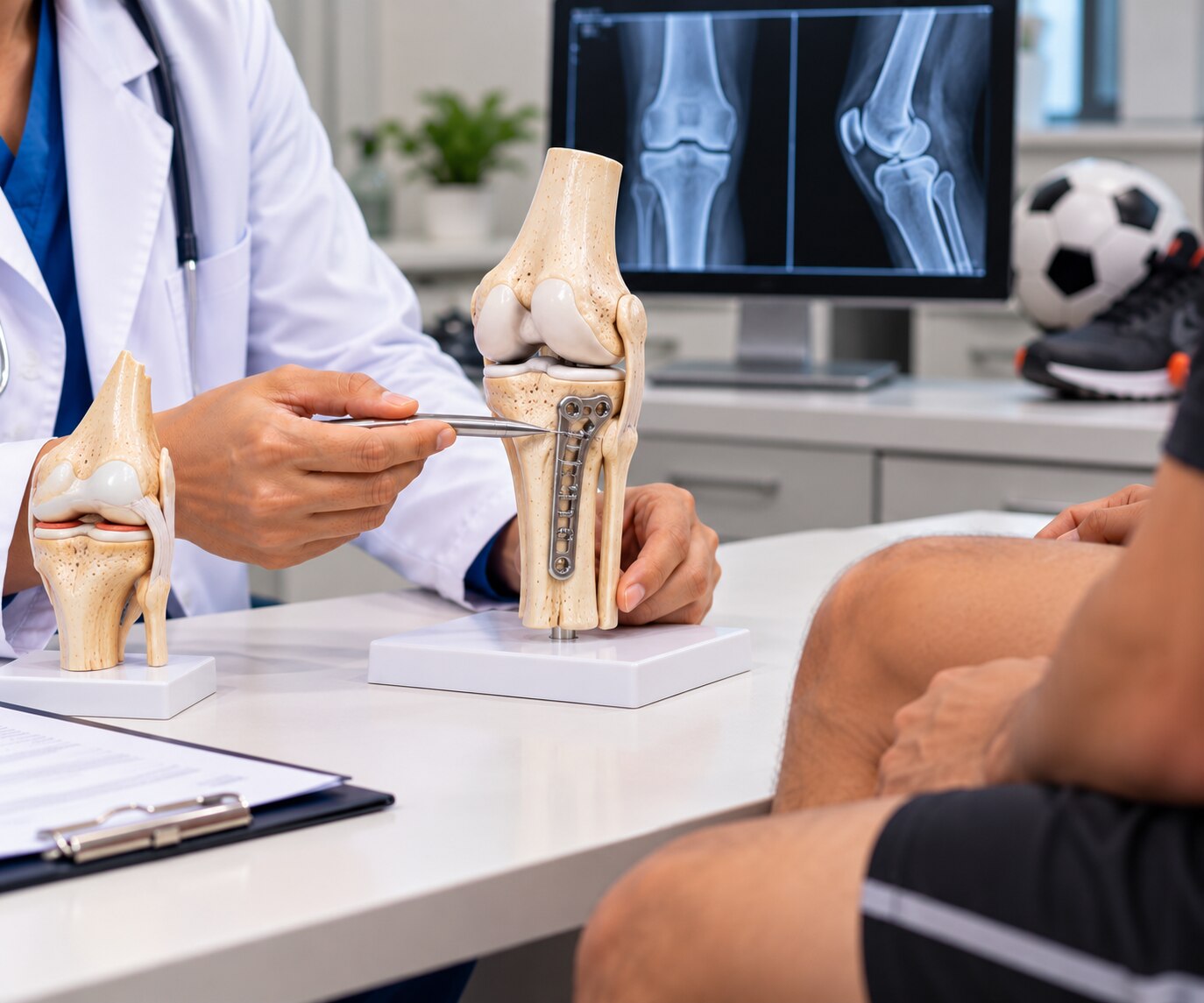
| Medial opening-wedge HTO | Varus with medial overload | A controlled cut opens on the inner tibia, then a plate holds the correction while the gap heals. Bone graft or bone substitute may be needed, and protected weight-bearing takes time. |
| Lateral closing-wedge HTO | Varus with medial overload | A bone wedge is removed from the outer tibia. It can shorten the leg, requires fibular management, and increases attention to peroneal-nerve risk. |
| Distal femoral osteotomy | Valgus with lateral overload | The femur is corrected rather than the tibia, so it is not an interchangeable HTO. |
| Tibial tubercle osteotomy | Selected patellar instability or patellofemoral problems | It moves the patellar-tendon attachment; it does not correct the weight-bearing axis. |
The surgeon must set the correction accurately. Undercorrection leaves the damaged compartment overloaded; overcorrection overloads the opposite side, and an unrecognised rotational deformity can stress the ankle, hip, or another knee structure.
Slope-correction osteotomy is a specialist adjunct for selected ACL-deficient or revision cases with excessive posterior tibial slope. It is not a substitute for every ligament reconstruction. A proper assessment of osteotomy options in Thane should identify the bone and compartment involved before choosing sports knee osteotomy in Thane.
What must the surgeon measure before recommending realignment?
A non-weight-bearing knee X-ray cannot show how your leg carries load while you stand, so it is not enough for knee realignment surgery choices in Thane. The surgeon needs:
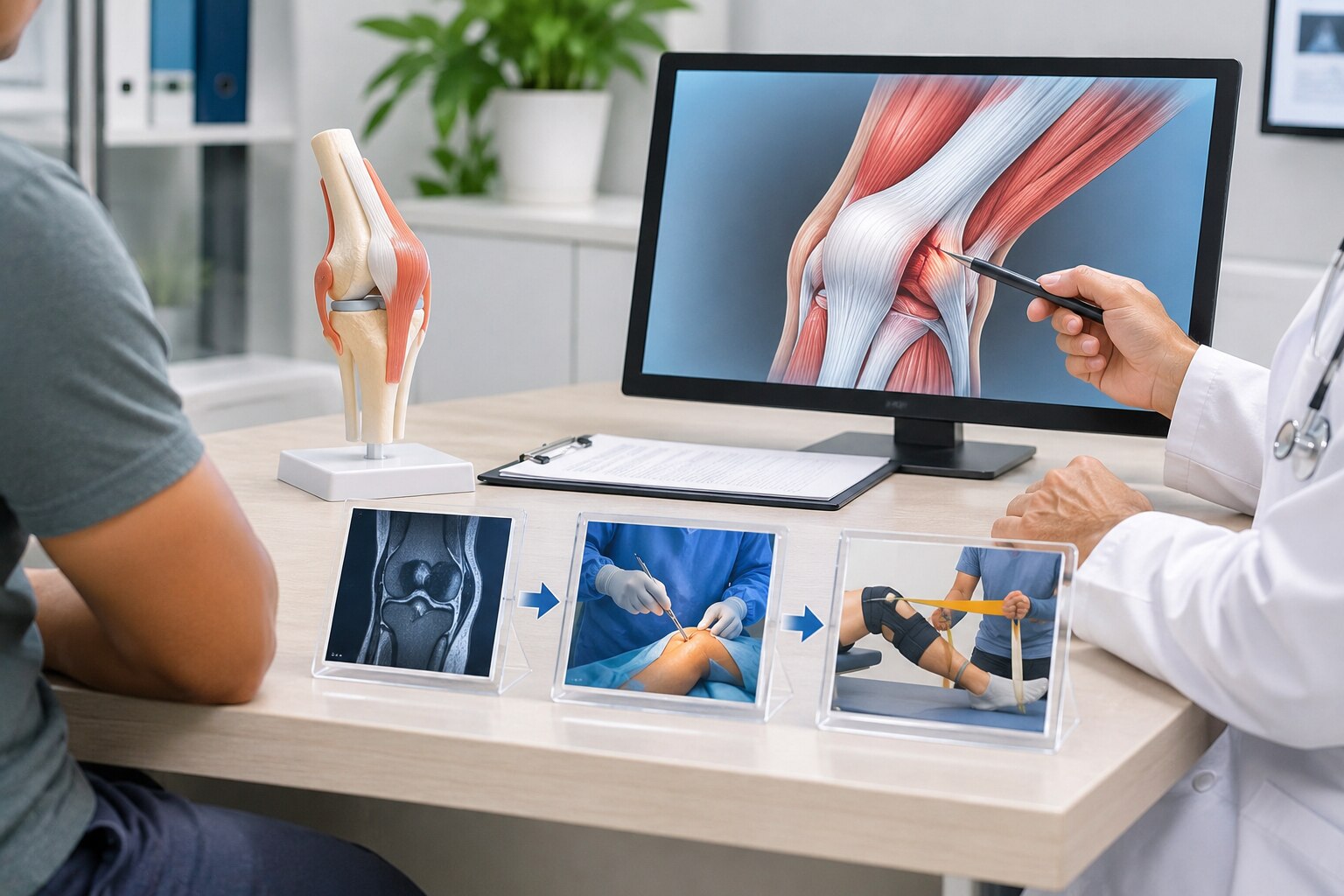
1. Standing, full-length hip-to-ankle radiographs to measure the mechanical axis and locate the deformity. Standing weight-bearing knee views show joint-space loss and arthritis in each compartment. MRI examines cartilage thickness, menisci, ligaments, and hidden bone changes. CT helps define rotational or three-dimensional bone anatomy when plain films leave the planning question unanswered.
2. A physical examination that records range of motion, ligament stability, meniscus symptoms, limb length, hip and ankle alignment, patellar tracking, muscle strength, and the opposite knee.
The surgeon must determine whether the deformity begins in the tibia, femur, or both, decide how far to shift the load-bearing axis, and account for ligament laxity before choosing the cut and fixation.
3. A suitability review covering age, body weight, activity goals, cartilage location and extent, previous ACL or meniscus operations, bone quality, smoking or vaping, diabetes control, vitamin D, nutrition, and willingness to follow protected weight-bearing and physiotherapy. A staged plan may be safer when realignment is combined with ACL reconstruction, meniscus treatment, or cartilage restoration.
The target is individual, not a standard angle. Undercorrection, overcorrection, or missed rotation can leave symptoms or overload another compartment.
What recovery, risks, and return-to-sport work does osteotomy require?
A sports knee osteotomy in Thane usually involves a short hospital stay, crutches, and partial weight-bearing rather than immediate normal walking. You will need wound checks, repeat X-rays, and regular physiotherapy while the tibial or femoral cut unites.
Desk work may resume before driving, running, pivoting, contact sport, and competition. A calendar date cannot clear you for play. Progress should include:
- Healed radiographs showing union
- Full or near-full knee movement
- Minimal swelling and a normal gait
- Adequate quadriceps and hamstring strength
- Successful hop testing
- Controlled, progressive sport-specific drills
Returning too quickly can overload an incompletely healed cut or expose weakness during landing and direction changes. Your surgeon and physiotherapist should progress loading according to healing, examination, strength, and sport demands.
Risks include delayed union, nonunion, loss or overcorrection, infection, blood clots, nerve or blood-vessel injury, fracture, stiffness, persistent pain, and plates or screws that irritate the surrounding tissue. Hardware removal can require another operation after the bone has healed.
Smoking, vaping, nicotine, poorly controlled diabetes, low vitamin D, poor nutrition, and medicines affecting bone healing or bleeding can delay recovery.
Osteotomy preserves your native knee but cannot guarantee previous sports performance or prevent later knee replacement. Seek urgent review for calf swelling or breathlessness, fever with wound drainage, a cold or numb foot, uncontrolled pain, or sudden loss of movement.
How should you compare an osteotomy consultation in Thane?
Compare an osteotomy consultation in Thane by the proposed operation and planning evidence, not by a clinic name or “sports-medicine specialist” label. Ask which bone will be cut, whether the deformity is tibial, femoral, rotational, or slope-related, and what mechanical-axis target will unload the damaged compartment.
| Procedure | Main question |
|---|---|
| Opening-wedge HTO | Is varus alignment overloading the medial compartment? |
| Closing-wedge HTO | Would removing a tibial wedge provide the safer correction, despite different leg-length and fibular considerations? |
| Distal femoral osteotomy | Is valgus alignment overloading the lateral compartment? |
| Tibial tubercle osteotomy or slope correction | Is the problem patellar tracking, or slope-related ligament instability rather than weight-bearing-axis overload? |
Ask how ligament, meniscus, or cartilage damage will be treated, which alternative was rejected and why, and whether ACL reconstruction, cartilage restoration, or another procedure must be staged. Confirm partial weight-bearing duration, physiotherapy milestones, and the plan if the bone does not unite or sport-level recovery is not achieved.
Take operation notes, MRI and X-ray reports or discs, a symptom timeline, instability episodes, medication list, smoking status, training load, and sport goals. Request alignment measurements, the proposed correction, fixation plan, follow-up schedule, and rehabilitation restrictions.
For knee realignment surgery choices in Thane, compare travel time, physiotherapy access, transport after surgery, and emergency arrangements. The Bone & Joints - Advance Ortho Care 08048067357 is one local discussion point; judge it by the completeness of examination, imaging, planning, follow-up, and backup options.
Related service
Osteotomy Surgery Dr. Vivek V. Shingane is an experienced Orthopaedic and Joint Replacement Surgeon offering advanced osteotomy surgery at The Bone & Joints. View service → |
Frequently asked questions
When does a sports-related knee problem justify osteotomy?
Osteotomy becomes a consideration when weight-bearing imaging shows a correctable alignment or slope problem that overloads one knee compartment, alongside symptoms and a joint worth preserving. Pain without measurable mechanical overload does not establish the indication.
Which osteotomy matches the knee’s alignment and overloaded compartment?
A high tibial osteotomy generally addresses varus alignment and medial-compartment overload. A distal femoral osteotomy generally addresses valgus alignment and lateral-compartment overload. The planned bone cut and correction depend on the deformity’s location and size.
What must the surgeon measure before recommending realignment?
Ask whether the assessment includes full-length standing hip-to-ankle radiographs, the mechanical axis, joint-line angles, tibial slope, limb-length difference, and the condition of cartilage, menisci, ligaments, and the opposite compartment.
What recovery and return-to-sport work does osteotomy require?
Recovery includes protected weight-bearing, wound and swelling management, progressive strength and range-of-motion training, and repeated clinical or X-ray checks. Return to running, jumping, and pivoting depends on bone healing, strength symmetry, movement control, and the sport’s demands.
How should you compare an osteotomy consultation in Thane?
Compare whether the consultation explains the deformity, imaging measurements, alternative treatments, fixation method, expected weight-bearing limits, rehabilitation plan, complications, and criteria for returning to your sport.
Keywords