Everyday arm function means more than reducing pain: it includes washing your hair, fastening clothing, lifting a cup, carrying groceries, and reaching behind your back. By matching the operation to the actual problem and following a staged rehabilitation plan, you can judge whether surgery is likely to restore useful movement, strength, stability, or endurance.
Key takeaways
- Surgery can restore useful movement, but a completely normal arm is not guaranteed.
- Choose surgery when structural damage blocks progress with physiotherapy or injections.
- Request movement, strength, stability, imaging, and nerve-function checks during assessment.
- Pain relief alone does not prove that your arm has regained useful function.
What everyday arm function can surgery realistically restore?
Everyday arm function means washing your hair, putting on a shirt, fastening clothing, lifting a cup, carrying groceries, reaching overhead, and reaching behind your back. Surgery can restore useful movement when pain, weakness, instability, fracture, tendon damage, arthritis, or stiffness is the main barrier—not guarantee a completely normal arm.
| Movement | Shoulder surgery | Elbow surgery |
|---|---|---|
| Overhead use | Reach shelves, groom, dress, and lift | Less central; depends on shoulder function |
| Rotation | Reach behind your back or position the hand | Turn a key, use a utensil, or rotate the forearm |
| Support | Improve lifting and arm elevation | Bend, straighten, and push up from a chair |
The operation must match the problem:
- Rotator cuff repair addresses painful weakness and lost elevation from a repairable tear.
- Stabilisation targets recurrent shoulder dislocation.
- Fracture fixation restores alignment after a proximal humerus or elbow fracture.
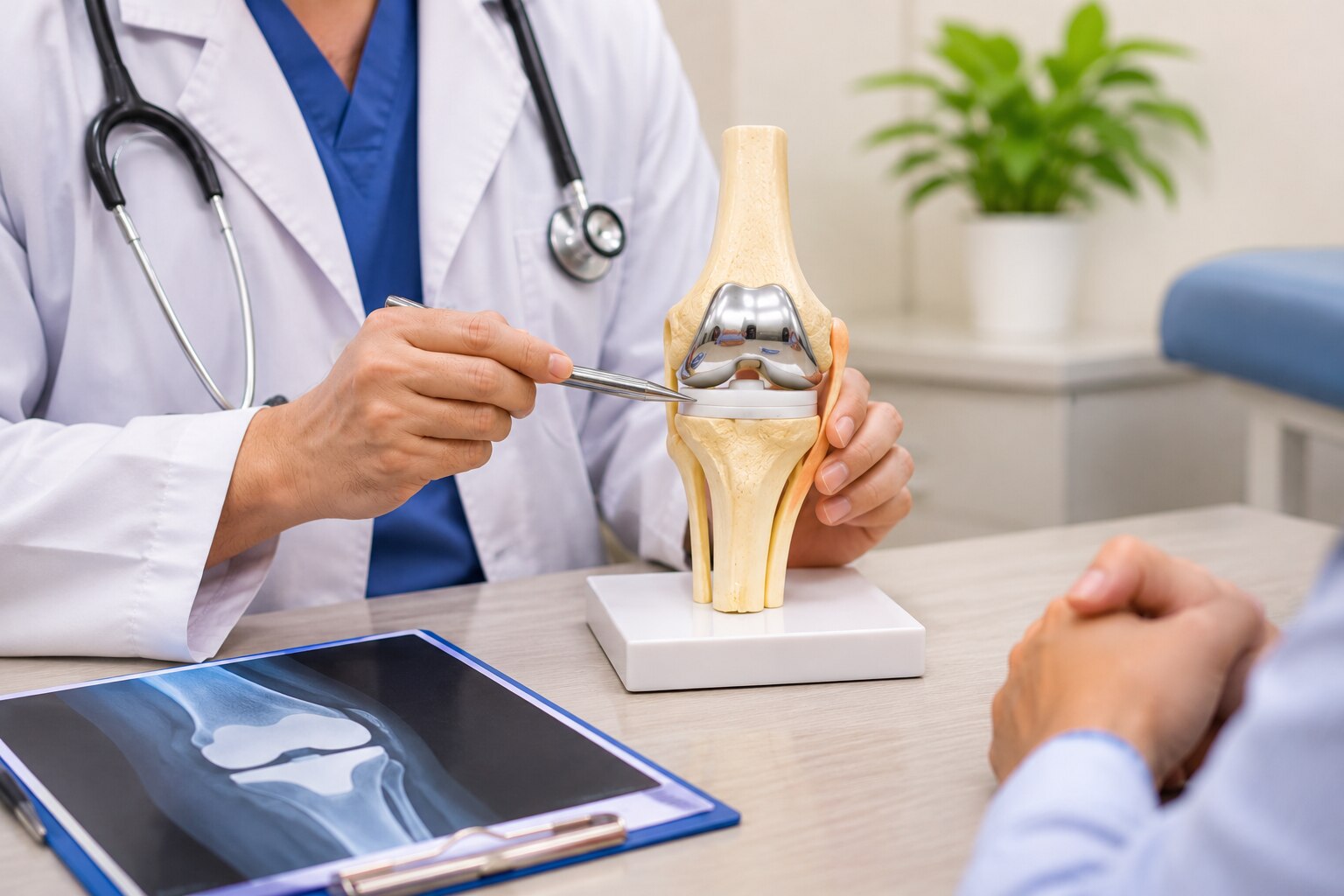
- Shoulder replacement relieves pain and improves useful reach in advanced joint destruction.
- Elbow replacement mainly relieves pain in selected severe arthritis or complex fractures.
A reverse shoulder replacement uses the deltoid when the rotator cuff cannot be repaired; it is not simply a stronger standard replacement. Shoulder replacement may leave limited rotation, behind-the-back reach, or heavy-lifting capacity. Elbow replacement commonly carries a lifelong restriction on repetitive loads of roughly 5–10 pounds, set by the surgeon and implant situation.
The benefits of shoulder and elbow surgery in Thane should therefore be judged by improved pain, stability, reach, or lifting.
When is surgery a better choice than physiotherapy or injections?
Surgery becomes a stronger choice when function remains limited, a structural problem is confirmed, weakness is progressing, instability keeps recurring, a fracture has not united, or severe joint destruction remains after appropriate nonsurgical care has failed.
| Option | Best fit | Why it may be chosen |
|---|---|---|
| Activity modification, physiotherapy or injection | Mild pain, deconditioning, uncomplicated inflammation, or improving frozen shoulder | Avoids an operation while strength and movement recover |
| Manipulation or guided rehabilitation | Frozen shoulder with restricted movement that is improving | Surgery is not justified by stiffness alone |
| Arthroscopy | A defined repairable problem, not pain alone | For uncomplicated subacromial pain without a structural lesion, decompression has shown no clinically important benefit over diagnostic arthroscopy |
| Tendon repair or stabilisation | Repairable rotator-cuff tear with weakness, tendon rupture, or recurrent dislocation | Corrects weakness or instability that therapy cannot overcome |
| Fracture fixation or joint replacement | Unhealed or displaced fracture, or severe joint destruction | Restores alignment or replaces damaged surfaces |
A repairable cuff tear with ongoing weakness differs from deconditioning. Tennis elbow that persists after a properly completed nonoperative programme differs from mild activity-related pain.
The phrase arm movement surgery in Thane describes a search need, not one operation. Numbness or tingling may come from cervical nerve roots, the shoulder region, or the ulnar nerve at the elbow; joint surgery can miss the cause.
Seek urgent assessment for a cold or pale hand, lost sensation, sudden paralysis, an open fracture, or a visible dislocation. Never manipulate a dislocation yourself.
What should a proper shoulder or elbow assessment include?
A proper assessment identifies the structure causing lost function, not merely the painful area. Record symptom duration, injury mechanism, work and sport demands, previous treatment, and the exact tasks you cannot perform.
Compare active with passive range of motion; test strength and shoulder instability; measure elbow flexion and extension and forearm rotation; record sensation, pulses, skin temperature, and circulation.
| Test | What it can show |
|---|---|
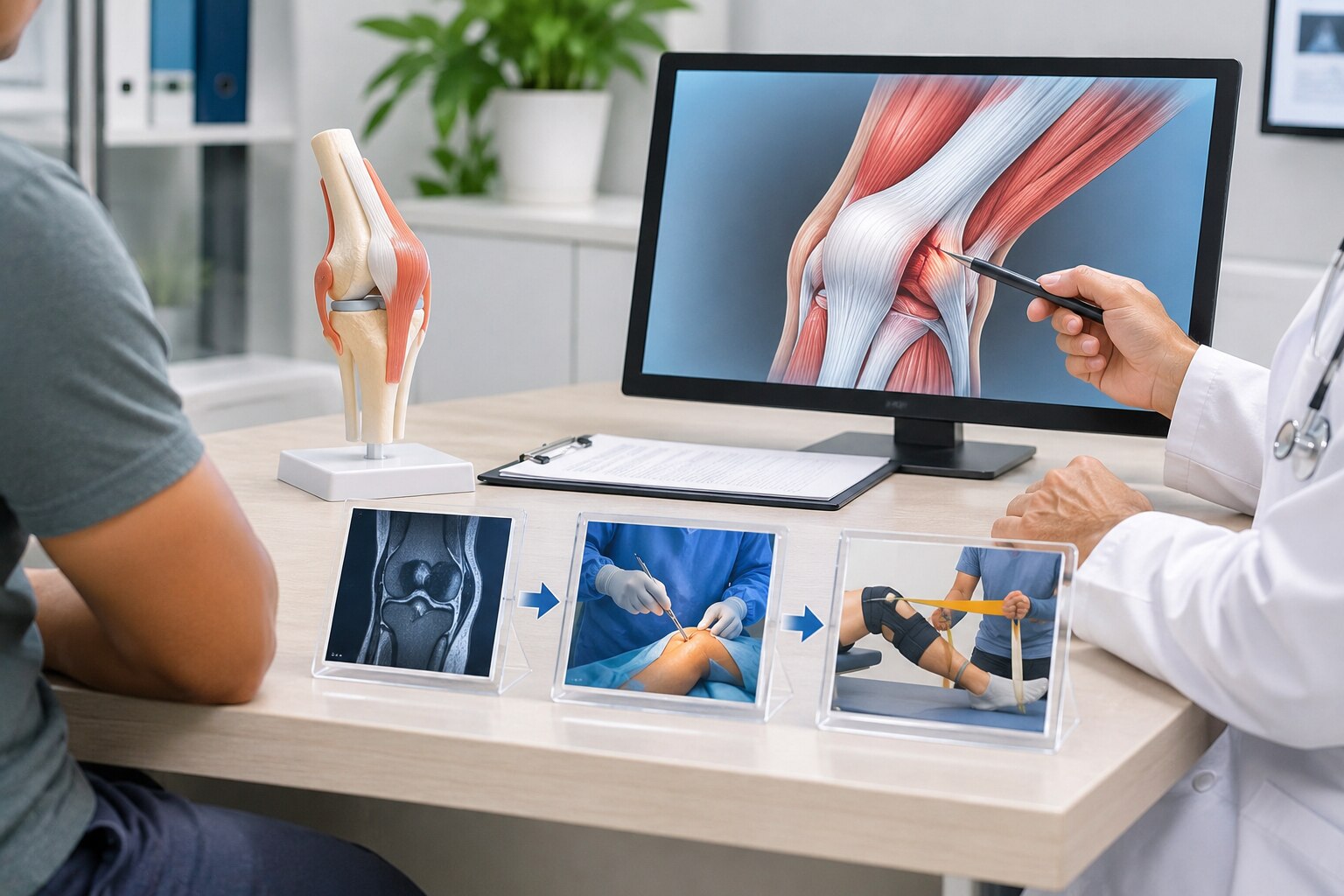
| X-rays | Fractures, alignment, arthritis, joint-space loss, and some implant-planning details |
| Ultrasound | Some rotator-cuff and tendon problems during movement |
| MRI | Tendons, cartilage, labral and other soft-tissue damage, muscle atrophy, and fatty degeneration |
| CT | Complex fractures, bone loss, deformity, and joint destruction |
| Nerve-conduction studies or electromyography | Nerve compression when numbness or weakness may not come from the joint |
A confirmed tear does not guarantee a successful repair if the tendon has longstanding retraction, muscle atrophy, or fatty degeneration. Nerve testing matters when symptoms could arise from the neck, shoulder region, or ulnar nerve at the elbow.
Ask these questions before agreeing to surgery:
- Which finding proves the diagnosis?
- What nonsurgical alternative remains?
- What movement should the operation restore?
- Which symptom will it not fix?
Why pain relief does not guarantee a fully functional arm
Pain relief can arrive before normal function returns because surgery repairs a structure, while rehabilitation rebuilds strength, range of motion, coordination, and endurance. Bone, tendon, instability, or damaged joint surfaces may be corrected without immediately restoring a fully capable arm.
After rotator cuff repair, a sling commonly protects the arm for several weeks. Passive or assisted movement begins in stages, active use follows, and strengthening comes later. Forceful lifting too early can jeopardise tendon healing; prolonged immobilisation can create stiffness.
Elbow surgery requires an especially narrow balance. Controlled early motion helps preserve extension and flexion, but aggressive movement can displace a fracture or damage a repair. Delaying movement too long can leave the elbow permanently difficult to bend or straighten.
Shoulder replacement often delivers more predictable pain relief than heavy-lifting or athletic strength. Reverse replacement can improve elevation when the rotator cuff is irreparable, but it does not recreate a normal cuff or guarantee comfortable reach behind your back.
Recovery also depends on tendon and bone quality, nerve status, arthritis severity, age, smoking, diabetes, and your adherence to rehabilitation. Judge the result by tasks, not pain alone:
- Washing your hair, dressing, fastening clothing, or reaching behind your back
- Lifting a cup, carrying groceries, or pushing up from a chair
- Turning your forearm to use a key or utensil
- Asking how long each rehabilitation phase lasts
- Confirming restrictions for lifting, driving, work, and sport
How should you compare a local surgical consultation?
A useful consultation should turn “arm movement surgery in Thane” into a named problem, a measurable goal, and a fallback plan. Ask the surgeon to explain:
- The diagnosis in plain language, show the relevant X-ray, MRI, ultrasound, or CT finding, and explain why physiotherapy, an injection, activity modification, manipulation, or observation is insufficient or still worth trying.
- The expected change in reach, rotation, strength, stability, and endurance, including movements such as washing your hair, dressing, lifting a cup, or reaching behind your back.
- The risks of persistent pain, stiffness, weakness, infection, nerve injury, fracture nonunion, recurrent instability, or implant complications, plus the plan if your arm does not improve.
For a shoulder specialist surgery in Thane search, compare the consultation itself rather than treating location as evidence of better results.
| Dimension | What to compare |
|---|---|
| Specific procedure | Experience with your confirmed operation, not surgery in general |
| Restrictions | Implant or repair limits on lifting, driving, work, and sport |
| Rehabilitation | Phases, duration, supervised therapy, and home exercises |
| Follow-up | Access after surgery and who handles persistent pain or stiffness |
| Complications | How infection, nerve injury, nonunion, instability, or implant failure is managed |
A consultation with The Bone & Joints - Advance Ortho Care 08048067357 can help test whether the diagnosis, expected functional gain, and rehabilitation commitment justify surgery.
Frequently asked questions
What everyday arm function can shoulder or elbow surgery realistically restore?
Surgery can improve activities such as washing your hair, dressing, fastening clothing, lifting a cup, carrying groceries, reaching overhead, and reaching behind your back when pain, weakness, instability, fracture, tendon damage, arthritis, or stiffness limits them. The result depends on the condition, tissue damage, treatment, rehabilitation, and your starting range of motion.
When is surgery a better choice than physiotherapy or injections?
Surgery becomes a stronger option when a fracture, torn tendon, severe arthritis, recurrent instability, or persistent stiffness creates a structural problem that physiotherapy or injections cannot correct. A specialist should compare examination findings, imaging, previous treatment, symptom duration, and your functional goals before recommending it.
What should a proper shoulder or elbow assessment include?
Assessment should include your medical history, pain pattern, range of motion, muscle strength, joint stability, deformity, swelling, and nerve and blood-supply checks. Depending on the suspected problem, the clinician may review X-rays, ultrasound, CT, or MRI scans.
Why does pain relief not guarantee a fully functional arm?
Pain can improve while weakness, restricted motion, instability, tendon damage, poor coordination, or fear of movement remains. Track practical tasks and measured range of motion alongside pain scores during recovery.
How should you compare a local shoulder or elbow surgical consultation?
Ask whether the clinician regularly treats your specific condition, explains non-surgical alternatives, identifies the proposed procedure, reviews relevant imaging, sets functional goals, and provides a rehabilitation plan. Confirm where surgery, follow-up, physiotherapy, and urgent care will occur before choosing a local consultation in Thane.
Keywords